

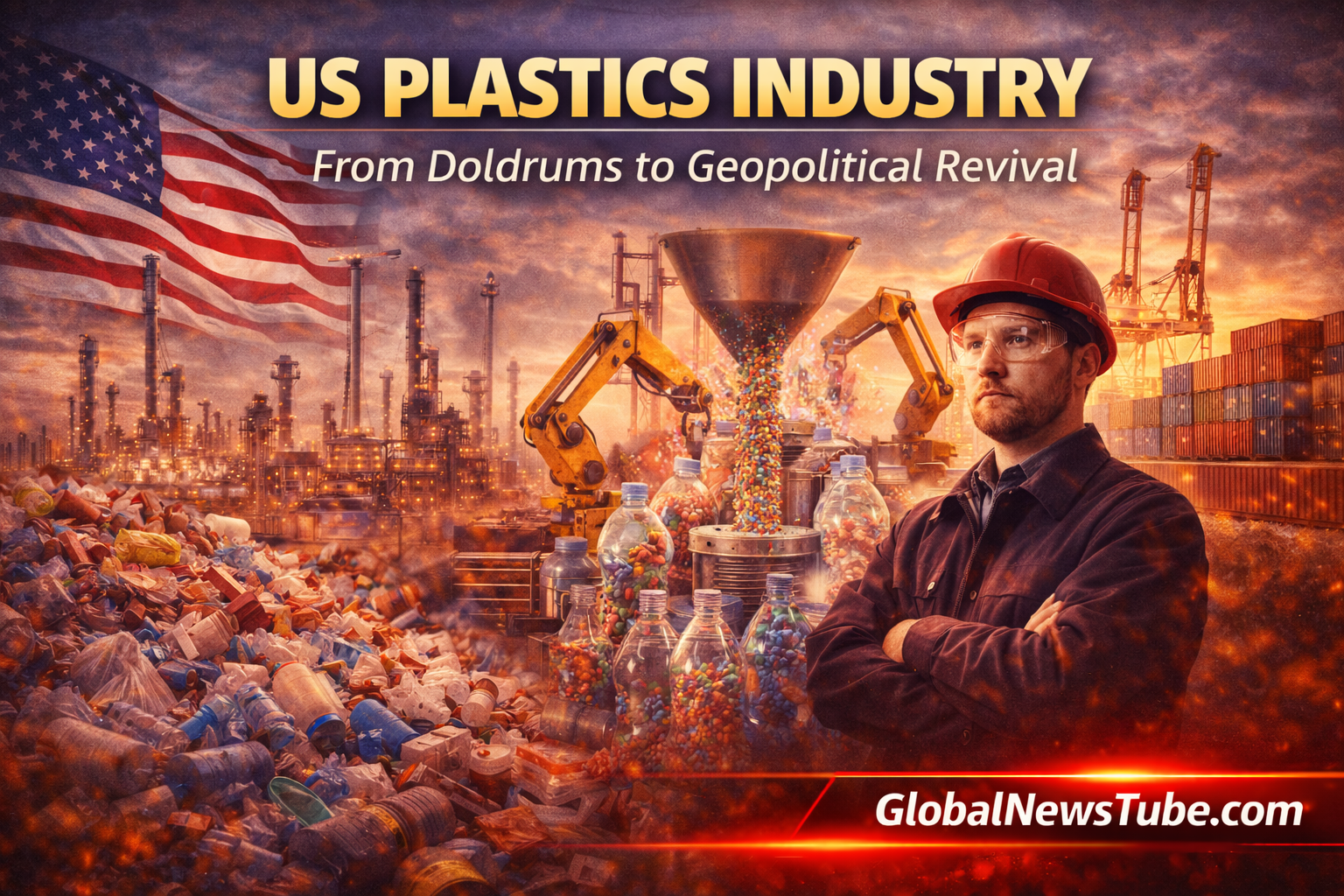
The US plastics industry, long weighed down by oversupply and weak demand, has been jolted back to life by the outbreak of war involving Iran. The Middle East is a critical hub for petrochemical exports, and disruptions caused by the conflict have reshaped global supply chains. Resin prices are climbing, shipping routes are unstable, and American producers are suddenly finding themselves in a position of renewed importance. This transformation highlights how geopolitical events can rapidly alter the trajectory of entire industries.
The Pre War Slump
Before the conflict, the US plastics sector was struggling. Excess production capacity, sluggish consumer demand, and competition from cheaper imports had driven margins down. Many producers were scaling back operations, delaying investments, and facing pressure from environmental advocates pushing for reduced plastic use. The industry was in what analysts described as the doldrums, with little sign of recovery.
Why the Iran War Matters
The war has disrupted petrochemical exports from the Middle East, particularly polyethylene and polypropylene, which are essential for packaging, consumer goods, and industrial applications. Much of this trade flows through the Strait of Hormuz, a chokepoint now destabilized by conflict. Tankers face delays, insurance premiums have skyrocketed, and refineries in the region are idled. This has created shortages worldwide, forcing buyers to look elsewhere for supply.
Rising Resin Prices
Resin prices have surged across global markets. Polyethylene (PE), polypropylene (PP), and polyethylene terephthalate (PET) are all trading at higher levels due to constrained supply. Feedstocks such as monoethylene glycol and purified terephthalic acid are harder to source, slowing production in Asia and Europe. North American producers, with relatively stable access to raw materials, are benefiting from increased demand. Analysts predict consumer goods packaging could rise in cost by 10–20% if disruptions persist.
US Plastics Industry From Weakness to Opportunity
The U.S. industry is experiencing a remarkable turnaround. Companies that had been cutting production are now ramping up to meet global demand. Export opportunities are expanding, and domestic producers are gaining leverage in markets once dominated by Middle Eastern suppliers. This shift underscores how geopolitical instability can create unexpected opportunities for industries previously in decline.
Supply Chain Challenges
Despite the surge in demand, challenges remain. Logistics costs are rising, and securing raw materials is more complex. Even U.S. producers rely on some imported inputs, and disruptions in global trade affect availability. Shipping costs have increased due to higher insurance premiums, and delivery schedules are uncertain. Manufacturers must balance the benefits of higher demand with the risks of unstable supply chains.
Impact on Consumers and Businesses
Consumers are already seeing higher prices for packaged goods, disposable tableware, and household plastics. Businesses that rely on stable resin costs such as food packaging companies are adjusting budgets and exploring alternatives. Some firms are considering greater use of recycled plastics or shifting to non petroleum based materials to hedge against volatility. For small businesses, rising costs may squeeze margins, while larger corporations may pass price increases on to consumers.
Environmental and Policy Dimensions
The surge in plastics demand raises questions about sustainability. As production ramps up, environmental advocates warn of increased plastic waste and carbon emissions. Policymakers may face pressure to balance economic opportunity with environmental responsibility. At the same time, the crisis underscores the strategic importance of domestic petrochemical capacity, potentially influencing future energy and trade policy. The debate over plastics is likely to intensify, with calls for stronger recycling programs and investment in alternative materials.
Global Market Shifts
The Iran war has reshaped global trade flows. Asian and European buyers are turning to U.S. suppliers, while Middle Eastern exports remain constrained. This shift could have long-term implications, as buyers diversify supply chains to reduce reliance on unstable regions. The US may strengthen its position as a reliable supplier, but it must also contend with competition from emerging markets investing in petrochemical capacity.
Future Outlook
If the Iran war continues, resin shortages and price volatility are likely to persist. U.S. producers may enjoy a competitive edge, but they must also contend with rising costs and global uncertainty. Long-term, the industry could see greater investment in domestic capacity, diversification of supply chains, and innovation in alternative materials. The plastics sector, once stagnant, is now at the center of geopolitical and economic shifts that will shape its trajectory for years to come.
The Iran war has transformed the U.S. plastics industry from a sector in decline to one of renewed importance. Rising resin prices, disrupted supply chains, and shifting global trade patterns have created both challenges and opportunities. For American manufacturers, the crisis is a reminder of how quickly global events can reshape markets. For consumers and policymakers, it highlights the need to balance economic resilience with sustainability in an industry that touches nearly every aspect of modern life.


