

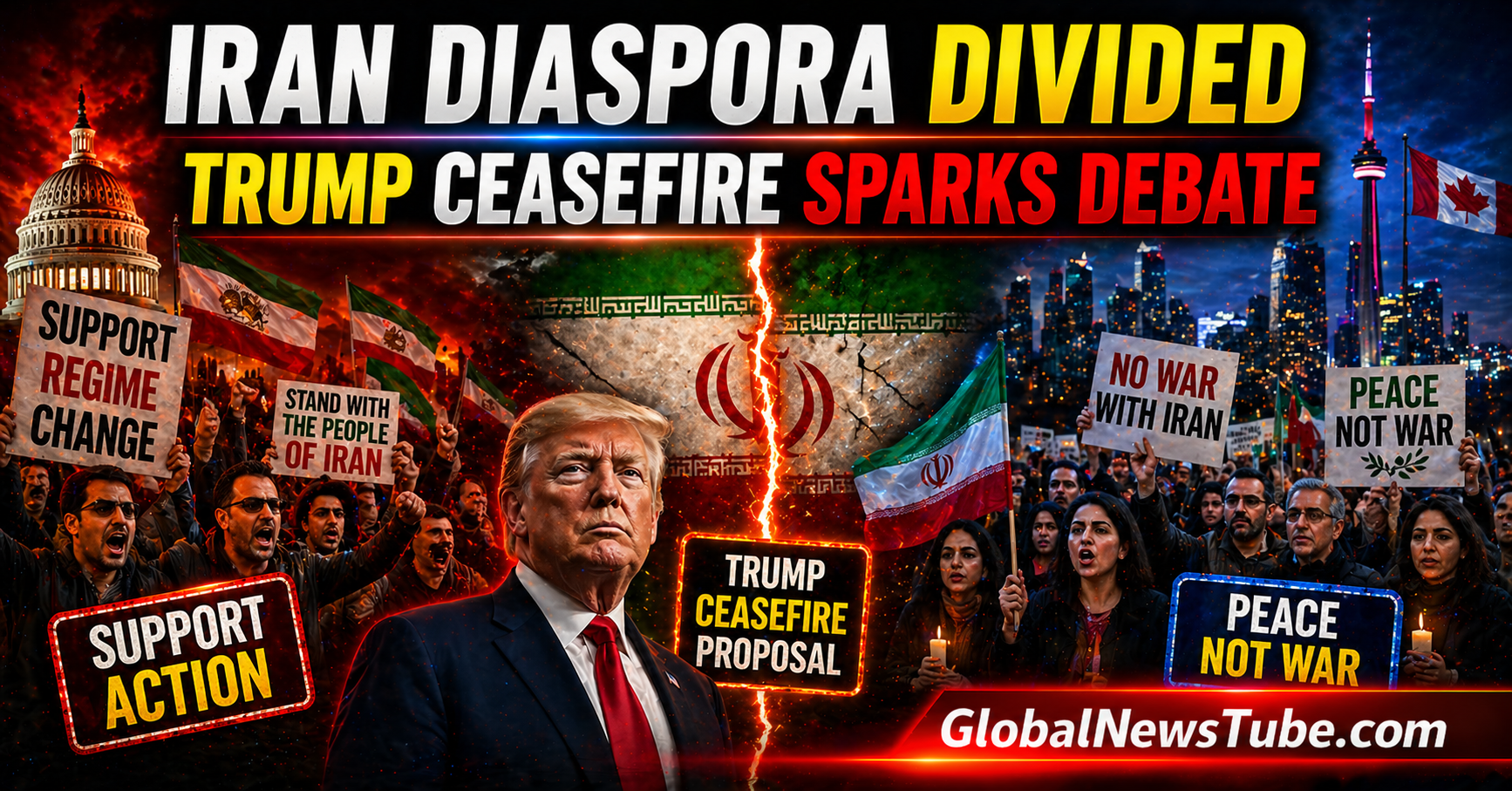
The Iranian diaspora in North America is experiencing deep divisions following a controversial ceasefire proposal put forward by Donald Trump. The plan, aimed at reducing tensions between the United States and Iran, has triggered mixed reactions among Iranian communities living in the United States and Canada. While some see the proposal as a necessary step toward peace, others fear it could legitimize political structures they oppose. This divide reflects broader disagreements about Iran’s future, foreign policy, and the role of diaspora communities in shaping global narratives.
Background of the Ceasefire Proposal
The ceasefire proposal introduced by Donald Trump comes amid heightened tensions between Iran and Western nations. The plan reportedly focuses on halting hostilities, easing sanctions, and creating a pathway for diplomatic engagement. However, limited clarity around its details has fueled debate within policy circles and diaspora communities.
For many Iranians abroad, the proposal raises critical questions about accountability, governance, and long-term stability in Iran. The uncertainty has intensified disagreements over whether the ceasefire would bring meaningful change or simply maintain the status quo.
Diverse Perspectives Within the Diaspora
The Iranian diaspora in North America is far from unified. It includes individuals with varying political beliefs, cultural backgrounds, and personal experiences. These differences are now more visible than ever as communities debate the merits of the ceasefire proposal.
Some diaspora members support the initiative, arguing that any effort to reduce conflict is worth pursuing. They believe that diplomacy, even if imperfect, can prevent further suffering and create opportunities for reform. Others strongly oppose the proposal, viewing it as a concession that could empower existing political leadership in Iran without addressing underlying issues.
Supporters Emphasize Peace and Stability
Supporters of the ceasefire argue that continued conflict only exacerbates economic hardship and humanitarian challenges for people living in Iran. They believe that reducing tensions could lead to improved living conditions and open the door to future negotiations on critical issues such as nuclear policy and human rights.
Many advocates also highlight the risks of military escalation, warning that prolonged conflict could destabilize the broader Middle East. From this perspective, the ceasefire is seen as a pragmatic step toward de escalation and regional stability.
Critics Raise Concerns Over Legitimacy
Opponents of the proposal express concerns that a ceasefire could legitimize Iran’s current political leadership without securing meaningful reforms. They argue that any agreement should include clear conditions related to governance, civil liberties, and international accountability.
Critics within the diaspora also worry that easing sanctions without structural changes could reduce pressure on Iranian authorities, potentially delaying progress on key issues. For these individuals, the ceasefire represents a missed opportunity to push for deeper reforms.
Role of Iranian Americans in Political Advocacy
Iranian Americans have long played an active role in shaping U.S. policy toward Iran. Through advocacy groups, public campaigns, and political engagement, they have influenced debates on sanctions, diplomacy, and human rights.
The current divide over the ceasefire proposal is likely to impact these advocacy efforts. Competing narratives within the diaspora could make it more challenging to present a unified stance to policymakers, potentially affecting the direction of future foreign policy decisions.
Canadian Iranian Community Reactions
Similar divisions are evident within the Iranian Canadian community. Canada has its own unique relationship with Iran, and diaspora members there often engage with both domestic and international policy discussions.
Some Canadian Iranians support diplomatic efforts to reduce tensions, while others emphasize the need for stronger international pressure on Iran. The debate highlights the complexity of diaspora politics and the influence of local contexts on global perspectives.
Impact on U.S. Iran Relations
The diaspora’s response to the ceasefire proposal could have broader implications for relations between the United States and Iran. Policymakers often consider diaspora perspectives when shaping foreign policy, particularly in democratic societies where public opinion plays a significant role.
A divided diaspora may lead to more nuanced policy approaches, as leaders attempt to balance competing viewpoints. However, it could also complicate decision making, making it harder to achieve consensus on key issues.
Media and Social Media Influence
Media coverage and social media platforms have amplified the debate within the diaspora. Online discussions, opinion pieces, and community forums have become key spaces for expressing views and mobilizing support.
While these platforms provide opportunities for dialogue, they can also deepen divisions by reinforcing existing beliefs and spreading misinformation. The rapid flow of information has made it more difficult to separate fact from speculation.
Generational Differences in Opinion
Generational differences play a significant role in shaping perspectives within the diaspora. Younger Iranian Americans and Iranian Canadians often have different priorities and experiences compared to older generations.
Younger individuals may focus on issues such as cultural identity, global integration, and economic opportunities, while older generations may emphasize political change and historical grievances. These differences contribute to the diversity of opinions on the ceasefire proposal.
Economic Considerations and Sanctions
Economic factors are central to the debate over the ceasefire. Sanctions have had a profound impact on Iran’s economy, affecting currency stability and access to essential goods.
Supporters of the ceasefire argue that easing sanctions could provide much needed relief to ordinary citizens. Critics, however, caution that economic benefits may not be evenly distributed and could strengthen existing power structures.
Humanitarian Concerns
Humanitarian considerations are another key aspect of the discussion. Prolonged conflict and economic hardship have taken a toll on the Iranian population, leading to concerns about access to healthcare, education, and basic necessities.
Many diaspora members prioritize these issues, advocating for solutions that address immediate needs while also promoting long-term stability. The challenge lies in balancing humanitarian goals with political and strategic considerations.
Future of Diaspora Engagement
The current debate is likely to shape the future of diaspora engagement on issues related to Iran. Increased polarization could lead to the formation of new advocacy groups and alliances, each representing different perspectives.
At the same time, there may be opportunities for dialogue and collaboration, as community leaders seek to bridge divides and find common ground. The outcome will depend on the ability of diaspora members to engage constructively and navigate complex political realities.
The ceasefire proposal introduced by Donald Trump has exposed deep divisions within the Iranian diaspora in North America. While some view the plan as a step toward peace and stability, others see it as a compromise that fails to address fundamental issues.
These differing perspectives reflect the diversity and complexity of diaspora communities, as well as the challenges of balancing political, economic, and humanitarian priorities. As debates continue, the role of the diaspora in shaping discussions on Iran’s future remains significant, with implications for international relations and regional stability.


