

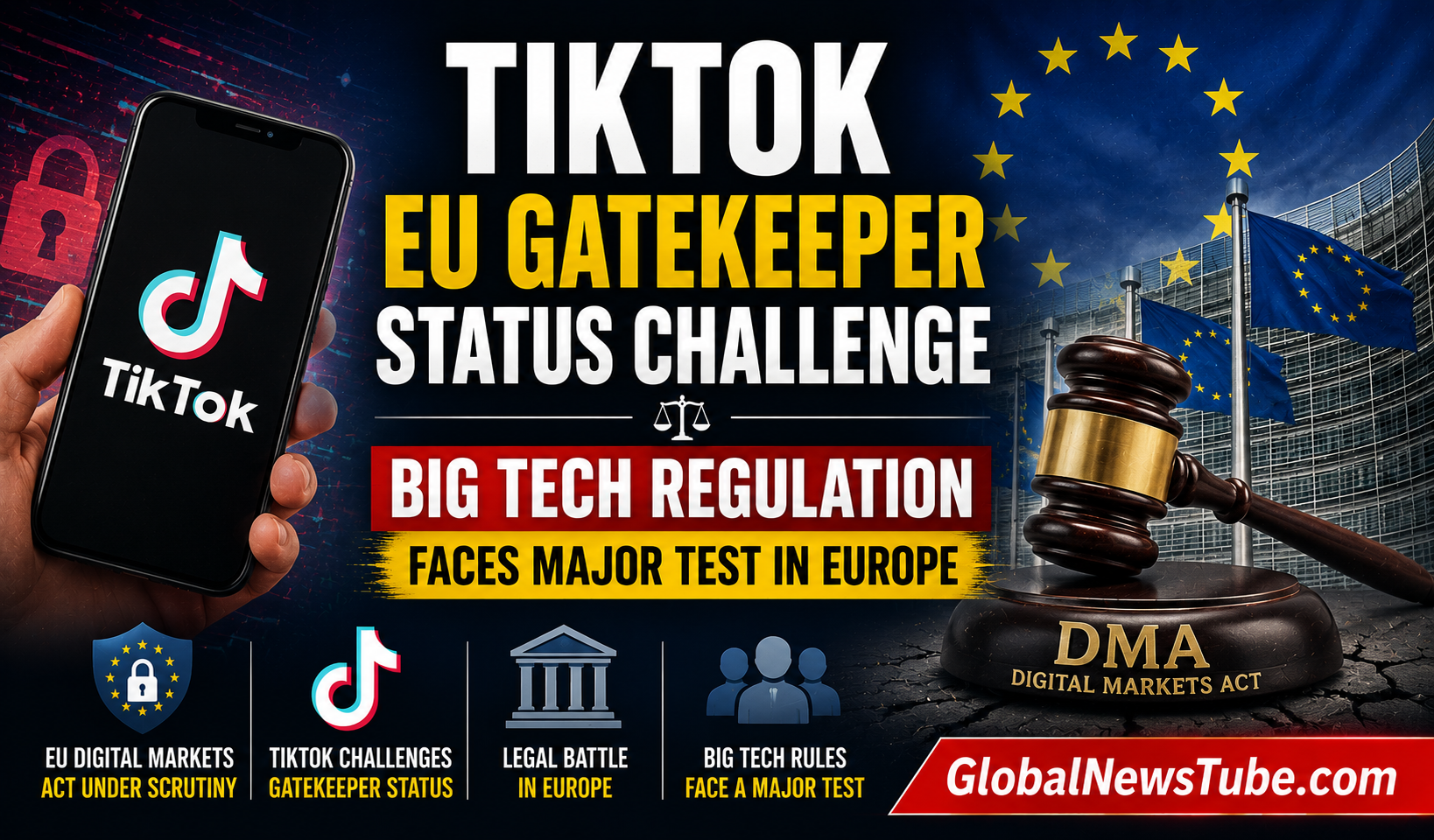
TikTok EU Gatekeeper Status Under Legal Scrutiny
The issue of TikTok EU gatekeeper status has become a major focus in global technology regulation as the platform challenges its designation under European Union law. TikTok, owned by ByteDance, is currently contesting its classification as a gatekeeper under the EU Digital Markets Act (DMA) in Europe top court. This law is designed to regulate large digital platforms that hold significant market power and influence how businesses and consumers interact online. The case is important not only for TikTok but also for the broader future of Big Tech regulation in Europe. As governments attempt to ensure fair competition in the digital economy, this legal battle could reshape how powerful online platforms are defined and controlled.
Background of the Digital Markets Act and Gatekeeper Rules
The Digital Markets Act is a major regulatory framework introduced by the European Union to control the influence of large technology companies. It targets firms that act as gatekeepers between businesses and users, ensuring they do not abuse their dominant position. TikTok was designated as a gatekeeper after surpassing key thresholds related to user numbers and market influence in Europe. This classification places it alongside other major tech companies that are also subject to strict regulatory obligations.
Gatekeepers must follow rules that prevent unfair practices such as favoring their own services, restricting competition, or limiting user choice. They are also required to allow greater interoperability with competing platforms and provide more transparency in how their systems operate. Non compliance can lead to heavy fines, making this designation highly significant for any company operating in the digital space.
TikTok Argument Against Gatekeeper Classification
TikTok is challenging its EU gatekeeper status on the grounds that it does not meet the required criteria for such a designation. The company argues that its influence in the European market is not as dominant as regulators suggest. Instead, TikTok claims that its global value is driven largely by markets outside Europe, and therefore it should not be classified as a gatekeeper within the EU framework.
A key part of TikTok argument is the concept of multihoming where users actively use multiple social media platforms at the same time. According to the company, most of its users also engage with other platforms such as Instagram, Facebook, Snapchat, and X. This suggests that users are not locked into TikTok ecosystem, which weakens the argument that it holds monopolistic control over user attention or market access. TikTok maintains that it operates in a highly competitive environment and should be treated as a challenger platform rather than a dominant gatekeeper.
European Commission Position on Digital Regulation
The European Commission strongly defends its decision to classify TikTok as a gatekeeper. Regulators argue that even in competitive environments, certain platforms can still exert significant influence over digital markets. They believe that TikTok large user base and rapid growth in Europe justify its classification under the Digital Markets Act.
According to the Commission, the purpose of the law is not only to address current dominance but also to prevent future monopolistic behavior. By regulating large platforms early, the EU aims to ensure fair competition and protect smaller businesses from being overshadowed by global tech giants. The Commission also argues that TikTok plays a key role in connecting businesses with consumers, giving it significant market power regardless of user overlap with other platforms.
Broader Impact on Big Tech Regulation
The outcome of the TikTok EU gatekeeper status case could have far reaching consequences for the global technology industry. This is one of the first major legal challenges to the Digital Markets Act, making it a landmark case for digital regulation in Europe. If TikTok succeeds in overturning its designation, it could weaken the EU regulatory framework and encourage other companies to challenge similar decisions.
On the other hand, if the court upholds the gatekeeper classification, it would strengthen the EU position as a global leader in tech regulation. It would also confirm that large digital platforms can be regulated even in highly competitive markets. The case is being closely watched by other major tech companies, many of which are also facing scrutiny under the same law. This legal battle reflects the growing global tension between innovation driven tech companies and governments seeking to regulate their influence.
Future Outlook for TikTok and EU Regulation
The final decision on TikTok EU gatekeeper status will play a critical role in shaping the future of digital regulation in Europe. The ruling will determine whether TikTok must comply with strict DMA obligations or continue operating under less restrictive conditions. Regardless of the outcome, the case highlights the increasing regulatory pressure on global technology platforms.
If the court sides with regulators, TikTok will need to adjust its business practices in Europe, potentially changing how its platform operates. If it wins the case, it could limit the EU ability to enforce similar rules in the future. Either outcome will influence how digital markets are governed and how companies structure their operations to comply with evolving laws.
A Defining Moment for Digital Market Control
In conclusion, the TikTok EU gatekeeper status case represents a defining moment in the evolution of global tech regulation. It is not only about one company but about how digital power is defined, measured, and controlled in modern economies. The outcome will influence how governments approach competition in the technology sector and how companies adapt to increasing regulatory oversight. As digital platforms continue to grow in influence, the balance between innovation and regulation becomes more critical. The ruling in this case will help determine that balance, setting a precedent for future decisions involving major technology companies. Whether TikTok remains classified as a gatekeeper or successfully overturns the designation, the impact of this case will be felt across the global digital economy for years to come.