


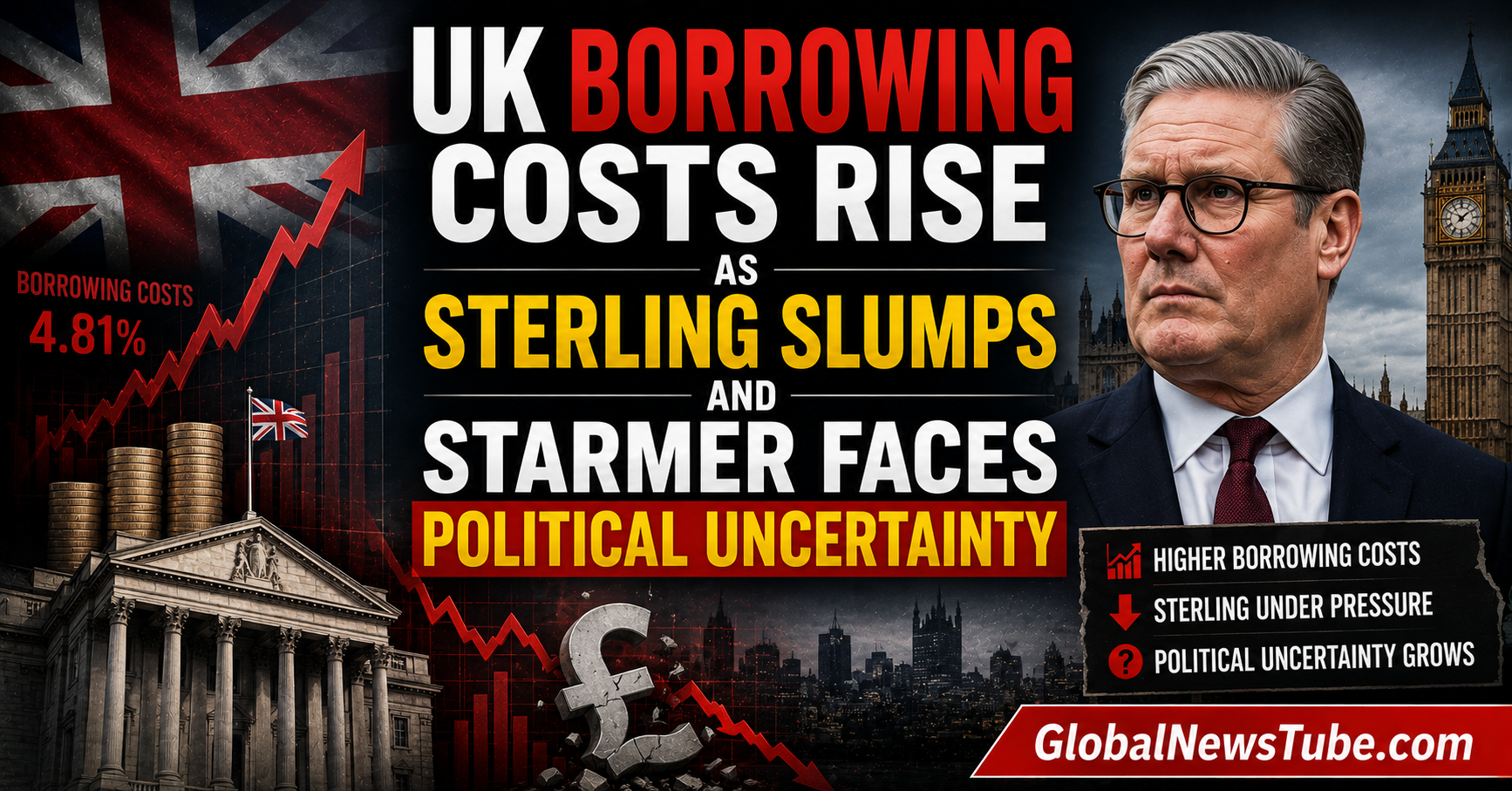
UK Borrowing Costs Rise Amid Political Turmoil
The phrase UK borrowing costs rise has become a defining theme in 2026 as Britain faces mounting economic and political challenges. Government borrowing costs have surged sharply, while the British pound has weakened against major global currencies. At the center of this uncertainty is Prime Minister Keir Starmer, whose leadership is under growing pressure following political setbacks and internal party tensions. The combination of rising bond yields, a falling currency, and political instability has created a fragile environment that is raising concerns among investors and policymakers. This situation highlights how closely financial markets are tied to political developments in the United Kingdom.
Surge in Gilt Yields and Borrowing Costs
One of the clearest signs of economic strain is the sharp increase in UK government bond yields, commonly referred to as gilt yields. Long-term borrowing costs have climbed to levels not seen in decades, with 10 year and 30 year yields rising significantly. This surge reflects growing investor concerns about inflation, fiscal policy, and economic stability. When borrowing costs rise, the government must spend more on interest payments, leaving less room for public services and development projects. The increase also has a direct impact on the wider economy, influencing everything from business investment to household borrowing. As yields continue to rise, they signal that investors are demanding higher returns due to perceived risks in the UK economy.
Sterling Slumps as Investor Confidence Weakens
At the same time that borrowing costs are increasing, the British pound has experienced a noticeable decline in value. The weakening of sterling reflects reduced investor confidence in the UK economic and political outlook. A weaker currency can provide some benefits, such as making exports more competitive, but it also has significant downsides. Import costs rise, which can contribute to inflation and increase the cost of living for consumers. For households already dealing with economic pressure, this adds another layer of difficulty. The fall in sterling also sends a signal to global markets that investors are becoming cautious about holding UK assets, further contributing to financial instability.
Political Uncertainty Around Keir Starmer
Political uncertainty is a key factor behind the rise in borrowing costs and the decline in the pound. Prime Minister Keir Starmer is facing growing criticism within his own party, with calls for leadership changes adding to the instability. This internal division has created uncertainty about the future direction of government policy. Investors are particularly sensitive to political risk, as changes in leadership can lead to shifts in fiscal strategy and economic priorities. Concerns about increased public spending or policy reversals can make investors hesitant, driving borrowing costs even higher. The current political climate has therefore become a major influence on financial markets, reinforcing the link between governance and economic performance.
Impact on Financial Markets and the Economy
The effects of rising borrowing costs are being felt across financial markets and the broader economy. Higher yields have contributed to volatility in stock markets, as investors reassess risk and adjust their portfolios. The banking sector is also affected, as rising interest rates influence lending conditions and profitability. For businesses, higher borrowing costs mean increased expenses for financing investments, which can slow growth and reduce expansion plans. For consumers, the impact is even more direct, with mortgage rates and loan costs rising in response to higher yields. This reduces disposable income and can dampen consumer spending, further slowing economic activity. The overall effect is a tightening of financial conditions that can weigh heavily on economic growth.
Global Pressures and Future Outlook
In addition to domestic challenges, global factors are adding to the pressure on the UK economy. Rising energy prices, geopolitical tensions, and shifts in global financial markets are all contributing to the current. These external influences make it more difficult for policymakers to manage inflation and maintain economic stability. Looking ahead, the direction of UK borrowing costs will depend on how both political and economic challenges are addressed. If the government can restore stability and present a clear fiscal strategy, investor confidence may improve, leading to lower yields and a stronger currency. However, continued uncertainty could prolong the current volatility and create further challenges for the economy.
A Defining Moment for the UK Economy
In conclusion, the trend that UK borrowing costs rise reflects a complex mix of economic pressures and political uncertainty. The surge in gilt yields, combined with a weakening currency and leadership challenges, has created a critical moment for the United Kingdom. The situation underscores the importance of stability, clear policy direction, and investor confidence in maintaining a healthy economy. While the challenges are significant, they also present an opportunity for reform and recovery. The coming months will be crucial in determining whether the UK can navigate this period of uncertainty and return to a path of sustainable growth.