


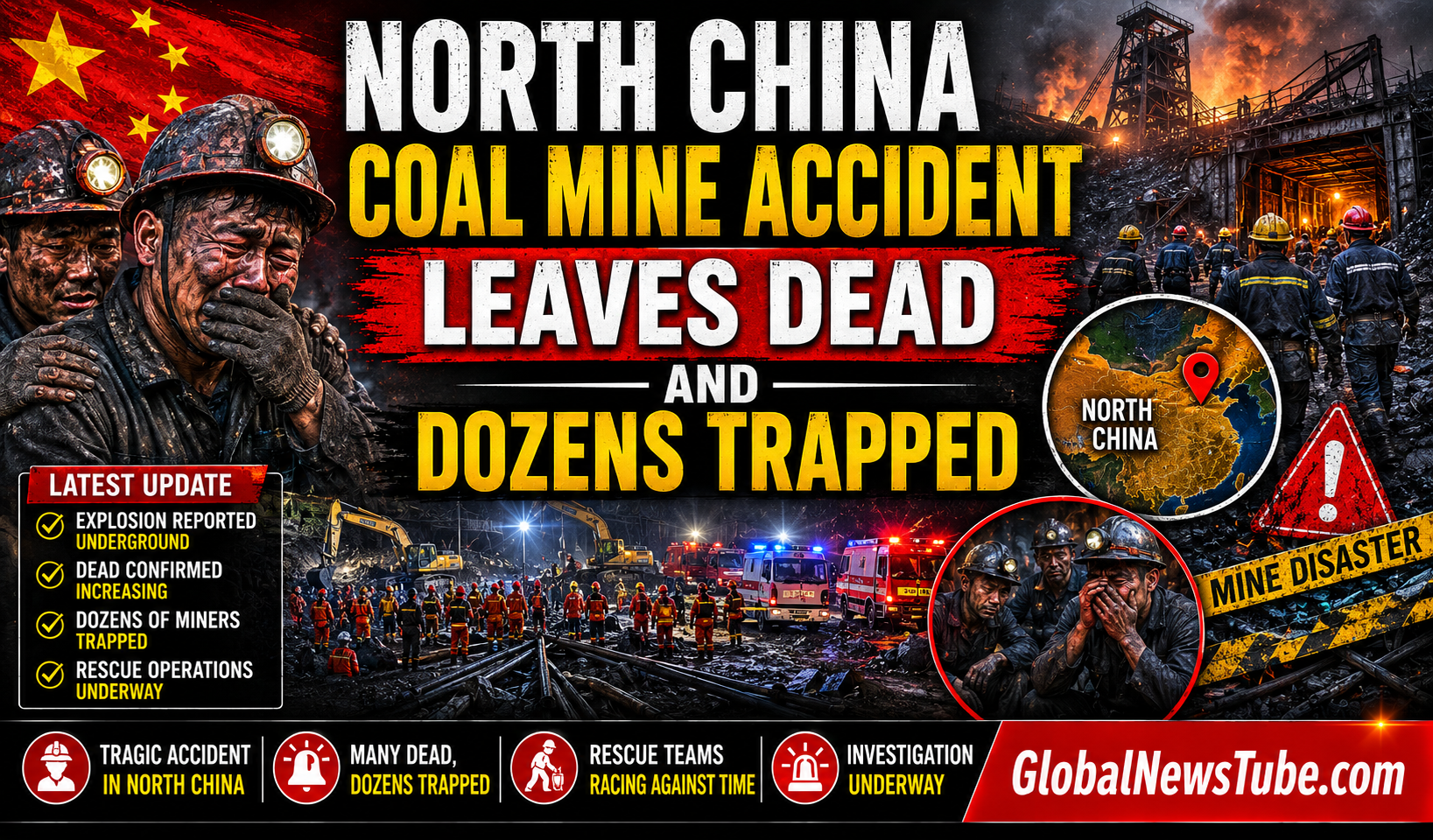
A tragic industrial disaster has unfolded in northern China, where a coal mine accident has left several workers dead and many others trapped underground. According to official reports, at least four people have died while around 90 miners remain trapped, triggering an urgent rescue operation.
The focus keyword North China coal mine accident reflects growing global attention on mining safety, industrial risks, and emergency response systems. The incident has once again highlighted the dangers faced by workers in one of the world most hazardous industries.
Details of the North China Coal Mine Accident
The North China coal mine accident occurred at a mining site in a key coal producing region, where a sudden collapse or explosion is believed to have trapped dozens of workers underground. Emergency teams were quickly dispatched to the scene to begin rescue operations.
Authorities confirmed that several workers lost their lives in the initial incident, while many others remain unaccounted for. Rescue efforts have been complicated by challenging underground conditions, including debris, unstable tunnels, and limited access points.
The North China coal mine accident has drawn nationwide attention, with officials closely monitoring the situation and coordinating rescue operations.
Rescue Operations and Challenges
Rescue teams are working around the clock to locate and extract the trapped miners. Specialized equipment, including drilling machines and ventilation systems, is being used to reach survivors and provide oxygen.
However, the complexity of the mine structure and the severity of the collapse have slowed progress. Rescuers must carefully navigate unstable areas to avoid further accidents.
Time is a critical factor in the North China coal mine accident, as the chances of survival decrease with each passing hour. Authorities have mobilized additional resources and personnel to accelerate rescue efforts.
Safety Concerns in China Mining Industry
The North China coal mine accident has reignited concerns about safety standards in China’s mining sector. Despite improvements in recent years, coal mining remains a high-risk industry due to factors such as poor ventilation, gas buildup, and structural instability.
China is one of the world’s largest producers and consumers of coal, making mining a vital part of its economy. However, the pressure to meet energy demands can sometimes lead to compromises in safety.
The North China coal mine accident underscores the need for stricter enforcement of safety regulations and better training for workers.
Government Response and Investigation
In response to the accident, Chinese authorities have launched an investigation to determine the cause of the incident. Officials are expected to examine whether safety protocols were followed and identify any negligence or violations.
The government has also pledged to support rescue efforts and provide assistance to the families of affected workers. Compensation and accountability measures are likely to follow once the investigation is complete.
The North China coal mine accident may lead to new policies aimed at improving safety standards and preventing similar incidents in the future.
Impact on Energy Sector and Economy
Coal remains a cornerstone of China energy supply, and incidents like the North China coal mine accident can have broader implications for the economy. Disruptions in mining operations may affect energy production and supply chains.
At the same time, increased scrutiny of the mining industry could lead to higher operational costs and stricter regulations. While these measures are necessary for safety, they may impact production efficiency.
The North China coal mine accident highlights the delicate balance between economic growth and worker safety.
Human Cost and Community Impact
Beyond economic and industrial concerns, the North China coal mine accident is a human tragedy. Families of the trapped miners are anxiously waiting for news, while communities mourn the loss of lives.
Mining communities often depend heavily on the industry for employment, making such incidents particularly devastating. The psychological and emotional toll on families and rescue workers cannot be overlooked.
The North China coal mine accident serves as a reminder of the sacrifices made by workers in hazardous industries.
Global Perspective on Mining Safety
Mining accidents are not unique to China, but the scale and frequency of such incidents have drawn international attention. Countries around the world face similar challenges in ensuring worker safety while maintaining production.
The North China coal mine accident may prompt global discussions on best practices, technological innovations, and regulatory frameworks to improve safety standards.
International cooperation and knowledge sharing could play a key role in reducing risks and preventing future disasters.
Future Outlook and Preventive Measures
Looking ahead, the North China coal mine accident could lead to significant changes in the industry. Increased investment in safety technology, stricter inspections, and better training programs are likely to be prioritized.
Automation and advanced monitoring systems may also help reduce risks by minimizing human exposure to dangerous conditions.
The North China coal mine accident serves as a wake-up call for both policymakers and industry leaders to prioritize safety and sustainability.
The North China coal mine accident is a stark reminder of the dangers inherent in the mining industry. With lives lost and many still at risk, the focus remains on rescue efforts and ensuring the safety of those trapped underground.
This tragedy highlights the urgent need for improved safety measures, stronger regulations, and greater accountability. As the situation unfolds, it will continue to draw attention from across the globe.
Ultimately, the North China coal mine accident underscores the importance of valuing human life above all else, even in industries critical to economic growth.