


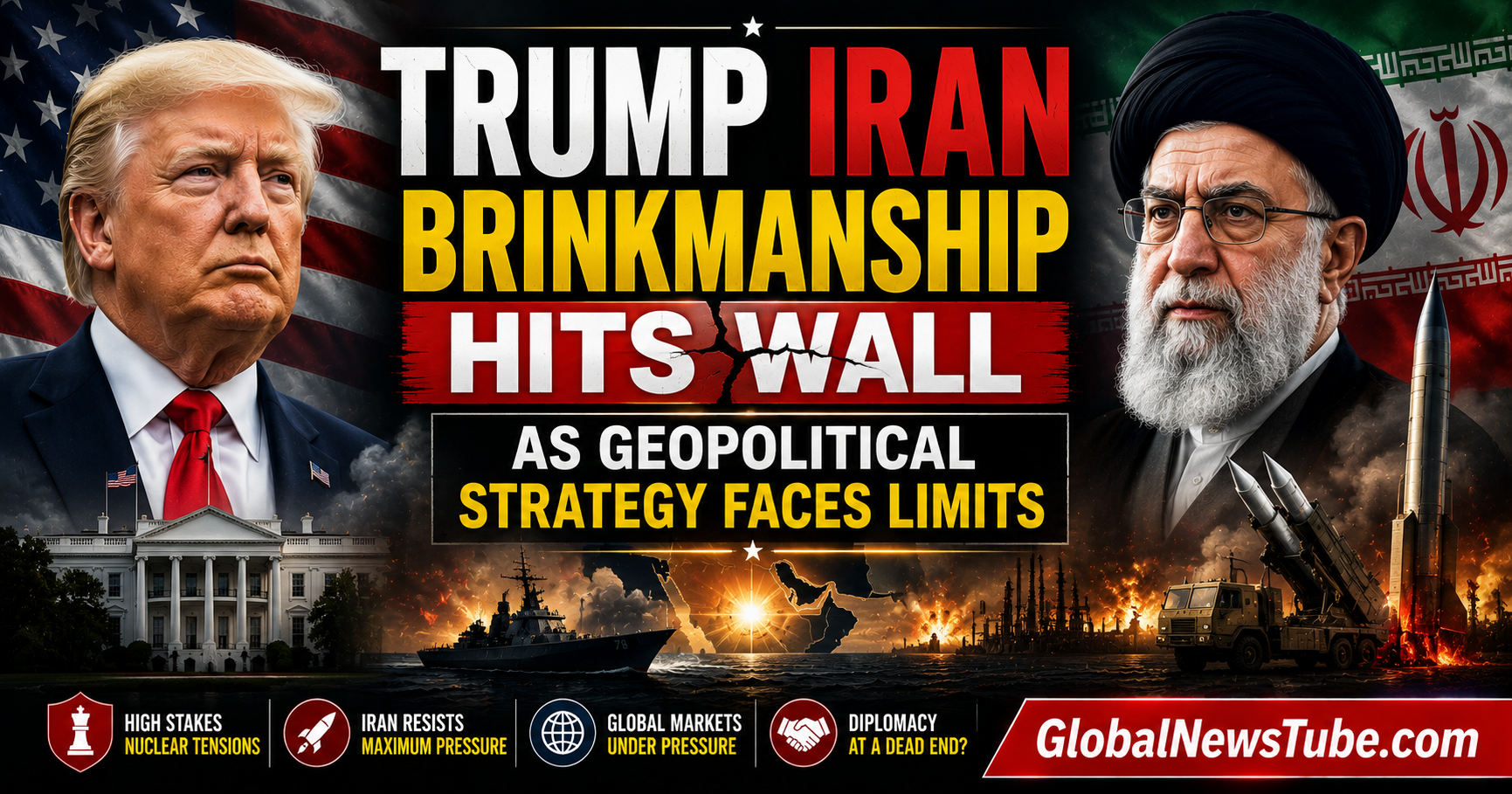
Trump Iran Brinkmanship Strategy Under Pressure
The Trump Iran brinkmanship strategy is facing growing challenges as tensions between the United States and Iran intensify. President Donald Trump aggressive negotiation style, built on economic pressure, strong rhetoric, and military deterrence, has been a defining feature of his foreign policy. While this approach has achieved results in certain situations, the ongoing standoff with Iran suggests that it may be reaching its limits. As the crisis continues without a clear resolution, concerns are rising over global stability, energy markets, and the effectiveness of high pressure diplomacy in complex geopolitical conflicts.
Breakdown of Trump Iran Brinkmanship in Ongoing Conflict
The Trump Iran brinkmanship approach is centered on coercive diplomacy, combining sanctions, political pressure, and the threat of force to push Iran toward concessions. However, this strategy has struggled to produce meaningful progress in the current conflict. Despite sustained pressure, there has been little indication that Iran is willing to compromise on key issues.
This stalemate reflects a deeper strategic divide. The United States seeks significant changes in Iran’s policies, while Iran remains determined to resist external pressure. The result is a prolonged deadlock, where neither side is willing to back down. This situation highlights the limitations of brinkmanship when facing a resilient opponent that is prepared to absorb economic and political costs in order to maintain its position.
Iran Strategic Resistance and Regional Leverage
A major reason the Trump Iran brinkmanship strategy is struggling lies in Iran ability to maintain leverage despite ongoing pressure. Iran has demonstrated resilience by adapting to sanctions and sustaining its regional influence. Its strategic position in the Middle East allows it to play a significant role in global energy markets.
Control over key shipping routes and influence in the region provide Iran with tools to counter U.S. pressure. Any disruption in these areas can have immediate global consequences, particularly in oil prices and supply chains. This leverage reduces the effectiveness of economic sanctions and strengthens Iran negotiating position.
Additionally, domestic political considerations play a crucial role. Iranian leadership is unlikely to accept terms that could be perceived as a concession to external pressure. This internal dynamic reinforces resistance and makes diplomatic breakthroughs more difficult to achieve.
Economic Fallout of Trump Iran Brinkmanship
The Trump Iran brinkmanship strategy has had notable economic consequences, both domestically and globally. Rising tensions in the Middle East have contributed to increased oil prices, which in turn affect inflation and consumer costs. Higher fuel prices are particularly impactful, as they influence transportation, manufacturing, and everyday expenses.
Financial markets have also responded to the uncertainty. Investors tend to react cautiously in times of geopolitical instability, leading to fluctuations in stock markets and shifts in investment strategies. Businesses face challenges in planning and expansion due to unpredictable economic conditions.
These economic effects illustrate the risks associated with aggressive foreign policy strategies. While the goal is to apply pressure on an adversary, the resulting instability can also impact the initiating country and the global economy. This creates a complex situation where policymakers must weigh strategic objectives against economic realities.
Diplomatic Challenges and Miscalculations
The Trump Iran brinkmanship approach has encountered significant diplomatic challenges. A strategy that relies heavily on pressure and public messaging can sometimes escalate tensions rather than resolve them. Communication style plays a critical role in international relations, and strong rhetoric may not always produce the intended results.
In the case of Iran, public pressure can reinforce hardline positions instead of encouraging compromise. Diplomatic engagement requires careful balance, allowing both sides to negotiate without appearing weak. The current approach has made it difficult to create an environment conducive to productive dialogue.
Another challenge lies in the expectations surrounding negotiations. A focus on achieving decisive victories can limit flexibility, making it harder to reach mutually acceptable agreements. Successful diplomacy often involves compromise, which requires both sides to find common ground while maintaining their respective interests.
Political Pressure and Domestic Implications
Domestic factors are increasingly influencing the Trump Iran brinkmanship strategy. Economic concerns, including rising living costs and market uncertainty, are placing pressure on policymakers to deliver results. Public opinion plays a significant role in shaping foreign policy decisions, particularly when economic impacts are directly felt by citizens.
Political considerations, including elections and leadership dynamics, also affect decision making. Leaders must balance national security priorities with domestic expectations, creating a complex policy environment. The outcome of the Iran conflict could have implications for political support and future policy direction.
Despite these pressures, the strategy remains focused on preventing Iran from advancing its strategic capabilities. This highlights the challenge of managing both domestic and international priorities simultaneously, as decisions in one area often have consequences in the other.
Can Trump Iran Brinkmanship Deliver Results?
The future of the Trump Iran brinkmanship strategy remains uncertain. While it has succeeded in applying pressure, it has not yet achieved a clear resolution. The ongoing stalemate suggests that adjustments may be necessary to move forward.
One possible path is increased diplomatic engagement, combining pressure with negotiation to find a balanced solution. Another scenario involves continued escalation, which could heighten risks for regional stability and global markets. Each option carries its own set of challenges and potential outcomes.
Ultimately, the effectiveness of the strategy will depend on its ability to adapt. Complex geopolitical conflicts require flexible approaches that consider both immediate and long-term consequences. The current situation demonstrates that while brinkmanship can be effective in certain contexts, it may not be sufficient on its own.
Limits of Trump Iran Brinkmanship in Modern Geopolitics
In conclusion, the Trump Iran brinkmanship strategy highlights the strengths and weaknesses of aggressive diplomacy in modern geopolitics. While it has demonstrated the ability to exert pressure and assert influence, it has also revealed limitations when faced with a determined and resilient adversary.
The ongoing conflict underscores the importance of balancing strength with diplomacy. Achieving lasting solutions requires not only pressure but also dialogue, compromise, and strategic understanding. As global tensions continue to evolve, policymakers must adapt their approaches to address increasingly complex challenges.
The case of Iran serves as a clear example of how geopolitical strategies must evolve in response to changing realities. Whether the current approach can be adjusted to achieve meaningful outcomes will play a key role in shaping future international relations and global stability.