

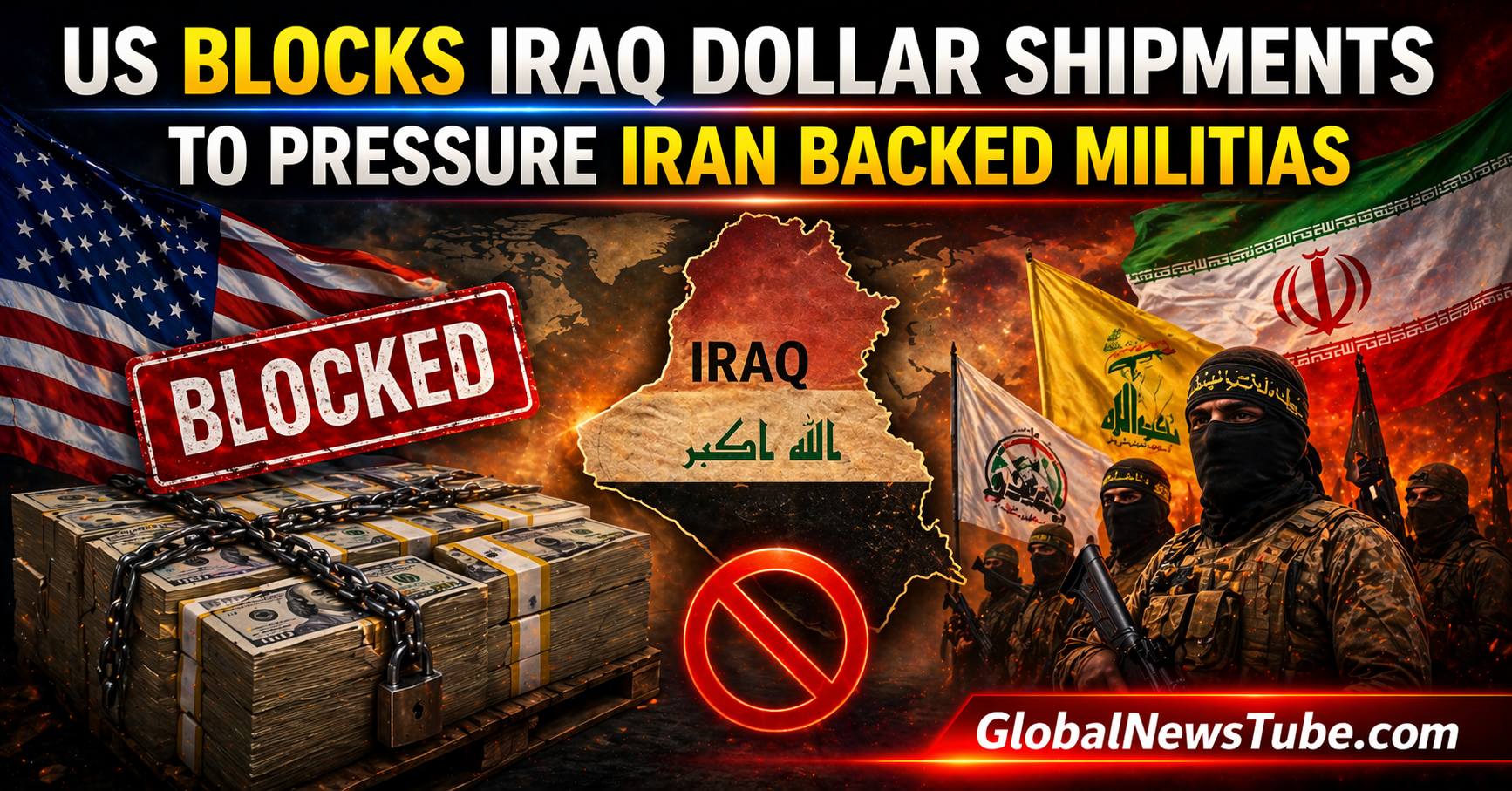
In April 2026, the United States blocked nearly $500 million in cash shipments destined for Iraq’s central bank. This move is part of Washington’s broader effort to weaken Iran-backed militias operating in Iraq and to exert financial leverage over Baghdad.
Oil Revenues and Dollar Dependence
Iraq’s economy relies heavily on oil revenues, which are deposited at the Federal Reserve Bank of New York. Since 2003, the U.S. has overseen these funds, authorizing regular shipments of physical U.S. dollars to Iraq’s central bank. These shipments are essential for retail foreign exchange needs such as travel, medical treatment abroad, and overseas education. Blocking them disrupts Iraq’s access to cash liquidity and underscores its dependence on U.S. controlled financial channels.
U.S. Strategic Objectives
The halt in shipments is a calculated geopolitical maneuver. Washington aims to:
- Curtail militia funding by restricting access to hard currency.
- Increase diplomatic leverage over Baghdad by controlling dollar flows.
- Signal consequences by suspending parts of its security cooperation with Iraq’s military.
Iraq Political and Economic Response
Iraq’s central bank reassured citizens that reserves remain sufficient. Politically, Prime Minister Mohammed Shia al-Sudani faces a delicate balancing act. He seeks U.S. support for a second term while avoiding direct confrontation with militias that are formally part of the Popular Mobilisation Forces (PMF). This dual pressure complicates Iraq’s domestic politics and regional alliances.
Regional Fallout
The U.S. decision reverberates across the Middle East:
- Gulf States Concerns: Saudi Arabia, UAE, and Kuwait have protested militia attacks launched from Iraqi territory.
- Escalating Violence: Militias may retaliate with intensified rocket and drone strikes against U.S. and allied facilities.
- War Context: The move coincides with the ongoing U.S. Israel conflict with Iran, amplifying regional instability.
Economic Implications for Iraq
The economic consequences are significant:
- Short-Term Effects: Reduced availability of physical dollars could hinder citizens traveling abroad or paying for medical services.
- Long-Term Dependence: Iraq remains tethered to U.S. controlled financial systems, limiting its economic sovereignty.
- Public Confidence: Any disruption in dollar supply risks undermining trust in Iraq’s financial institutions.
Global Implications
The U.S. decision highlights how financial tools are weaponized in modern geopolitics. By restricting dollar access, Washington reinforces its global influence but risks pushing Iraq toward alternative financial systems, potentially involving China or Russia.
The U.S. blockade of Iraq dollar shipments is more than a financial maneuver it is a geopolitical strategy aimed at weakening Iran backed militias and reshaping Iraq political alignment. While Baghdad insists it has sufficient reserves, the long-term consequences could challenge Iraq stability, deepen regional tensions, and alter global financial dynamics.


