

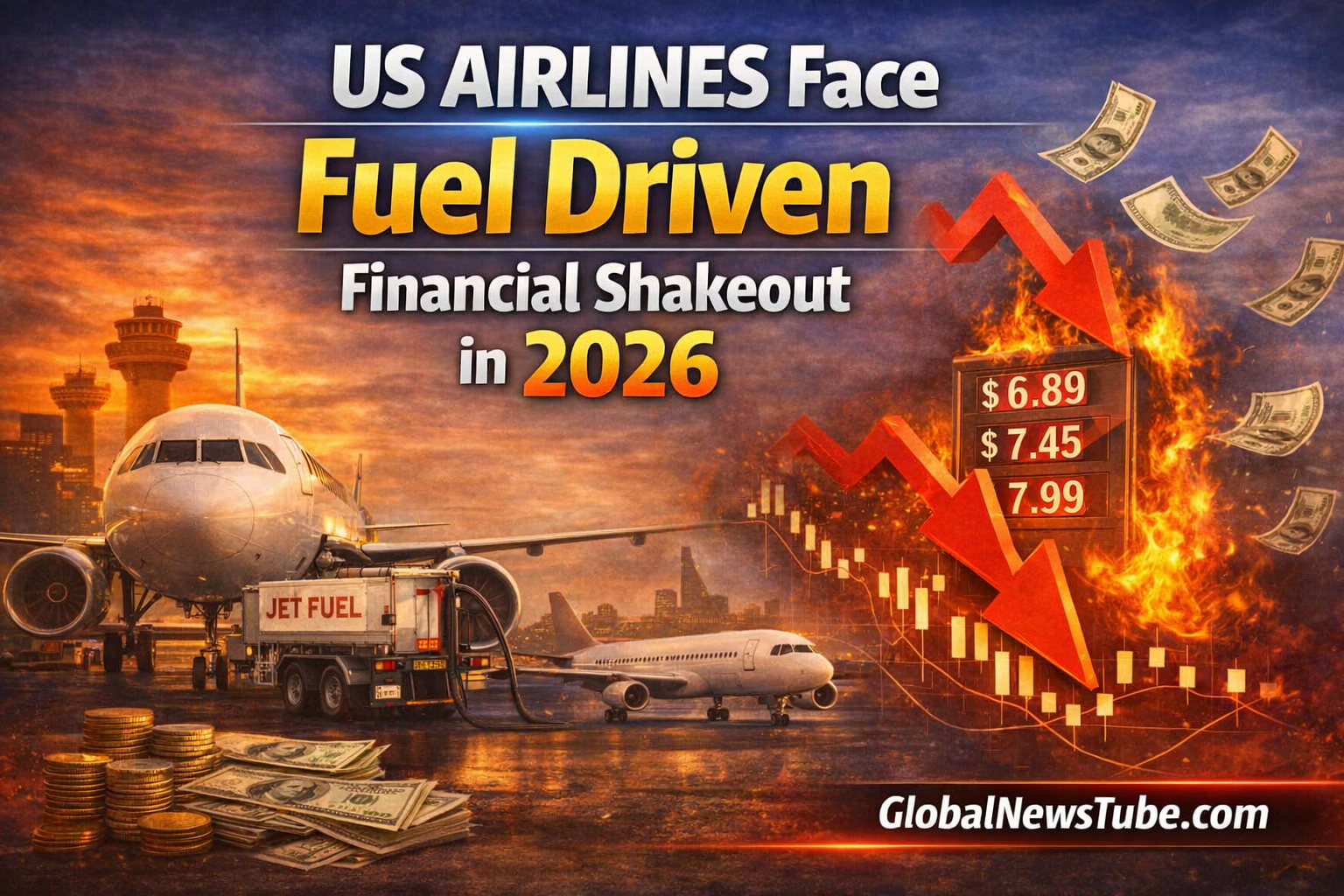
The US airlines fuel crisis 2026 is rapidly reshaping the aviation industry, as soaring jet fuel prices push carriers toward a potential financial shakeout. What was expected to be a profitable year has turned into a period of uncertainty, driven by volatile oil markets and global supply pressures. Rising fuel costs one of the largest expenses for airlines are forcing companies to rethink pricing strategies, reduce capacity, and prepare for structural changes across the industry.
Rising Fuel Costs Trigger Industry Pressure
The airline sector is under intense strain as jet fuel prices surge sharply. Fuel typically represents a significant portion of operating expenses, and sudden increases can quickly erode profit margins. The recent spike in oil prices has made it difficult for airlines to maintain stable pricing, especially since tickets are often sold well in advance. This creates a gap between revenue and actual operating costs, putting financial pressure on carriers.
Airlines are now facing a scenario where cost predictability has weakened, making financial planning more challenging. The volatility in fuel prices has also increased risk exposure, particularly for companies that rely heavily on stable cost structures to maintain profitability.
Financial Shakeout Across the Airline Industry
The ongoing crisis is expected to trigger a financial shakeout in the airline industry, separating stronger carriers from weaker ones. Major airlines with diversified revenue streams and strong financial reserves are better equipped to absorb rising costs. In contrast, smaller and budget airlines, which operate on thin margins, are more vulnerable to financial instability.
This environment is likely to intensify competition while simultaneously forcing weaker players to scale back operations. Some airlines may reduce routes, delay expansion plans, or seek additional financing to remain operational. In more severe cases, the pressure could lead to restructuring or market exits, reshaping the competitive landscape.
Impact on Airfares and Passenger Demand
As fuel costs rise, airlines are increasingly passing these expenses on to consumers through higher ticket prices. This has led to a noticeable increase in airfares, particularly on long haul and high demand routes. However, raising prices presents a challenge, as it can reduce demand, especially among price sensitive travelers.
Consumers are already facing broader economic pressures, and higher travel costs may discourage discretionary spending on flights. This creates a delicate balance for airlines, which must recover rising costs without significantly impacting passenger volumes. The interplay between pricing and demand will be a key factor influencing the industry’s performance in 2026.
Operational Adjustments and Capacity Cuts
To manage rising costs, airlines are making strategic operational adjustments. One of the most common responses is reducing flight capacity, particularly on less profitable routes. By cutting back on flights, airlines can lower fuel consumption and focus on routes with stronger demand.
Additionally, some carriers are postponing expansion plans and reevaluating fleet upgrades. Delays in aircraft deliveries and ongoing supply chain challenges have further complicated efforts to improve fuel efficiency. As a result, airlines are prioritizing short term cost control measures while navigating an uncertain operating environment.
Fuel Strategy and Cost Management
Fuel management strategies are playing a crucial role in how airlines respond to the crisis. Many carriers are exploring ways to optimize fuel usage, improve operational efficiency, and enhance route planning. However, limited use of fuel hedging has left some airlines more exposed to price fluctuations.
In response, companies are focusing on alternative approaches such as maximizing premium services, improving load factors, and leveraging customer loyalty programs to maintain revenue streams. These strategies aim to offset rising costs while preserving competitiveness in a challenging market.
Potential Industry Consolidation
The current financial pressure is likely to accelerate consolidation within the airline industry. Historically, periods of high costs and economic uncertainty have led to mergers, acquisitions, or strategic partnerships. Stronger airlines may seek to expand their market share by acquiring struggling competitors or their assets.
Such consolidation could lead to a more concentrated market, with fewer but more financially stable players. While this may improve efficiency and profitability for airlines, it could also reduce competition in certain regions, potentially leading to higher fares over time.
Long Term Outlook for the Aviation Sector
Despite the immediate challenges, the long term outlook for the airline industry remains cautiously optimistic. Travel demand continues to show resilience, supported by both leisure and business travel recovery. However, sustained high fuel prices could slow growth and limit profitability.
Airlines are expected to continue adapting by investing in fuel efficient aircraft, optimizing operations, and refining pricing strategies. The pace of recovery will largely depend on fuel market stability and broader economic conditions.
The US airlines fuel crisis 2026 is creating a significant financial shakeout across the aviation industry. Rising jet fuel costs are squeezing margins, forcing airlines to raise fares, cut capacity, and rethink operational strategies.
While larger carriers may be able to withstand the pressure, smaller and budget airlines face a more uncertain future. The coming months will be critical in determining how the industry evolves, with potential consolidation and strategic shifts likely to shape the market.
As fuel prices remain volatile, the airline industry is entering a transformative phase that will have lasting implications for both companies and travelers.


