

Iran War Escalation Trump April 2026 Speech
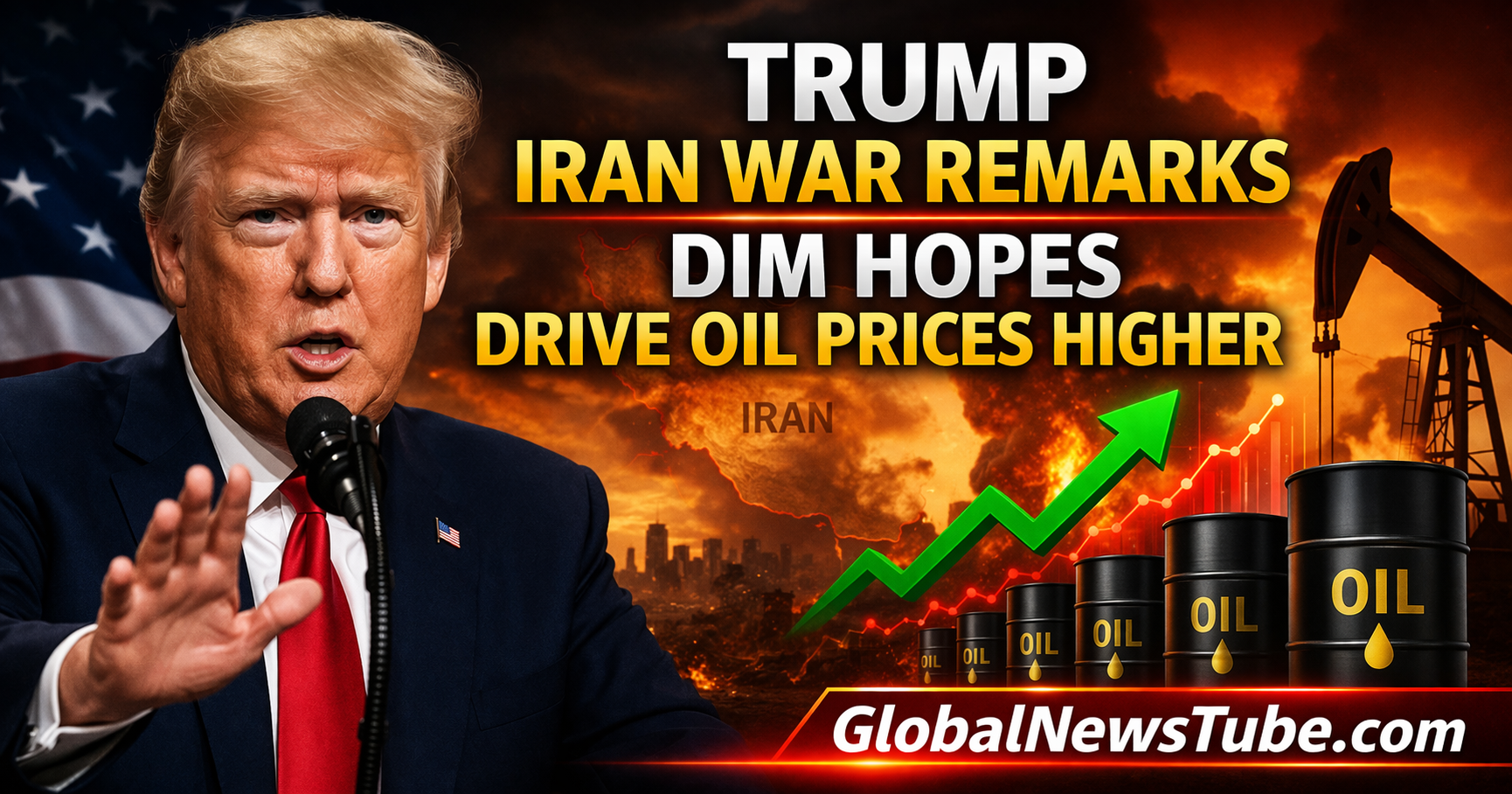
On April 1, 2026, President Donald Trump delivered a speech that reshaped global perceptions of the Iran war. While he assured Americans that military objectives were nearing completion, he simultaneously vowed to intensify strikes against Tehran over the next two to three weeks. This dual message promising closure while signaling escalation has created confusion and anxiety both domestically and internationally. Analysts argue that such rhetoric undermines confidence in a quick resolution, suggesting instead that the conflict may drag on longer than anticipated. The Trump speech has therefore become a pivotal moment in the narrative of the Iran war, dimming hopes for peace and stability.
Oil Prices Surge Amid Escalation Fears
The most immediate consequence of Trump’s speech was felt in global energy markets. Brent crude surged more than 6% in volatile trading, reflecting fears that the Iran war would disrupt oil supplies for an extended period. The Strait of Hormuz, a critical artery for global oil shipments, remains effectively closed to tanker traffic, exacerbating supply chain concerns. In the United States, gasoline prices climbed above $4 per gallon, sparking domestic debates about inflation and household budgets. The phrase oil prices surge has become synonymous with the uncertainty surrounding Trump’s Iran war strategy, as markets brace for prolonged instability.
Impact on Global Markets and Inflation
The ripple effects of rising oil prices extend far beyond energy markets. Global stock futures fell sharply after Trump’s speech, signaling investor unease about the trajectory of the conflict. Inflationary pressures are mounting across both developed and developing economies, with higher fuel costs threatening to erode consumer purchasing power. Countries heavily reliant on Middle Eastern oil, such as Japan, South Korea, and India, face heightened risks to energy security. For these nations, the Iran war is not just a geopolitical crisis it is a direct threat to economic stability. Central banks worldwide may be forced to adjust monetary policies to counter inflation, further complicating the global financial outlook.
Geopolitical Risks in the Middle East
The Middle East conflict has entered a dangerous phase. Joint U.S. Israeli strikes have intensified hostilities, complicating diplomatic efforts and raising the risk of regional spillover. Iran’s defiant response underscores the difficulty of achieving a negotiated settlement. The strategic importance of the Strait of Hormuz amplifies the stakes, as any disruption in oil flow directly impacts global markets. Trump’s rhetoric of escalation undermines confidence in peace talks, leaving diplomats with fewer options to de escalate tensions. The Trump speech has therefore become a turning point in the geopolitical narrative, signaling prolonged instability in the region and raising fears of a wider Middle East conflict.
Energy Security and Supply Chain Disruptions
Beyond immediate price spikes, the Iran war poses long term challenges to energy security. Supply chains remain vulnerable, with tanker traffic halted and refineries under pressure. Nations dependent on imports are scrambling to secure alternative sources, while oil producing countries outside the Middle East are weighing opportunities to fill the gap. The phrase oil prices surge reflects not only current volatility but also the structural risks embedded in global energy markets. Energy companies are revising forecasts, and governments are considering strategic reserves to cushion against prolonged disruptions. The Iran war has thus exposed the fragility of global energy supply chains, highlighting the need for diversification and resilience.
Diplomatic Outlook Can Peace Talks Succeed
Despite ongoing negotiations, the prospects for peace appear dim. Trump’s insistence on escalating military action overshadows diplomatic channels, making it difficult for negotiators to build trust. Analysts argue that the contradiction between promises of a short war and actions suggesting prolonged conflict undermines confidence in U.S. strategy. The Iran war is increasingly seen as a test of global diplomacy, where the balance between military force and negotiation will determine the future of the Middle East. Without credible assurances of de-escalation, peace talks risk becoming symbolic rather than substantive.
Domestic Impact in the United States
At home, rising gasoline prices are fueling political debates. With average costs exceeding $4 per gallon, households face mounting financial pressure. Inflationary concerns are likely to dominate economic discussions, as the Trump speech has tied domestic prosperity directly to the trajectory of the Iran war. Businesses reliant on transportation and logistics are reporting higher costs, which could translate into price increases for consumers. The administration’s challenge lies in balancing foreign policy objectives with the economic realities faced by American citizens. For many, the Iran war is no longer a distant conflict it is a crisis felt at the gas pump and in household budgets.
Future Outlook Volatility Ahead
Looking forward, the global economy must brace for continued volatility. Oil prices are expected to remain elevated as long as the Iran war persists. Stock markets will likely reflect ongoing uncertainty, while inflationary pressures could reshape monetary policies worldwide. The Middle East conflict has become a defining factor in global economic stability, and Trump’s April 2026 speech has ensured that the coming weeks will be marked by turbulence. Analysts warn that unless diplomatic breakthroughs occur, the combination of military escalation and energy disruption will continue to weigh heavily on global markets.
The April 2026 Trump speech has dimmed hopes for a swift end to the Iran war. Instead, it has triggered an oil prices surge, rattled global markets, and intensified geopolitical risks. While Trump insists the conflict will end soon, his vow to escalate strikes suggests prolonged instability. For energy markets, households, and governments alike, the Iran war is no longer just a regional conflict it is a global economic crisis. The coming weeks will test the resilience of economies, the credibility of diplomacy, and the stability of energy markets.


