

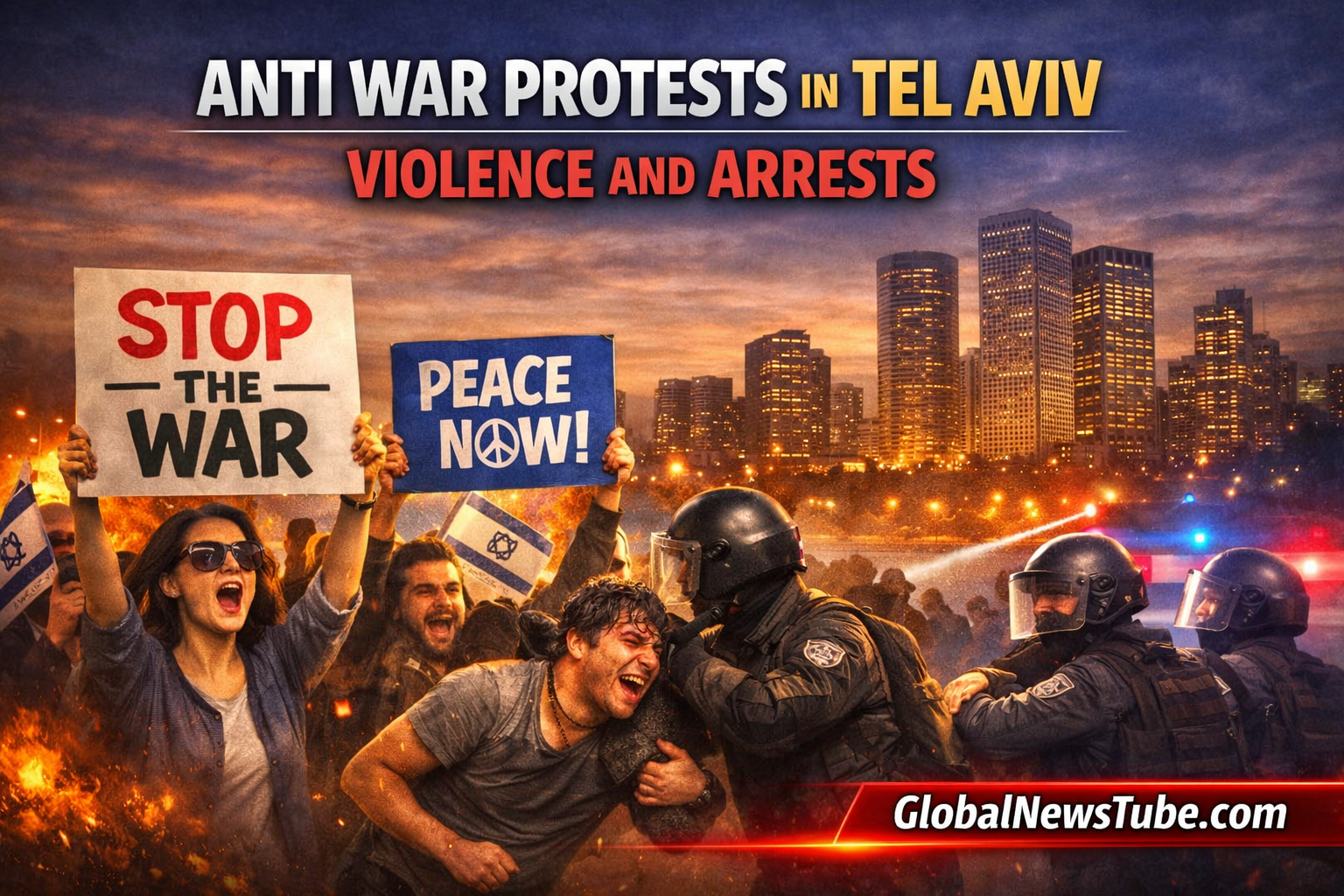
A City in Turmoil
Tel Aviv witnessed a dramatic escalation when an anti war protest against Israel’s joint military campaign with the United States in Iran turned violent. Police detained dozens of demonstrators, citing violations of wartime restrictions and public safety concerns. The incident has sparked debate about civil liberties, democratic values, and the growing anti war sentiment within Israel.
Background of the Protests
The protests emerged as Israel’s military involvement in Iran entered its second month. Citizens gathered in Tel Aviv to demand an end to the war, criticizing the government’s decision to align closely with U.S. military operations. Wartime restrictions on public gatherings had already limited demonstrations, but frustration boiled over as hundreds of people defied the ban.
Police Response and Arrests
Authorities moved swiftly to disperse the crowds. At least 18 protesters were detained, though eyewitnesses claim the number was higher. Police justified their actions by pointing to wartime regulations and escalating violence. Videos circulating online showed officers using force to break up the demonstration, fueling anger among activists and human rights groups.
Why the Protests Turned Violent
Several factors contributed to the escalation:
- Frustration with wartime restrictions: Citizens feel their democratic rights are being curtailed.
- Anger at government policies: Many Israelis oppose the war, fearing it will destabilize the region further.
- Heavy police presence: The use of batons, water cannons, and mounted units inflamed tensions.
- Youth involvement: Younger protesters, already disillusioned with politics, clashed directly with police.
Public Sentiment in Israel
The protests reflect deep divisions within Israeli society. While some citizens support the government’s military actions, others believe the war is unnecessary and harmful. The arrests in Tel Aviv may deepen resentment, as critics argue that silencing dissent undermines democratic values. For many, the protests are not just about foreign policy but about the right to speak freely in times of crisis.
Regional and Global Context
The Tel Aviv protests are part of a broader wave of anti war sentiment across the region. Neighboring countries are watching closely, concerned that Israel’s domestic unrest could spill over into regional instability. Globally, human rights organizations have condemned wartime restrictions on protests, urging governments to respect freedom of expression even during conflict.
Historical Context of Israeli Protests
Israel has a long history of public demonstrations, from peace marches in the 1980s to protests against government corruption in recent years. However, wartime protests are particularly sensitive. During past conflicts, authorities often imposed restrictions, but the scale of arrests in Tel Aviv suggests a harsher approach this time. This raises questions about whether Israel’s democratic traditions are being eroded under the pressure of war.
Implications for Israel Democracy
The violent dispersal of protests highlights the tension between national security and civil liberties. Israel has long prided itself on being a democracy in the Middle East, but the suppression of anti war demonstrations could damage its reputation. The arrests may discourage future protests, limiting public debate on critical national issues. Critics argue that democracy cannot thrive if dissent is silenced during wartime.
Voices of Activists and Human Rights Groups
Activists in Tel Aviv have condemned the police response, calling it excessive and unjustified. Human rights groups argue that wartime restrictions should not override fundamental freedoms. Some protesters vowed to continue demonstrating despite the risks, framing their struggle as part of a larger fight for democracy and peace. International organizations have urged Israel to reconsider its approach, warning that repression could fuel further unrest.
Psychological and Social Impact
Beyond the political implications, the protests have a profound psychological impact on citizens. Living under wartime restrictions creates stress and uncertainty, while witnessing violent clashes erodes trust in institutions. For younger generations, the experience of being silenced may shape their political views for years to come. The protests are not only about policy but about identity, belonging, and the future of Israeli society.
The Role of Media and Technology
Social media played a crucial role in documenting the protests. Videos of police detaining demonstrators spread rapidly, sparking outrage both domestically and internationally. Technology has become a double edged sword while it empowers activists to share their message, it also allows authorities to monitor and track dissent. The digital battlefield is now as important as the streets of Tel Aviv.
Regional Implications
The unrest in Tel Aviv could have ripple effects across the Middle East. Iran may use the protests to argue that Israeli citizens themselves oppose the war, undermining the government’s legitimacy. Meanwhile, Arab states may view the crackdown as evidence of Israel’s internal fragility. The protests thus carry geopolitical weight, influencing perceptions far beyond Israel’s borders.
A Nation at a Crossroads
The detention of dozens of protesters in Tel Aviv underscores the growing tension between citizens and the state during wartime. As Israel continues its military campaign with the U.S. against Iran, domestic opposition is likely to intensify. The challenge for the government will be to maintain security while respecting democratic freedoms a balance that appears increasingly difficult to achieve. The protests are not just about war; they are about the soul of Israeli democracy and the future of civil liberties in times of conflict.


