

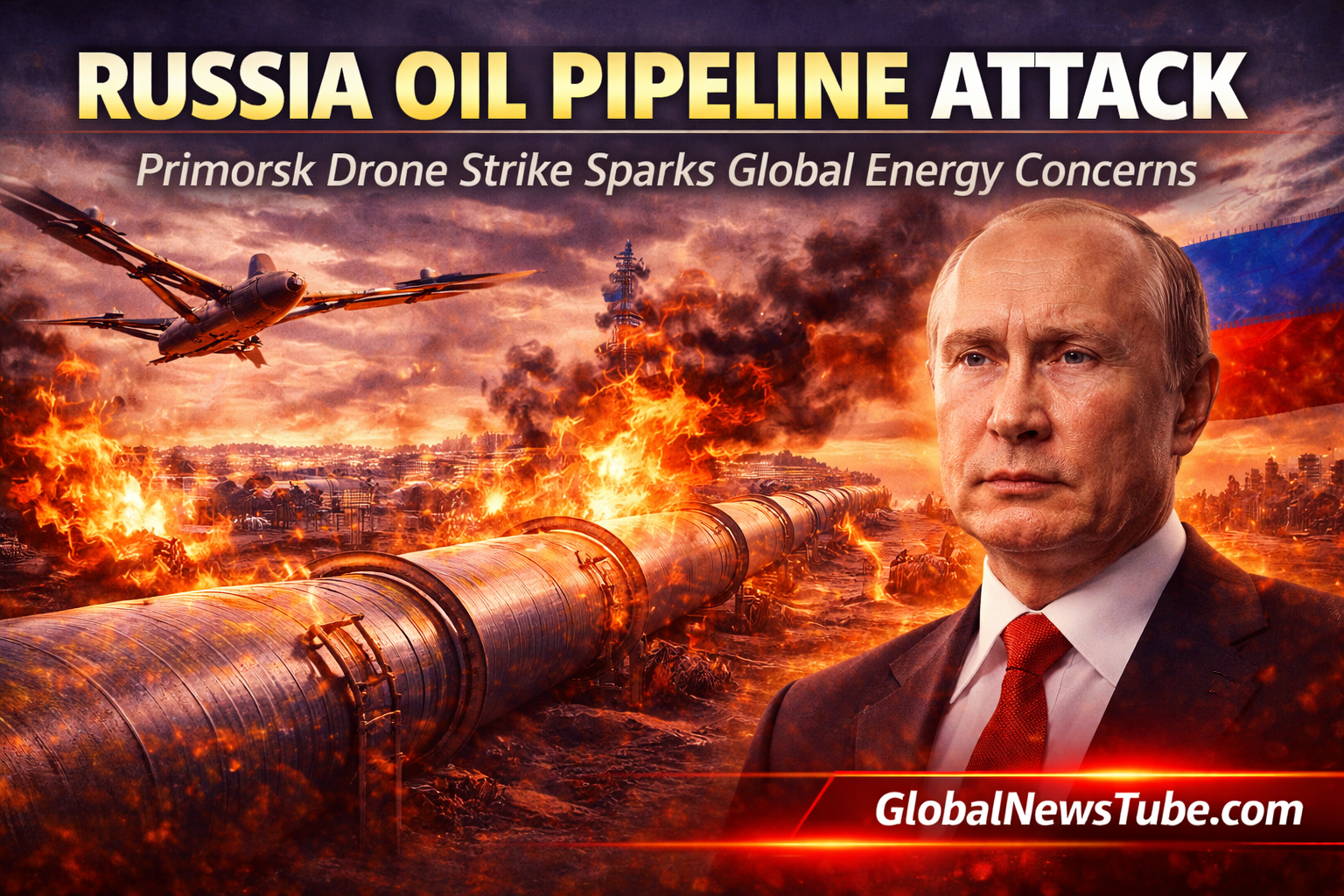
On April 5, 2026, a Ukrainian drone strike damaged an oil pipeline at Russia’s Baltic Sea port of Primorsk. The incident ignited a fire but caused no casualties, according to Governor Alexander Drozdenko. This event highlights Ukraine’s intensified campaign against Russian energy infrastructure, aiming to weaken Moscow’s revenue streams and disrupt its military logistics. The Russia oil pipeline attack has raised alarms across global energy markets, emphasizing vulnerabilities in critical supply chains. For analysts and policymakers, the strike represents more than a localized incident it is a signal of how modern warfare increasingly targets economic lifelines rather than just military assets.
Primorsk as a Strategic Oil Export Hub
Primorsk is one of Russia’s largest oil terminals, handling a significant portion of crude exports to Europe. Its strategic location on the Baltic Sea makes it a vital artery for Russian energy flows. Any disruption at Primorsk directly impacts Baltic Sea oil exports, creating ripple effects across European energy security and global oil prices. Historically, Primorsk has been a cornerstone of Russia’s energy trade, with pipelines feeding into the port from inland oil fields. The infrastructure is designed to move millions of barrels of crude annually, and its proximity to European markets makes it indispensable. When Ukraine strikes such a hub, the consequences extend far beyond Russia’s borders, affecting shipping companies, insurers, and governments that rely on stable energy flows.
Details of the Drone Strike
Governor Alexander Drozdenko confirmed that Ukrainian drones targeted the port, damaging a section of the pipeline. While the fire was contained quickly, the attack demonstrated Ukraine’s ability to strike deep into Russian territory. Russia claimed to have shot down 19 drones in the Leningrad region during the assault, but the damage at Primorsk shows that defenses remain vulnerable. The incident also highlights the growing sophistication of Ukrainian drone technology. Unlike earlier strikes that focused on border regions, this attack penetrated heavily defended airspace, raising questions about Russia’s ability to secure critical infrastructure. For local residents, the fire was a reminder of how the war has expanded beyond frontlines, touching civilian and industrial areas once thought safe.
Ukraine Strategy Targeting Russian Energy Infrastructure
Ukraine has increasingly relied on drones to strike Russian energy facilities. These attacks aim to disrupt logistics, reduce export revenues, and weaken Russia’s ability to finance its war effort. The Primorsk drone strike is part of a broader campaign that has previously targeted refineries, storage depots, and pipelines. By focusing on energy infrastructure, Ukraine leverages asymmetric tactics. Conventional battles may favor Russia’s larger military, but drone strikes allow Ukraine to inflict economic damage with relatively low cost and high impact. This strategy also serves a symbolic purpose demonstrating to both domestic and international audiences that Ukraine can reach deep into Russian territory. Each successful strike undermines Russia’s narrative of invulnerability and forces Moscow to divert resources to defense rather than offense.
Economic Impact of the Attack
Global oil markets reacted with caution. Any disruption in Russian exports can trigger price spikes, especially given the scale of Primorsk’s operations. Traders closely monitor such incidents, as they influence futures contracts and supply chain stability. Although Europe has diversified away from Russian energy since 2022, it remains sensitive to disruptions in Russian energy infrastructure. The Primorsk incident reinforces the need for alternative supply routes and renewable energy investments. Maritime insurers may also raise premiums for tankers operating in the Baltic Sea. Increased risk assessments could affect shipping costs, further complicating energy flows. For Russia, the economic impact is twofold immediate repair costs and long-term reputational damage. Buyers may begin to question the reliability of Russian exports, potentially accelerating the shift toward other suppliers.
Political and Military Reactions
Moscow emphasized its air defense success, claiming multiple drones were intercepted. However, the visible damage at Primorsk undermines confidence in Russia’s protective capabilities. Kyiv framed the attack as a legitimate strike against Russia’s war economy. By hitting energy infrastructure, Ukraine signals to allies that it is actively undermining Moscow’s ability to sustain prolonged conflict. Western observers view these strikes as part of Ukraine’s broader strategy to weaken Russia economically. Some analysts warn of escalation risks if attacks expand to other critical infrastructure. Politically, the incident may harden Russia’s resolve while simultaneously strengthening Ukraine’s case for continued Western support. The narrative of Ukraine striking at the heart of Russia’s economy resonates with allies who see energy as a key lever in the conflict.
Future Outlook
The Primorsk incident may encourage Ukraine to continue targeting energy hubs. Russia, in turn, could intensify retaliatory strikes, raising the risk of broader escalation. Repeated attacks on Russian energy infrastructure could erode Moscow’s export capacity, reducing revenues and weakening its geopolitical leverage. For global markets, this means sustained volatility and renewed focus on energy diversification. Analysts predict that if Ukraine maintains this strategy, Russia may be forced to invest heavily in air defense systems around critical infrastructure, diverting funds from other military priorities. Meanwhile, Europe and Asia will likely accelerate efforts to secure alternative energy sources, from Middle Eastern suppliers to renewable projects. The long-term implication is a reshaping of global energy flows, with Russia potentially losing its dominance in certain markets.
The Russia oil pipeline attack at Primorsk highlights the intersection of military strategy and economic warfare. As Ukraine intensifies its drone campaign, Russia faces mounting pressure on its energy infrastructure. The incident underscores the fragility of global energy supply chains and the geopolitical risks tied to the Ukraine Russia war 2026. For policymakers, the lesson is clear energy infrastructure is no longer just an economic asset but a battlefield target. The Primorsk strike will likely be remembered as a turning point in how modern conflicts are fought not only with tanks and missiles but with drones aimed at the arteries of national economies.


