

Escalation in the Gulf
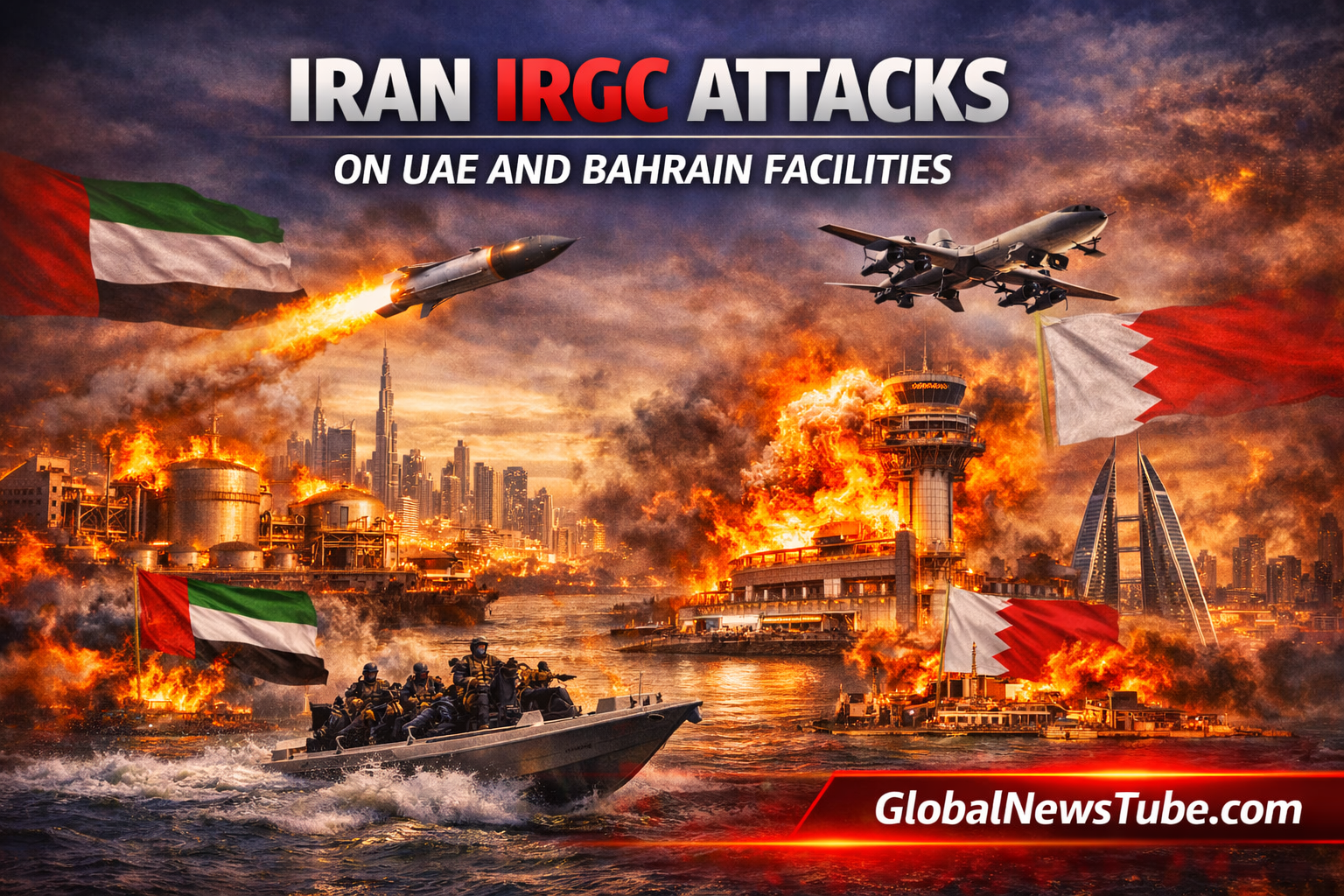
The Middle East has once again become the focal point of global concern as Iran’s Islamic Revolutionary Guard Corps (IRGC) claimed responsibility for drone and missile attacks on aluminium facilities in the United Arab Emirates and Bahrain. These strikes, which Iran linked to U.S. military operations in the Gulf, mark a dangerous escalation in the ongoing confrontation between Iran, the United States, and Israel. The attacks not only threaten regional stability but also carry significant implications for global trade and energy security.
The Nature of the Attacks
The IRGC targeted Emirates Global Aluminium (EGA) in Abu Dhabi and Aluminium Bahrain (Alba), two of the largest aluminium producers in the region. The strikes injured several workers and caused structural damage, disrupting operations at facilities that are vital to the global aluminium supply chain. Iran justified the attacks by claiming that these facilities were indirectly linked to U.S. military activities in the Gulf, framing them as retaliation for American and Israeli strikes on Iranian infrastructure.
Economic Consequences
The Gulf region contributes between 4–9% of global aluminium production, making these facilities critical to industries worldwide. Aluminium is essential for construction, automotive manufacturing, aerospace, and electronics. Any disruption in supply from the UAE and Bahrain could lead to price increases and shortages, affecting economies far beyond the Middle East. The attacks also highlight the vulnerability of global supply chains to geopolitical conflicts, as even localized strikes can have far reaching consequences.
Regional Security Fallout
The attacks have triggered heightened security measures across the Gulf states.
- Saudi Arabia reported intercepting multiple drones aimed at its territory, preventing further damage.
- Kuwait activated air defense systems to shoot down incoming drones, while air raid sirens repeatedly sounded across the country.
- Oman condemned drone strikes on its territory, warning that continued escalation could destabilize the entire region.
These developments underscore the vulnerability of the Gulf Cooperation Council (GCC) states, which are increasingly caught in the crossfire of the U.S. Israel war against Iran.
Strategic Implications for the United States
For Washington, the attacks demonstrate Iran’s ability to strike facilities tied to American interests, complicating military operations in the Gulf. The U.S. must now contend with the reality that Iran can retaliate against its allies’ infrastructure, raising the stakes of continued military engagement. The strikes also highlight the limits of deterrence, as Iran has shown it can withstand pressure and respond with force.
Iran Retaliation Strategy
For Iran, the IRGC’s actions serve as both retaliation and deterrence. By targeting critical infrastructure in allied Gulf states, Tehran signals that it can expand the battlefield beyond its borders. This strategy aims to pressure Gulf governments to reconsider their alignment with U.S. military bases and operations. However, it also risks provoking stronger responses from Washington and Tel Aviv, potentially escalating the conflict further.
The Position of Gulf States
The UAE, Bahrain, Saudi Arabia, Kuwait, and Oman now face difficult choices. Their close ties with the U.S. provide security guarantees but also expose them to Iranian retaliation. The attacks raise questions about the sustainability of their current foreign policy strategies. Should they continue to host U.S. military bases and risk further strikes, or should they seek a more balanced approach to avoid becoming direct targets in the conflict
Broader Middle East Escalation
The IRGC’s attacks are part of a wider pattern of escalation in the region. The U.S. Israel war against Iran has already led to strikes on Iranian infrastructure, prompting Tehran to retaliate against Gulf states. This cycle of action and reaction threatens to spiral into a broader regional conflict, drawing in multiple actors and destabilizing the Middle East. The consequences would be severe, not only for regional security but also for global trade and energy markets.
Global Trade and Energy Security
Beyond aluminium, the Gulf is a critical hub for oil and gas exports. Any escalation that disrupts shipping routes or energy facilities could have devastating effects on global markets. The temporary suspension of operations at Oman’s Salalah port by shipping giant Maersk illustrates the fragility of global logistics in the face of regional conflict. If the situation worsens, the world could face higher energy prices, supply shortages, and economic instability.
A Dangerous Turning Point
The Iran IRGC attacks on UAE and Bahrain aluminium facilities mark a dangerous turning point in the U.S. Israel war against Iran. With global aluminium supply chains threatened and Gulf states increasingly drawn into the conflict, the stakes for Middle East diplomacy and international trade are higher than ever. The coming weeks will determine whether this escalation leads to broader regional instability or forces renewed efforts at negotiation. For now, the Gulf remains on edge, and the world watches closely as tensions continue to rise.


