


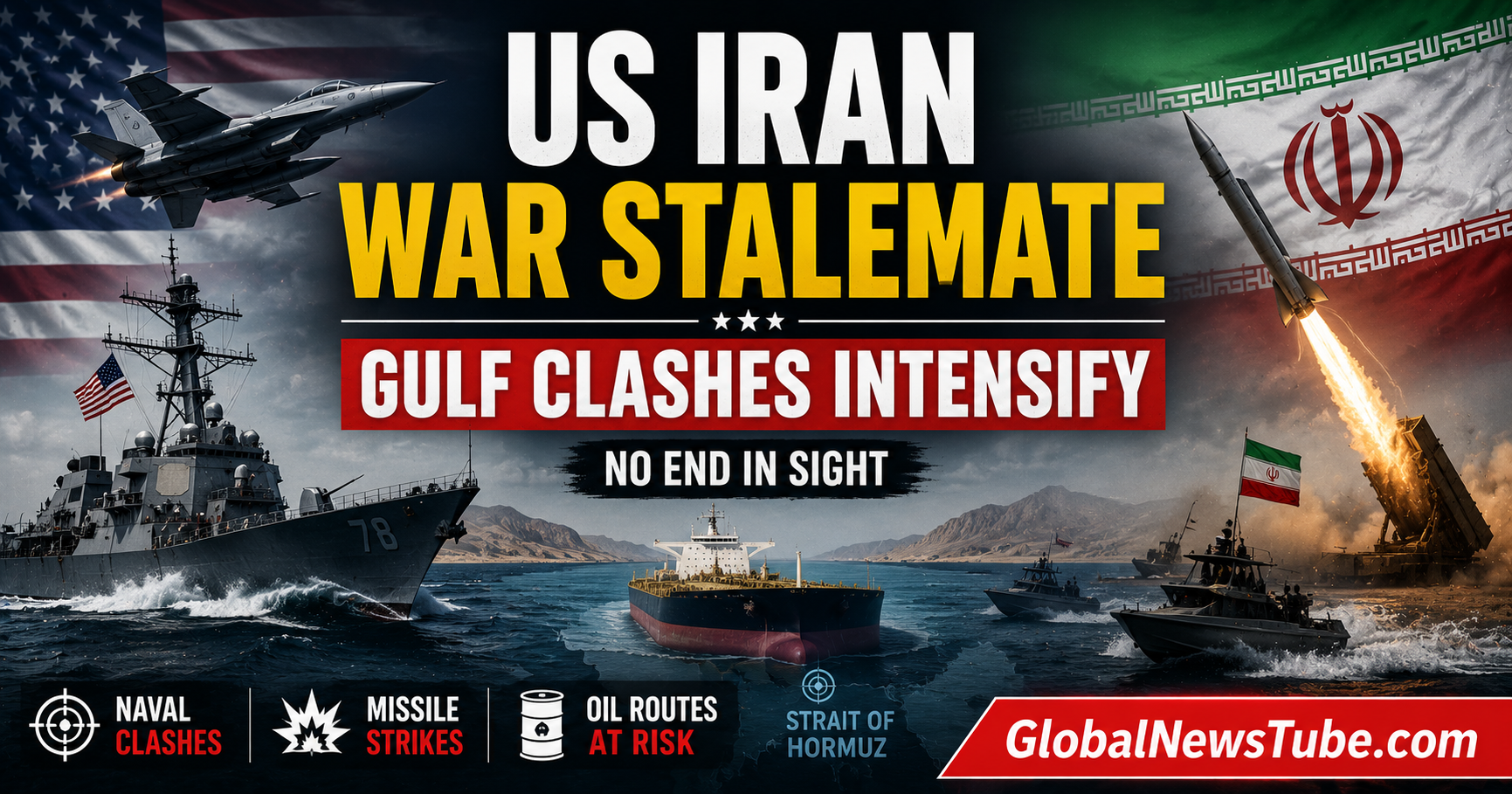
Escalating Gulf Clashes Despite Ceasefire
The US Iran war 2026 shows no clear signs of ending as renewed Gulf clashes continue to undermine fragile diplomatic efforts. Despite a ceasefire agreement reached weeks earlier, both sides have resumed military engagements, particularly in the strategically vital Strait of Hormuz. Reports indicate that the United States and Iran have exchanged fire in recent days, highlighting the instability of the truce and the deep mistrust between the two nations.
The situation has worsened due to repeated accusations from both sides of ceasefire violations. Iran claims the United States has continued aggressive military operations, while Washington insists its actions are defensive or retaliatory. These conflicting narratives have made it increasingly difficult to establish a path toward peace, reinforcing the ongoing Middle East tensions and prolonging uncertainty in the region.
Strategic Importance of the Strait of Hormuz
At the center of the conflict lies the Strait of Hormuz crisis, one of the world most critical maritime chokepoints. A significant portion of global oil and gas supplies passes through this narrow waterway, making it a focal point of both economic and military importance.
Iran attempts to restrict or control shipping through the strait have intensified the conflict, with reports suggesting that non Iranian vessels face disruptions and heightened risks. In response, the United States has attempted to maintain a naval presence and enforce security measures to keep the route open. However, clashes between naval forces and attacks on commercial vessels have made safe passage increasingly difficult.
This ongoing struggle for control has not only escalated military tensions but also threatened global energy stability, further complicating diplomatic negotiations.
Stalled Peace Talks and Diplomatic Deadlock
Efforts to end the US Iran war 2026 have largely stalled, with both sides unwilling to compromise on key demands. While the United States has proposed a framework for peace, including discussions on Iran nuclear program and regional influence, Tehran has shown reluctance to fully engage under current conditions.
Recent assessments suggest that Iran could withstand a prolonged naval blockade, weakening Washington leverage and making economic pressure less effective. This has created a diplomatic deadlock, where neither side is able to force a decisive outcome nor willing to make concessions.
As a result, negotiations remain fragile and uncertain, with intermittent talks failing to produce meaningful progress. The lack of trust and the continuation of military actions have made it difficult to establish a stable foundation for peace.
Regional Impact and Rising Middle East Tensions
The ongoing conflict has had a profound impact on the broader Middle East, increasing instability and drawing in regional actors. Countries such as the United Arab Emirates have reported missile and drone attacks linked to the conflict, highlighting the spillover effects beyond the immediate battlefield.
Gulf nations remain cautious about deeper involvement, balancing their security concerns with the risk of escalation. Many have strengthened their defenses while avoiding direct participation in the conflict.
The prolonged nature of the war has also disrupted regional economies, strained alliances, and created new security challenges. As Middle East tensions continue to rise, the possibility of a broader regional conflict remains a significant concern.
Global Oil Disruption and Economic Consequences
One of the most critical consequences of the conflict has been global oil disruption. The Strait of Hormuz is a key artery for energy supplies, and any instability in the region has immediate effects on global markets. Disruptions caused by military clashes, shipping restrictions, and security concerns have led to volatility in oil prices and supply chains.
The economic impact extends beyond energy markets, affecting international trade, transportation, and investment. Countries heavily dependent on oil imports are particularly vulnerable, facing increased costs and potential shortages. This has added pressure on global economies already dealing with inflation and post-conflict recovery challenges.
As the conflict drags on, the risk of prolonged economic instability grows, making a resolution even more urgent for the international community.
Trump Foreign Policy and the Path Forward
Trump foreign policy has played a central role in shaping the trajectory of the US Iran war 2026. The administration reliance on military pressure, sanctions, and assertive rhetoric has contributed to both the escalation and persistence of the conflict. While these strategies were intended to force Iran into compliance, they have also hardened positions and reduced the likelihood of compromise.
The current stalemate reflects the limitations of this approach, as neither side has achieved a decisive advantage. Moving forward, resolving the conflict will likely require a shift toward more balanced diplomacy, increased international involvement, and confidence building measures.
Ultimately, the future of the conflict will depend on whether both nations can move beyond confrontation and engage in meaningful negotiations. Until then, the combination of Gulf clashes, strategic competition, and unresolved grievances will continue to define the US Iran war 2026 and its global implications.