


The Iran War and Its Immediate Consequences
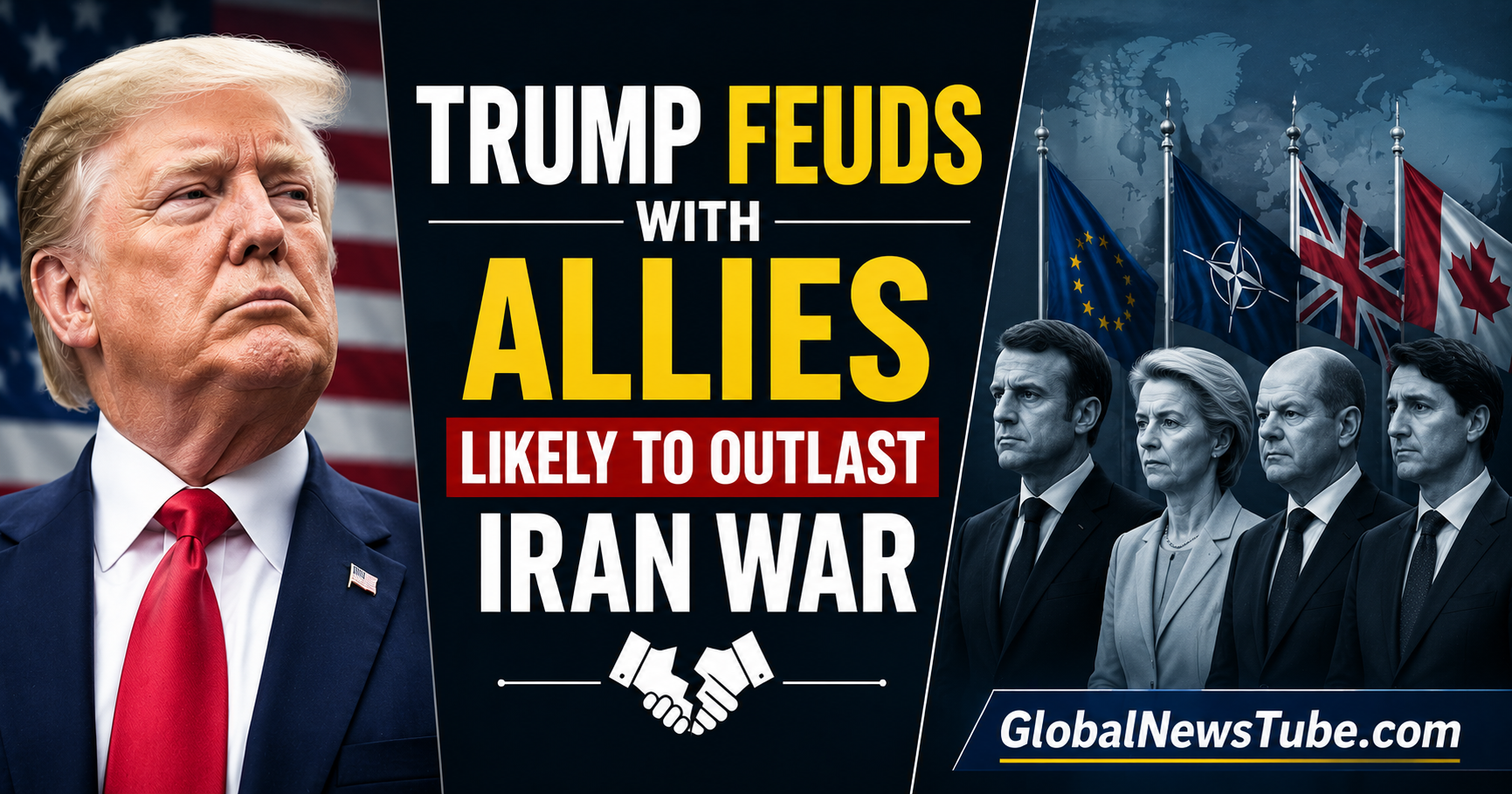
The Iran war 2026 has left a deep mark on global politics, even as active fighting begins to subside. What started as a rapid military confrontation between the United States and Iran quickly escalated into a broader geopolitical crisis affecting energy markets, global security, and diplomatic relations. Although a fragile ceasefire has reduced large scale violence, tensions remain high due to unresolved issues such as nuclear policy, sanctions, and regional influence. Under Trump foreign policy, the United States adopted an aggressive and largely unilateral approach, relying on military strikes and economic pressure to force Iran into negotiations. While this strategy may have achieved short-term tactical gains, it also triggered long-term consequences that extend far beyond the battlefield, particularly in terms of US allies tensions and global trust in American leadership.
Growing Rift Between the U.S. and Its Allies
One of the most significant outcomes of the conflict has been the widening gap between Washington and its traditional allies. Throughout the Iran war 2026, several key partners expressed frustration over what they saw as a lack of consultation and coordination. Trump foreign policy often prioritized rapid decision making over alliance consensus, leaving countries in Europe and Asia feeling sidelined. This approach contributed directly to US allies tensions, as governments questioned whether the United States still valued collective security. Decisions such as troop withdrawals from strategic regions and sudden policy shifts created uncertainty among allies who depend on American support. Over time, these actions have eroded confidence and made diplomatic cooperation more difficult, reinforcing the perception of a US credibility crisis on the global stage.
NATO Relations Under Strain
NATO relations have been particularly affected by the policies pursued during and after the conflict. The alliance, which has long served as a cornerstone of Western security, now faces internal divisions fueled by disagreements over burden-sharing and strategic priorities. Trump repeated criticism of NATO members for not spending enough on defense has intensified these tensions. At the same time, moves to reduce US troop presence in Europe have raised concerns about the future of transatlantic security. As a result, several European nations are reconsidering their dependence on the United States and exploring ways to strengthen their own defense capabilities. This shift reflects a broader trend in which NATO relations are evolving from a US dominated structure to a more balanced but uncertain partnership.
Europe Push for Strategic Independence
In response to the changing dynamics, European countries are increasingly pursuing strategic independence. The Iran war 2026 served as a wake up call, highlighting the risks of relying too heavily on a single ally for security. Governments across the European Union are now investing in their own military capabilities, expanding defense budgets, and enhancing regional cooperation. This effort is not about replacing the United States entirely but about reducing vulnerability in times of crisis. The push for independence also aligns with the broader global power shift, as nations seek to assert greater control over their own security and foreign policy decisions. While progress may be gradual, the direction is clear Europe is preparing for a future in which it must play a more autonomous role on the world stage.
Global Power Shift and Rising Rivals
As US allies tensions continue to grow, rival powers are taking advantage of the situation to expand their influence. China and Russia, in particular, are positioning themselves as alternative partners in a rapidly changing international system. This marks a significant global power shift, moving away from a unipolar world dominated by the United States toward a more complex multipolar order. Countries in Asia, the Middle East, and Africa are increasingly open to diversifying their alliances, seeking economic and security partnerships beyond Washington. This trend not only challenges U.S. dominance but also reshapes the balance of power in key regions. The Iran war 2026 has accelerated this transformation, creating opportunities for competitors to strengthen their geopolitical standing.
Long-Term Impact on US Credibility
The most enduring consequence of the conflict may be the US credibility crisis that has emerged in its aftermath. Trust is a fundamental component of international relations, and once it is weakened, it can take years to rebuild. Trump foreign policy, characterized by unpredictability and unilateral action, has made allies more cautious in their dealings with the United States. This hesitation could affect future cooperation on everything from military operations to trade agreements. As the world adjusts to a new geopolitical reality, the United States faces the challenge of restoring confidence among its partners while navigating an increasingly competitive global environment. Ultimately, the legacy of the Iran war 2026 will not be defined solely by its military outcomes but by its lasting impact on alliances, diplomacy, and the global balance of power.
SEO Slug: trump-feuds-allies-iran-war-global-power-shift-2026
Meta Description: Trump foreign policy during Iran war 2026 strains US allies, weakens NATO relations, and drives a global power shift with lasting credibility challenges.