


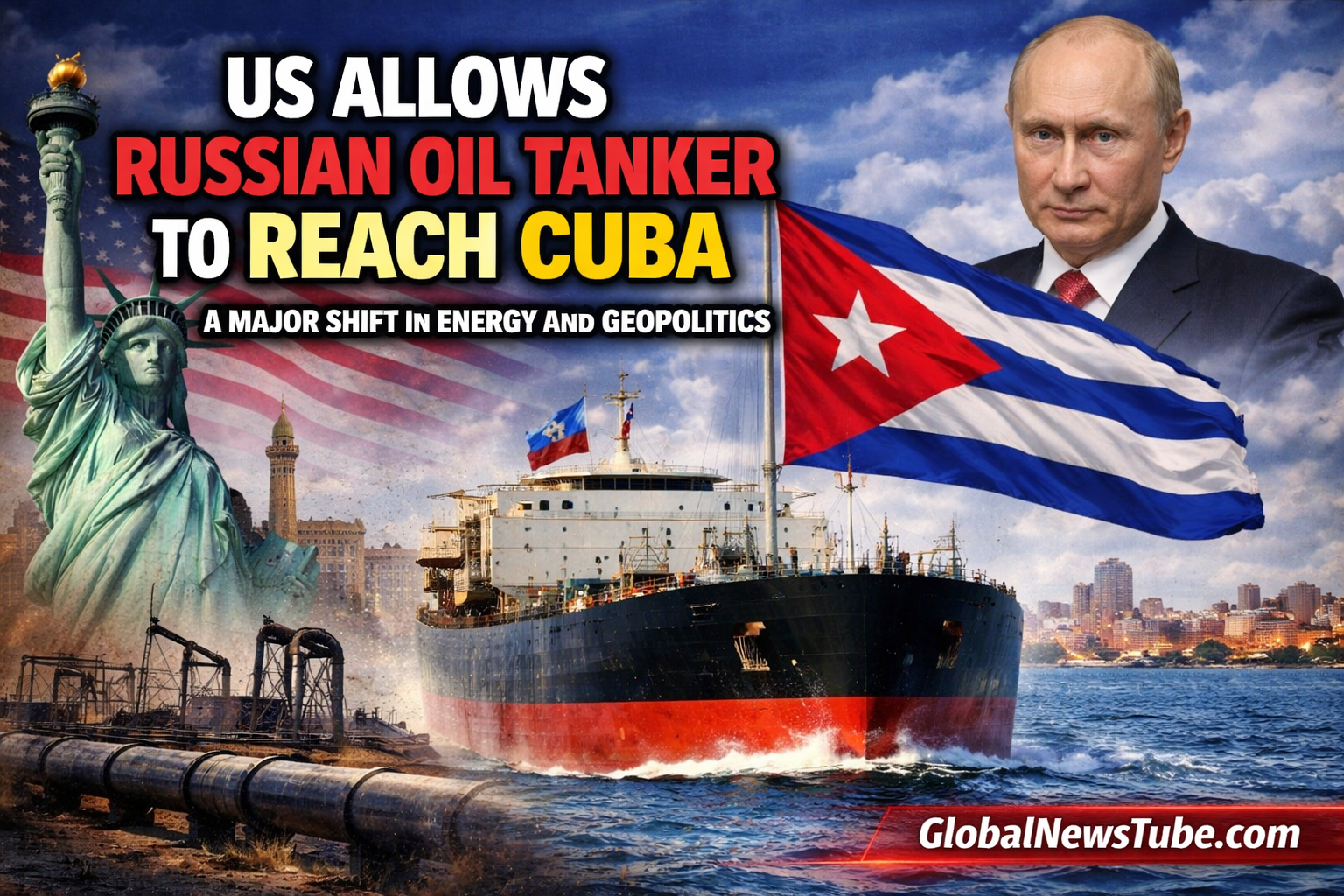
The decision that the United States allows a Russian oil tanker to reach Cuba marks a significant turning point in global energy politics and US foreign policy. This unexpected move comes at a time when Cuba is facing one of the worst energy crises in its history, with widespread blackouts, fuel shortages, and severe disruptions to daily life. The development highlights how humanitarian concerns and geopolitical realities are forcing even long standing adversaries to reconsider rigid policies. As global tensions rise and energy markets remain volatile, the fact that the US allows a Russian oil tanker to reach Cuba reflects a complex balancing act between political pressure and practical necessity.
Cuba Deepening Energy Crisis
Cuba’s energy crisis has been building for months, driven largely by restrictions on oil imports and declining support from traditional allies. The island nation has struggled to secure consistent fuel supplies, resulting in frequent nationwide power outages and major disruptions to essential services such as healthcare and transportation. Reports indicate that Cuba had not received a significant oil shipment for nearly three months, pushing its already fragile economy to the brink. The shortage of fuel has affected every aspect of life, from public transportation systems grinding to a halt to hospitals operating under emergency conditions. In this context, the arrival of a Russian oil tanker provides a much needed lifeline, even if only temporary.
Russian Oil Tanker Provides Temporary Relief
The tanker, carrying hundreds of thousands of barrels of crude oil, represents the first major delivery of fuel to Cuba in months. This shipment is expected to help stabilize the country’s energy grid and reduce the severity of blackouts, at least in the short term. While the amount of oil is not enough to solve Cuba’s long term energy challenges, it can sustain the country for several weeks under strict rationing measures. The significance of this delivery lies not only in its immediate impact but also in what it signals about changing geopolitical dynamics. The fact that the US allows a Russian oil tanker to reach Cuba suggests a shift in approach, even if it is limited and temporary.
Why the US Allowed the Tanker
There are several reasons why the United States may have chosen to permit this shipment despite its broader strategy of applying pressure on Cuba. One of the most important factors is humanitarian concern. The worsening conditions in Cuba have raised alarms about the well being of ordinary citizens, particularly in areas such as healthcare and basic infrastructure. Allowing the tanker to proceed helps prevent a deeper humanitarian crisis that could have broader regional implications. At the same time, the decision avoids the risk of direct confrontation with Russia, which could have escalated tensions significantly. Intercepting or blocking a Russian tanker might have led to a dangerous geopolitical standoff, something Washington appears keen to avoid.
Impact of Global Energy Pressures
Another key factor influencing the decision is the state of global energy markets. Ongoing geopolitical tensions and supply disruptions have made oil a highly sensitive and strategic resource. In such an environment, enforcing strict blockades becomes more complicated, especially when it risks exacerbating humanitarian crises or triggering international conflict. By allowing this shipment, the US demonstrates a degree of flexibility in its energy and foreign policy, adapting to changing global conditions while maintaining its broader strategic objectives.
Russia’s Strategic Involvement
Russia’s role in this situation is equally important. By supplying oil to Cuba, Moscow is reinforcing its presence and influence in the Caribbean region, an area traditionally considered within the US sphere of influence. This move also underscores Russia’s willingness to support its allies despite international pressure and sanctions. The delivery of oil to Cuba can be seen as both a humanitarian gesture and a strategic maneuver, strengthening ties between the two nations while subtly challenging US authority in the region. The involvement of Russia adds another layer of complexity to an already intricate geopolitical situation.
Geopolitical Implications
The broader implications of this development extend far beyond Cuba. The decision that the US allows a Russian oil tanker to reach Cuba reflects the delicate balance between confrontation and cooperation in US Russia relations. While the two countries remain strategic rivals, this incident shows that there are limits to how far tensions can be pushed, particularly when humanitarian and energy concerns are at stake. It also highlights the evolving nature of global energy politics, where traditional alliances and policies are increasingly shaped by immediate needs and practical considerations.
What This Means for Cuba
For Cuba, the arrival of the tanker offers temporary relief but does not resolve the underlying issues. The country remains heavily dependent on foreign oil and continues to face economic challenges compounded by sanctions and limited domestic production capacity. While the shipment may ease blackouts and improve access to fuel in the short term, long term solutions will require structural changes and more stable energy partnerships. Without such changes, Cuba is likely to remain vulnerable to future crises.
Future Outlook
Looking ahead, the situation remains uncertain. It is possible that additional shipments could be allowed if conditions in Cuba do not improve, or if global energy pressures persist. Alternatively, the United States could revert to stricter enforcement of its policies if geopolitical tensions escalate or if it seeks to reassert pressure on the Cuban government. There is also the possibility that this development could open the door to renewed diplomatic engagement between the US and Cuba, although such an outcome remains speculative at this stage.
In conclusion, the fact that the US allows a Russian oil tanker to reach Cuba is a significant moment in international relations, reflecting the intersection of humanitarian concerns, geopolitical strategy, and energy security. The decision underscores the complexity of modern global politics, where rigid policies must often give way to practical realities. While the move provides short term relief for Cuba, it also raises important questions about the future of US foreign policy, the role of Russia in global energy markets, and the stability of the international system as a whole.