


Arrival in Croatia
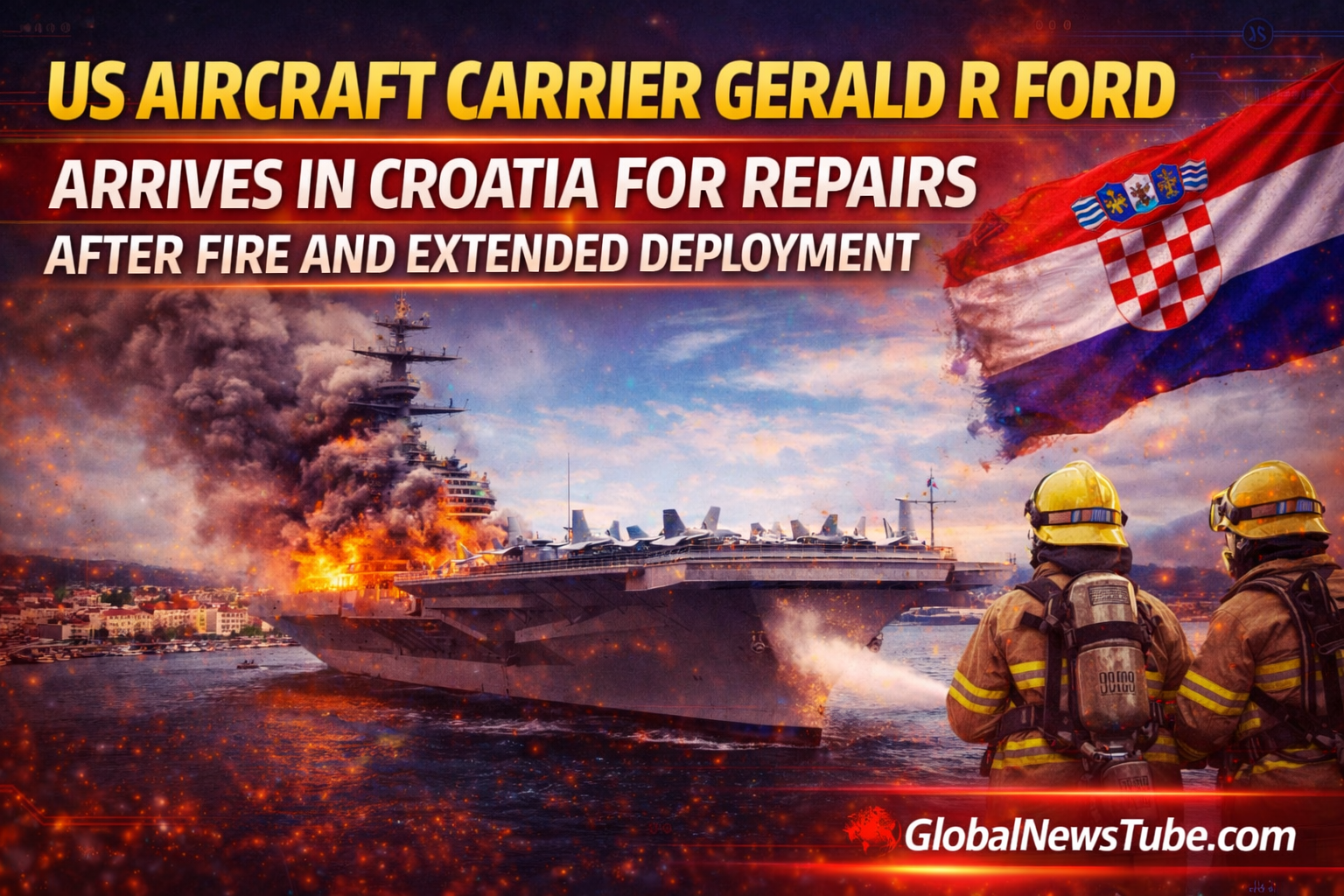
On March 28, 2026, the US aircraft carrier USS Gerald R Ford, the world’s largest and most advanced warship, arrived in the Croatian port of Split for repairs and maintenance following a mid deployment fire and a lengthy series of operational challenges. The arrival marks a significant moment for the carrier and its crew after more than nine months at sea and active participation in military operations in multiple regions.
The stop in Croatia underscores the logistical needs of the carrier after extended deployment and highlights the United States Navy’s global reach.
Extended Deployment and Operational Strain
The USS Gerald R. Ford had been on deployment for approximately nine months. During this time, the ship participated in operations across multiple regions from the Caribbean to the Mediterranean and, most recently, the Red Sea.
A non combat related fire broke out aboard the carrier on March 12 in its main laundry area while operating in the Red Sea. The blaze took hours to extinguish, affected sleeping quarters, and required extensive cleanup and repairs. Several sailors were treated for smoke inhalation and minor injuries.
In addition to the fire, the carrier faced persistent maintenance challenges that have affected its operational efficiency. These issues added to the strain on both the crew and the ship’s systems.
Significance of the Split Visit
Croatia, a NATO ally, approved the carrier’s stop in Split, allowing the Gerald R. Ford to dock for essential repairs. The port call provides a practical reprieve for the crew and vessel while reinforcing diplomatic and military cooperation between the United States and European partners.
With more than 5,000 personnel on board and a complement of over 75 aircraft, including F‑18 Super Hornets, the Ford remains a central component of US naval power projection.
The Fire Incident and Damage Impact
The March 12 fire was a pivotal event that accelerated the carrier’s transition to repair status. It broke out in the laundry room and caused smoke to spread into nearby sleeping areas, forcing many sailors to relocate.
The ship’s firefighting teams worked for hours to control the blaze, with damage control measures focusing on preventing the fire from spreading into critical machinery spaces or affecting propulsion. The extent of smoke damage necessitated a port visit for maintenance and supply replenishment.
Maintenance Challenges and Crew Morale
Deployments of this duration place significant strain on both equipment and personnel. While aircraft carriers are designed for sustained operations, prolonged deployments often reveal maintenance challenges that require dockside attention.
In addition to addressing fire related damage, the crew will tackle mechanical and structural issues that can only be fully serviced while docked. Extended deployments also affect morale, as being at sea for months with limited shore leave can be challenging for sailors.
Middle East and Global Operations
The Ford’s deployment has been part of US naval operations linked to tensions in the Middle East, including supporting air operations and providing strategic deterrence.
The repair stop in Croatia follows earlier maintenance visits in the Mediterranean, reflecting the logistical cycle necessary to keep a carrier operational after extended missions.
US Croatia Naval Cooperation and NATO Implications
Croatia’s welcoming of the Gerald R. Ford underscores the collaborative military relationship between the United States and NATO allies. Port calls like this allow for technical servicing, diplomatic engagement, and joint readiness dialogues.
For the US Navy, such engagements ease logistical pressure on forward deployed forces and enhance interoperability across allied navies.
The Future of the Ford and Carrier Operations
Despite challenges during this deployment, the Ford remains a critical asset for the US Navy’s global posture. Aircraft carriers are central to American power projection, capable of sustained presence and rapid response in multiple theaters.
Once repairs in Croatia are complete, the Gerald R. Ford is expected to resume deployment duties, potentially rejoining ongoing operations or pivoting to other strategic requirements. The stop in Split is a necessary interval enabling continued operational effectiveness.
Maintenance Mission and Global Reach
The arrival of the USS Gerald R. Ford in Croatia for repairs marks an important phase in the carrier’s extended 2026 deployment. After a fire aboard ship, months at sea, and technical challenges, the Ford has docked in Split to address maintenance needs and reinforce alliances.
How effectively the Ford is serviced and returned to operational status will influence US naval presence across key global regions from the Mediterranean to the Middle East and beyond. The capacity to maintain and repair such a massive warship far from home ports reflects the enduring strength of US maritime power and allied support networks.