


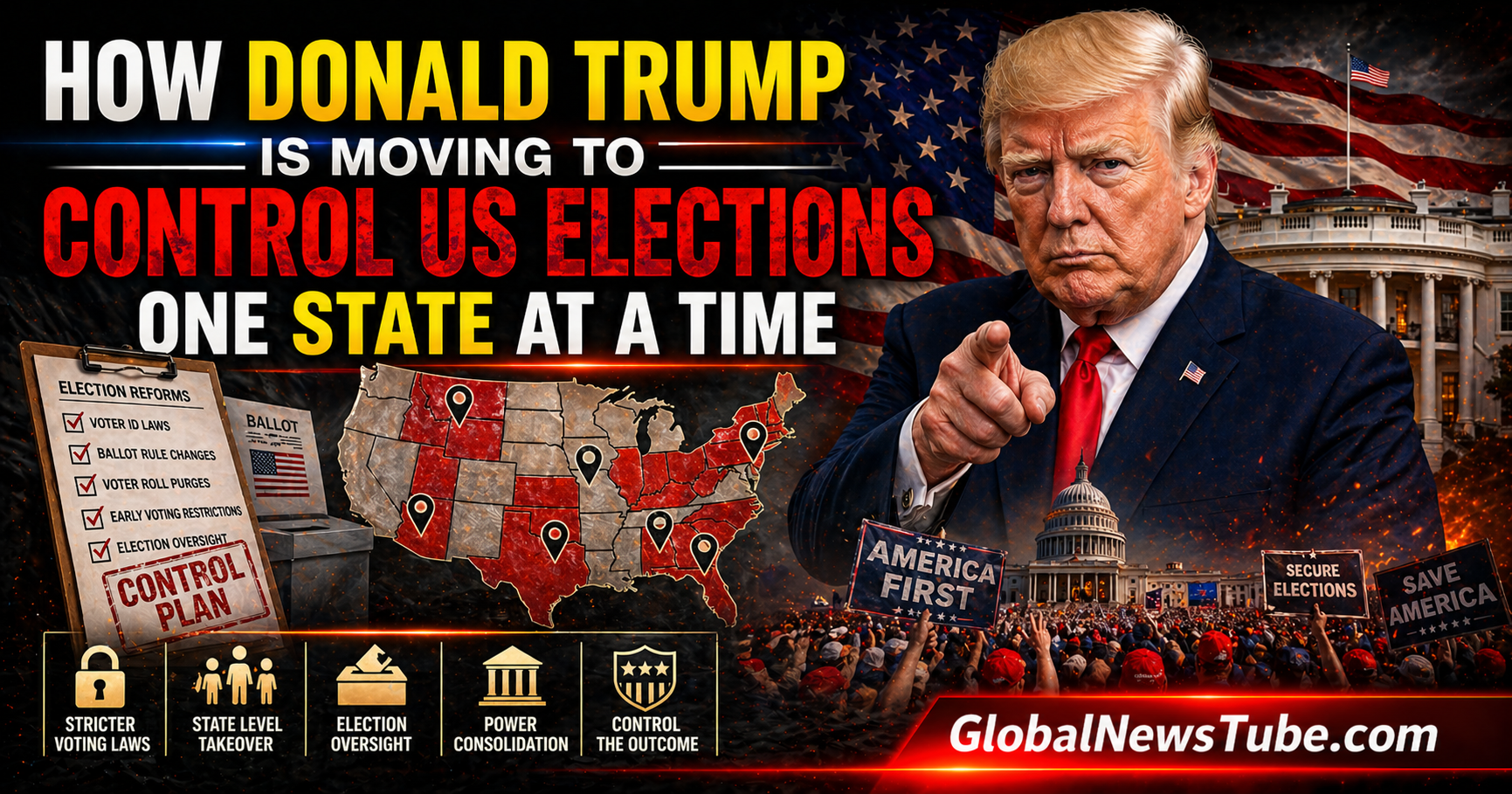
The evolving political strategy of Donald Trump has placed the integrity of American elections under intense scrutiny. Recent developments suggest that Trump is moving to control US elections through a mix of legal pressure, administrative influence, and policy changes. As the United States approaches the 2026 midterm elections, these actions are raising concerns about the balance between federal authority and state independence, as well as the long-term health of democratic institutions.
The US Election System and State Authority
The United States election system has historically been decentralized, with individual states responsible for managing elections. This includes maintaining voter rolls, setting voting procedures, and ensuring election security. This structure has long been viewed as a safeguard against centralized control, allowing each state to tailor its processes to local needs.
However, recent actions indicate a shift toward increased federal involvement. The push to standardize election practices and introduce broader oversight mechanisms marks a significant departure from traditional norms. This shift has sparked debate over whether such involvement strengthens election integrity or undermines state autonomy.
Federal Push to Influence State Elections
One of the most notable developments is the growing role of federal agencies in state election processes. Efforts have been made to collect voter data, review election systems, and establish closer ties with state election officials. These actions suggest a coordinated strategy aimed at influencing how elections are conducted across multiple states.
Supporters argue that federal oversight is necessary to ensure consistency and prevent fraud. Critics, however, warn that such involvement could compromise the independence of state run elections and create opportunities for political interference. The tension between these perspectives highlights the complexity of balancing security with autonomy.
Legal Battles Over Voter Data and Election Control
Legal action has become a key tool in the effort to reshape election management. Attempts to obtain voter data from states have led to lawsuits and counter lawsuits, with both sides arguing over the limits of federal authority.
Voting rights advocates have raised concerns about privacy and the potential misuse of voter information. They argue that aggressive data collection could lead to voter suppression, particularly among marginalized communities. On the other hand, proponents maintain that accurate voter data is essential for maintaining the integrity of elections.
These legal battles underscore a broader conflict between federal objectives and state sovereignty, with courts playing a crucial role in determining the outcome.
Creation of Election Integrity Structures
Another important aspect of this strategy is the establishment of federal units focused on election oversight. These “election integrity” initiatives aim to monitor voting systems, analyze potential vulnerabilities, and enforce compliance with federal standards.
While these efforts are presented as measures to strengthen democracy, they have also been met with skepticism. Critics question the neutrality of such initiatives, particularly when they involve individuals or groups with strong political affiliations. This raises concerns about whether these structures are truly impartial or driven by political motives.
Policy Changes and Executive Actions
Policy changes have further expanded the federal role in elections. New requirements for voter identification, proof of citizenship, and stricter verification processes have been introduced or proposed. These measures aim to standardize voting procedures across states and reduce the risk of fraud.
However, these policies have also sparked debate about accessibility. Opponents argue that stricter requirements could make it more difficult for certain groups to vote, potentially affecting turnout. Supporters counter that these measures are necessary to ensure that elections are fair and credible.
The challenge lies in finding a balance between safeguarding elections and maintaining broad access to the democratic process.
Role of Key States in the Strategy
The approach to influencing elections is not uniform but focuses on specific states where outcomes are likely to have the greatest impact. Battleground states such as Georgia, Ohio, Nevada, and Colorado have become central to this strategy.
These states often play a decisive role in national elections, making them key targets for policy changes and administrative influence. By concentrating efforts in these regions, the strategy aims to shape electoral outcomes more effectively.
This targeted approach reflects a calculated political effort rather than a broad nationwide reform.
Impact on the 2026 Midterm Elections
The 2026 United States elections are expected to be highly competitive, with control of Congress at stake. Changes in election procedures, voter verification requirements, and oversight mechanisms could significantly influence voter participation and outcomes.
Both major political parties are closely monitoring these developments. Some view the changes as necessary reforms, while others see them as attempts to gain a strategic advantage. The outcome of the midterm elections will likely determine the future direction of election policies in the United States.
Political and Public Reactions
Reactions to these developments have been deeply divided. Supporters argue that stronger oversight and standardized procedures are essential for maintaining trust in the electoral system. They believe that addressing vulnerabilities is necessary to protect democracy.
Opponents, however, view these actions as an attempt to centralize control over elections. They warn that increased federal involvement could undermine the independence of state systems and reduce public confidence in election outcomes.
Public opinion reflects this divide, highlighting the broader political polarization within the country.
Risks to Democratic Institutions
The growing federal role in election management raises important questions about the future of democratic institutions. The decentralized nature of US elections has long been a key feature of the system, providing checks and balances against centralized authority.
If this balance shifts too far toward federal control, it could alter the nature of the electoral process. Critics argue that this could weaken institutional independence and create new challenges for maintaining fair and transparent elections.
At the same time, the need for improved security and consistency cannot be ignored. The challenge lies in addressing these concerns without compromising democratic principles.
Future Outlook
The future of US elections will depend on how these developments evolve. Legal challenges, political debates, and public opinion will all play a role in shaping the outcome.
If federal initiatives continue to expand, the structure of election management could undergo significant changes. Alternatively, resistance from states and legal constraints could limit these efforts and preserve the existing system.
The coming years, particularly the 2026 midterm elections, will be crucial in determining the direction of US election policy.
The developments surrounding how Trump is moving to control US elections one state at a time highlight a critical moment in American democracy. The combination of legal action, policy changes, and federal involvement represents a significant shift in how elections are managed.
While supporters emphasize the importance of election integrity, critics warn of potential risks to democratic norms and state autonomy. As the debate continues, the challenge will be to ensure that reforms strengthen the system without undermining its foundational principles.