


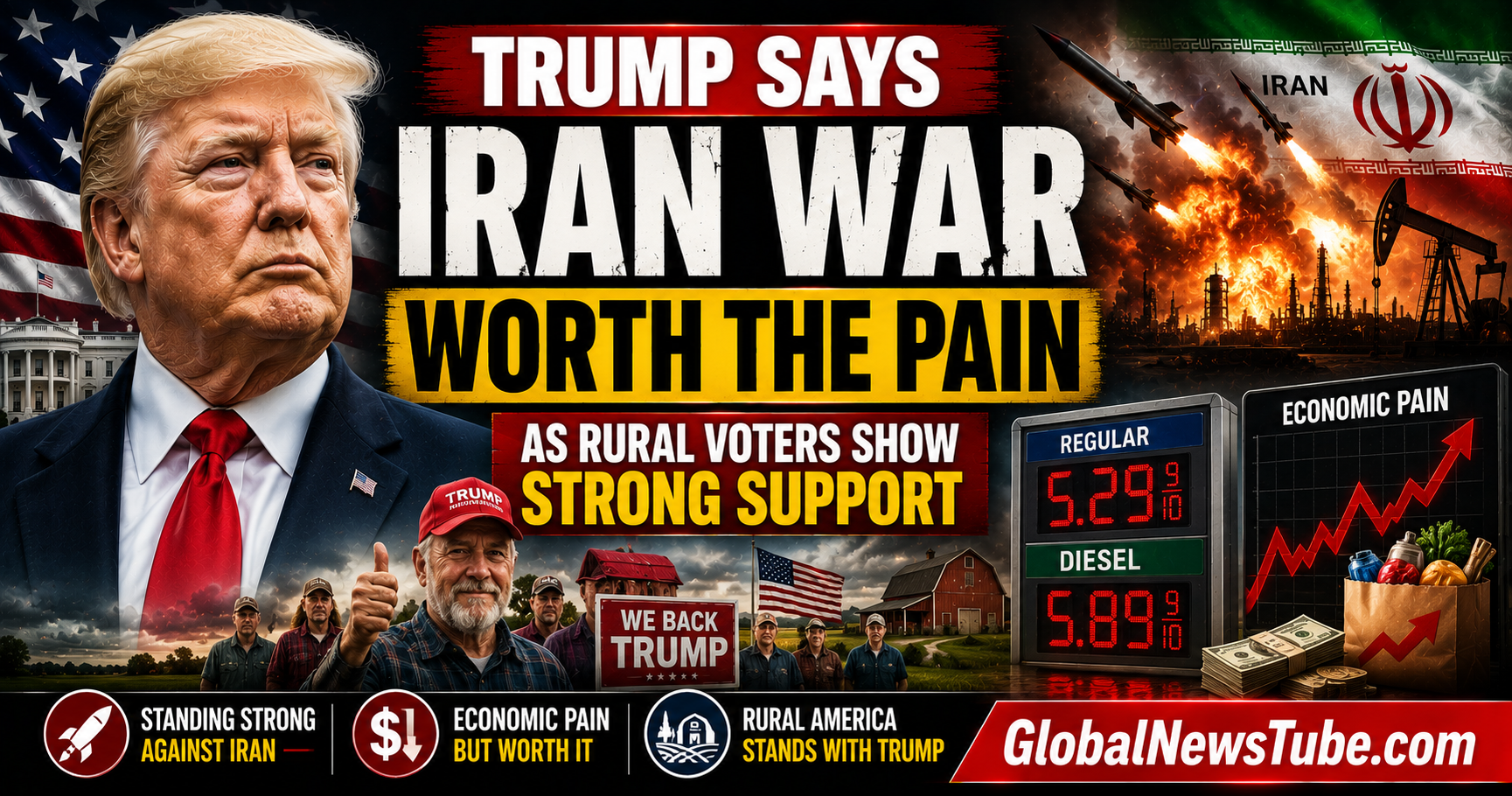
Rural Voters Show Strong Support for Trump Iran War Policy
Rural voters across the United States continue to stand firmly behind Donald Trump decision to pursue military action against Iran, even as economic pressures mount. Many of these voters view the conflict through the lens of national security rather than personal financial hardship. For them, preventing Iran from becoming a nuclear power is a priority that outweighs rising living costs. This support reflects a deep trust in Trump leadership and a belief that strong foreign policy decisions are necessary to protect the country long term interests.
Rising Gas Prices Highlight Economic Impact of Iran Conflict
One of the most immediate effects of the Iran war has been a sharp increase in gas prices. Disruptions in global oil supply chains, particularly around critical shipping routes, have driven fuel costs significantly higher. This increase has affected transportation, agriculture, and daily commuting expenses, placing a financial burden on households. Despite these challenges, many supporters argue that such economic pain is temporary and manageable compared to the potential risks posed by an unchecked Iran.
Trump Prioritizes National Security Over Economic Concerns
President Trump has consistently emphasized that national security must come before economic convenience. He argues that the long-term consequences of allowing Iran to expand its nuclear capabilities would be far more damaging than short-term economic strain. This perspective aligns with his broader foreign policy approach, which focuses on strength, deterrence, and decisive action. By framing the war as a necessary measure, Trump has reinforced his image as a leader willing to make tough decisions in the face of global threats.
Divided Public Opinion Across Urban and Rural America
While rural communities largely support the Iran war, public opinion across the United States remains divided. Urban populations and economically sensitive groups are more likely to express concern about rising costs and the lack of clear outcomes from the conflict. This divide highlights the differing priorities between regions, with rural voters emphasizing security and patriotism, while others focus on economic stability and diplomatic solutions. The result is a polarized national debate that continues to shape the political landscape.
Global Oil Market Disruptions Drive Inflation Pressures
The Iran conflict has had a significant impact on global oil markets, leading to increased prices and inflation worldwide. As energy costs rise, businesses face higher operating expenses, which are often passed on to consumers. This has contributed to broader inflation, affecting everything from food prices to manufacturing costs. The interconnected nature of the global economy means that even localized conflicts can have widespread economic consequences, making the Iran war a major factor in current financial trends.
Political and Economic Implications of the Iran War in 2026
The ongoing war with Iran is expected to have lasting political and economic implications throughout 2026. For Trump, maintaining strong support among rural voters could prove crucial in upcoming political contests. However, continued economic pressure may challenge his appeal among other voter groups. On a broader scale, the conflict is reshaping global energy dynamics and influencing international relations. How the situation evolves will play a key role in determining both domestic political outcomes and the stability of the global economy.