


A War Under Scrutiny
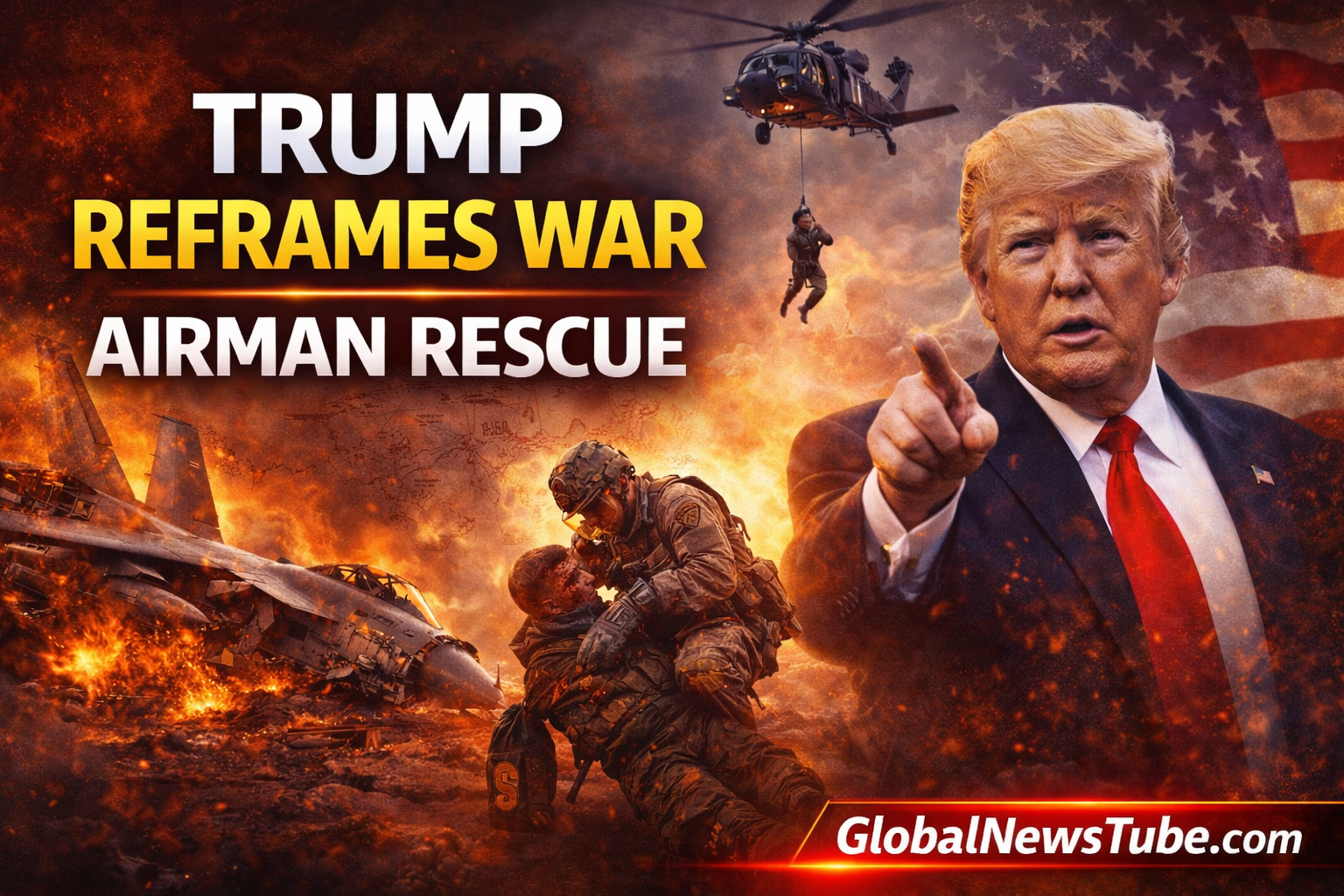
By April 2026, the U.S. Iran conflict had become increasingly unpopular at home, with rising costs, civilian casualties, and fears of escalation. President Trump, facing mounting criticism, sought to reframe the narrative by highlighting the successful rescue of a downed airman. This event was portrayed as proof of American strength and military precision, shifting public attention from the war’s controversies to its moments of triumph.
The Rescue Mission A No Fail Operation
U.S. forces pushed deep into Iranian territory to recover the pilot of a downed F-15E fighter jet. Intelligence capabilities played a crucial role, allowing American troops to locate the airman while evading Iranian patrols. CIA Director John Ratcliffe described it as a “race against time,” emphasizing that failure was not an option. Trump himself declared “WE GOT HIM!” on Truth Social, celebrating the mission as one of the most daring search and rescue operations in U.S. military history.
Political Messaging Heroism Over Controversy
Trump’s framing of the rescue was strategic. With polls showing declining support for the war, the president used the airman’s recovery to highlight American resilience and military success. In speeches and social media posts, he emphasized themes of courage, sacrifice, and victory over “evil.” This messaging aimed to rally public support and distract from criticism over civilian infrastructure strikes and rising oil prices.
Media Coverage and Public Reaction
Major outlets covered the rescue extensively, with images of helicopters flying low over Khuzestan Province circulating online. The dramatic nature of the mission captured public imagination, offering a rare positive story amid grim reports of destruction. Supporters praised Trump’s leadership, while critics argued the president was exploiting the rescue to justify a war that remained deeply unpopular.
Strategic Implications for the Iran War
The rescue highlighted both the risks and capabilities of U.S. forces operating in hostile territory. It demonstrated advanced intelligence coordination and rapid deployment capacity. However, it also underscored the dangers of escalation, as Iran claimed responsibility for shooting down the jet and vowed retaliation. Analysts warned that while the rescue boosted morale, it did little to resolve the broader strategic challenges of the conflict.
Economic Fallout Oil Prices and Global Markets
The war’s impact on global energy markets continued to grow. Oil prices spiked following U.S. strikes on Iranian infrastructure, raising fears of inflation and recession. The rescue did little to calm markets, as investors remained focused on the potential closure of the Strait of Hormuz. Trump’s threats of further attacks added uncertainty, keeping energy costs volatile.
Military Rescues as Political Tools
Throughout history, dramatic military rescues have been used to bolster political narratives. From the 1979 Iran hostage crisis to the 2003 rescue of Jessica Lynch in Iraq, such operations often serve as symbols of national strength. Trump’s use of the 2026 airman rescue fits this pattern, leveraging a tactical success to reframe a strategically troubled war.
Costs and Public Opinion
The war has already cost billions in military spending, with estimates suggesting over $50 billion allocated in just the first months of 2026. Troop deployments have surged, with tens of thousands stationed across the Middle East. Public opinion polls show declining support, with fewer than 40% of Americans backing continued military action. The rescue provided a temporary boost in approval ratings, but analysts caution that such gains are often short lived.
Humanitarian Perspective Civilian Impact
While the rescue was celebrated, humanitarian organizations continue to highlight the devastating impact of the war on Iranian civilians. Reports indicate thousands displaced, widespread damage to infrastructure, and growing shortages of food and medicine. Critics argue that focusing on military heroism risks overshadowing the human cost of the conflict, which remains a central reason for its unpopularity.
Can Heroism Sustain Support
While the rescue provided a temporary boost to Trump’s messaging, experts question whether isolated victories can sustain public support for a prolonged and costly conflict. The war’s unpopularity stems from broader issues civilian casualties, economic fallout, and fears of escalation that cannot be erased by a single success. The challenge for Trump will be maintaining momentum while addressing the deeper concerns driving opposition.
The rescue of a downed U.S. airman in Iran was a dramatic and successful mission, celebrated by President Trump as proof of American strength. Yet while the operation offered a moment of heroism, it did not resolve the underlying controversies of the war. As oil prices rise and public skepticism grows, the question remains whether such victories can truly recast an unpopular conflict into a narrative of resilience and triumph.