


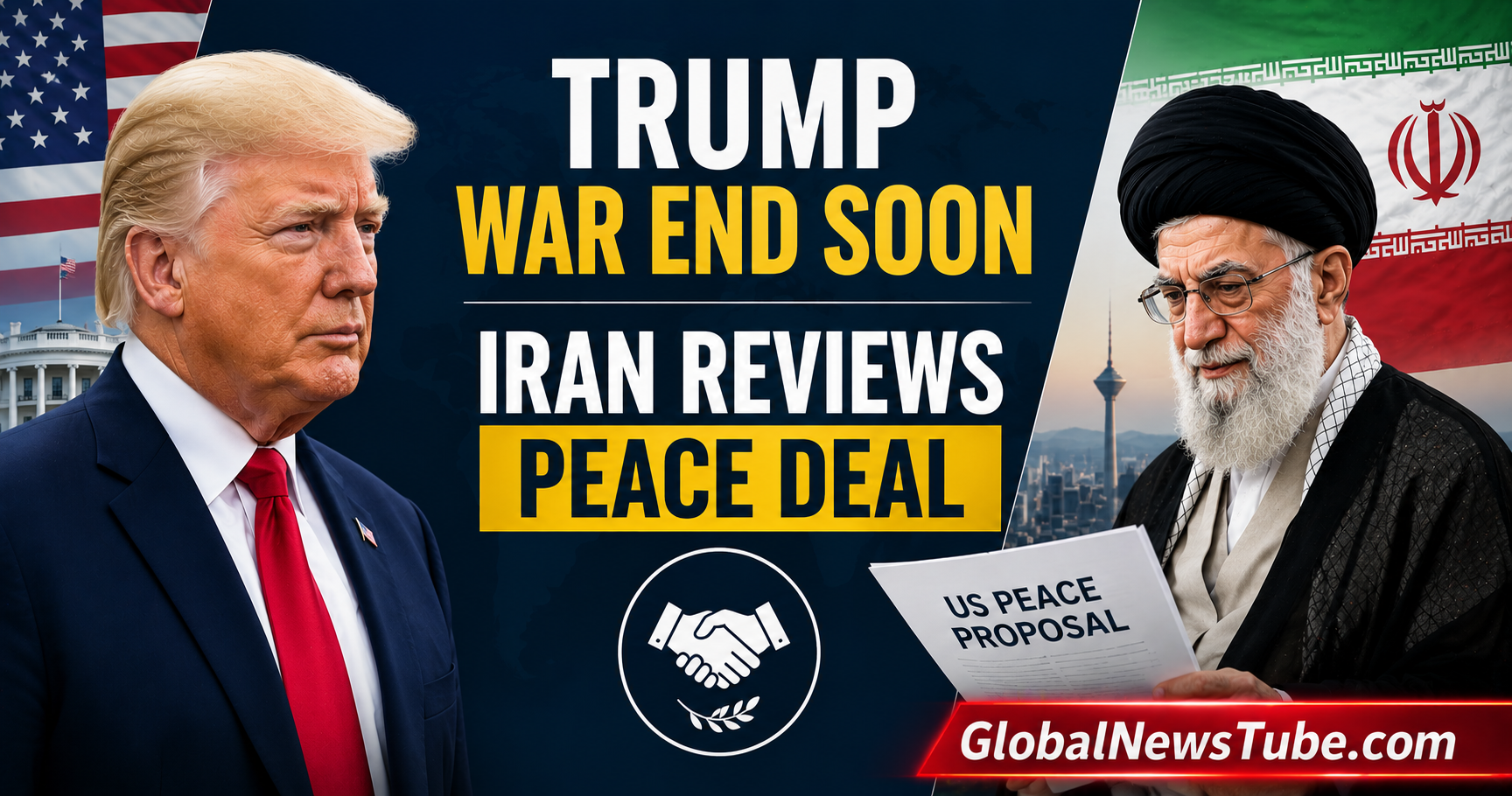
The United States and Iran appear to be approaching a critical turning point in their 2026 conflict, as former U.S. President Donald Trump expressed confidence that a swift end to the war is possible. A newly proposed U.S. peace plan is currently under review by Iranian officials, raising cautious optimism across global diplomatic circles. However, despite the positive tone from Washington, underlying tensions and unresolved issues continue to complicate the path toward a lasting agreement.
Background of the US Iran Conflict
The current conflict between the United States and Iran escalated earlier in 2026 following a series of military confrontations and geopolitical disputes. The crisis has had a profound impact on the Middle East, particularly around the Strait of Hormuz, a vital global oil transit route. Disruptions in this area have triggered fluctuations in energy markets and heightened fears of broader regional instability, making the conflict not just a bilateral issue but a global concern.
Details of the US Peace Proposal
The U.S. peace proposal is designed as a temporary framework aimed at halting hostilities and opening the door for comprehensive negotiations. The plan includes an immediate ceasefire, stabilization efforts in key conflict zones, and a 30 day negotiation period to discuss long-term solutions. While the proposal avoids overly rigid commitments, it seeks to create momentum toward diplomacy. For the United States, this approach reflects a strategic balance between pressure and negotiation, offering Iran an opportunity to de escalate while maintaining leverage.
Iran Response and Key Challenges
Iran has responded cautiously to the proposal, indicating that while it is open to reviewing the terms, significant concerns remain. Officials in Tehran have suggested that the current framework may be biased and insufficient to address core issues such as economic sanctions and national sovereignty. Key sticking points include Iran nuclear program, demands for sanctions relief, and disagreements over regional influence. These unresolved matters highlight the complexity of the negotiations and explain why previous diplomatic efforts have struggled to achieve lasting success.
Global and Economic Impact
The potential for a peace agreement has already influenced global markets, particularly in the energy sector. Oil prices have shown signs of stabilization as investors respond to the possibility of reduced tensions in the Middle East. At the same time, international stakeholders including major economies and regional powers are closely monitoring developments. A successful resolution could restore confidence in global trade routes and reduce uncertainty, while failure could trigger renewed volatility and economic disruption.
The coming weeks will be decisive in determining whether the U.S. and Iran can move from conflict to diplomacy. While Donald Trump remains optimistic about a quick resolution, Iran cautious approach underscores the challenges ahead. Even if a temporary agreement is reached, achieving long-term peace will require sustained dialogue and mutual concessions. Ultimately, the outcome of these negotiations will shape not only the future of U.S. Iran relations but also the broader geopolitical landscape, making this one of the most closely watched diplomatic efforts of 2026.