


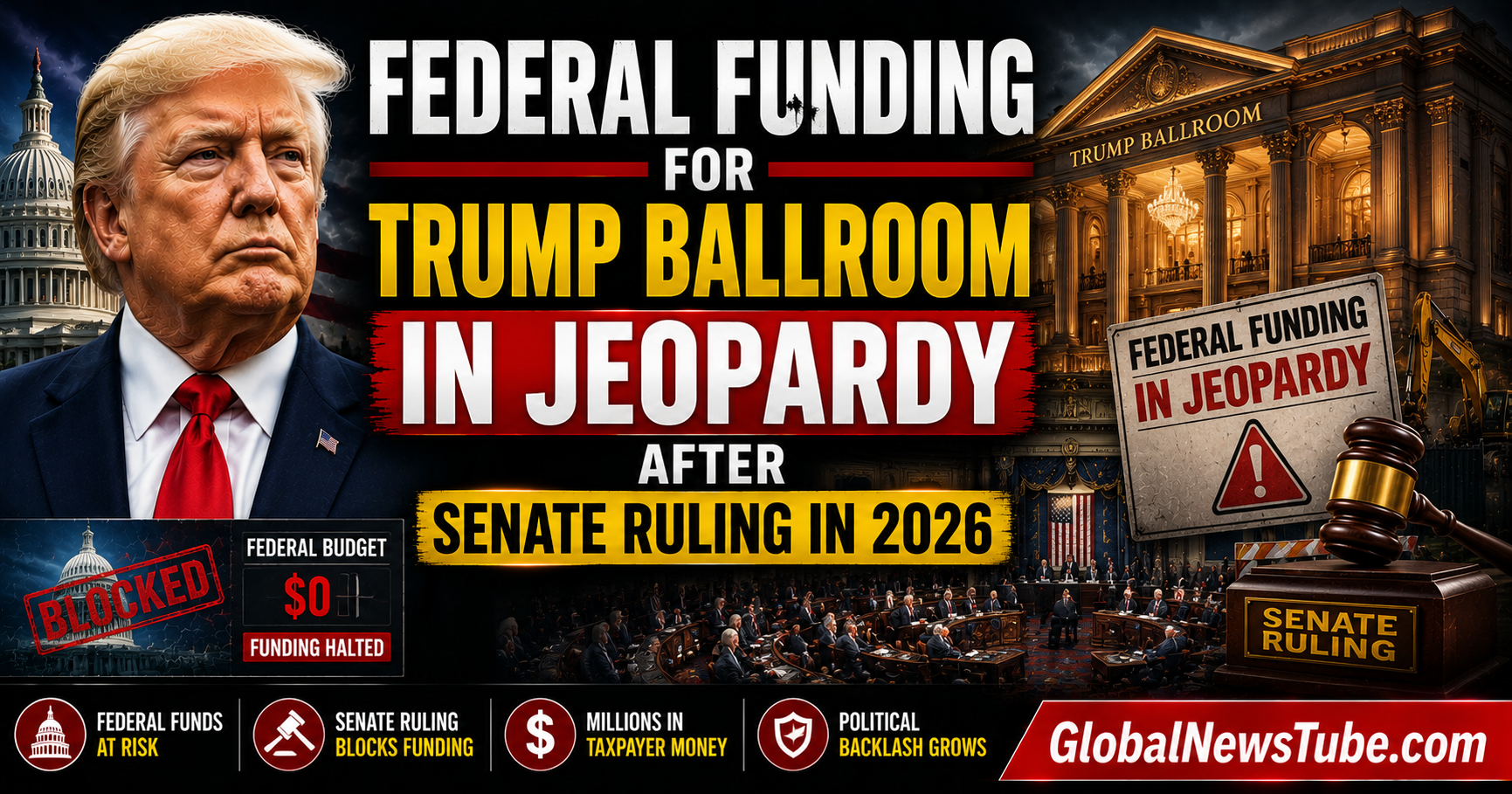
Senate Ruling Blocks Key Funding for Trump Ballroom Project
A major political and financial setback has emerged for Donald Trump as a Senate ruling threatens federal funding tied to his proposed White House ballroom. The Senate parliamentarian removed provisions related to security funding from a broader spending bill, complicating efforts to allocate taxpayer money connected to the project.
The Trump ballroom funding 2026 debate has intensified following this decision, as it means the proposal now requires broader political support in the Senate. Lawmakers face challenges in moving forward without procedural advantages, highlighting how congressional rules can significantly shape policy outcomes.
White House Ballroom Project Faces Political Controversy
The White House ballroom funding proposal has sparked debate across political lines. The project has been presented as a large scale addition intended to expand event-hosting capacity at the White House. However, concerns have been raised about whether federal resources should be used for any part of the project.
The Senate ruling Trump ballroom issue has become a symbol of wider disagreements over government spending priorities. Critics argue that public funds should focus on essential services, while supporters maintain that infrastructure and security enhancements justify the investment.
Lawmakers Debate Security Funding and Project Scope
Supporters of the proposal argue that any federal funding linked to the ballroom would be focused on necessary security upgrades rather than the structure itself. They emphasize the importance of maintaining high security standards at key government sites.
Opponents, however, question whether combining security related funding with a high profile construction project creates confusion and reduces transparency. The federal funding Trump project debate has therefore become a broader discussion about how government spending is structured and justified.
Democrats Criticize Project Amid Economic Concerns
Democratic lawmakers have voiced strong opposition to the White House ballroom funding, framing it as an unnecessary expense during a time of economic pressure. Rising costs of living and other financial challenges have made government spending a sensitive issue.
The Trump ballroom funding 2026 controversy has also entered political discourse as an example of differing priorities between parties. Critics argue that funding decisions should reflect immediate public needs rather than long-term or symbolic projects.
Legal and Procedural Challenges Add Uncertainty
In addition to political opposition, the ballroom project faces procedural and legal uncertainties. Questions have been raised about approvals, oversight, and the extent of executive authority in moving forward with such initiatives.
The Senate ruling Trump ballroom funding issue adds complexity, as it limits the pathways available for securing federal support. These challenges make it difficult to predict how quickly or whether the project will advance.
Timeline and Future of the Ballroom Project
The proposed ballroom remains part of a broader vision to enhance the White House ability to host major events. However, funding uncertainties and political debates continue to delay progress.
The federal funding Trump project discussion will likely continue as lawmakers negotiate future spending measures. Whether the project proceeds with private backing or seeks revised public funding remains an open question.
Broader Implications for US Politics
The Trump ballroom funding 2026 issue highlights deeper divisions in US politics regarding fiscal policy and government priorities. It reflects ongoing debates about how public funds should be allocated and what projects deserve federal support.
The Senate ruling also demonstrates the importance of legislative procedures in shaping outcomes. Even widely discussed proposals can face significant obstacles when they encounter institutional rules and political opposition.
The White House ballroom funding controversy has become a key issue in US political discussions in 2026. A Senate ruling has placed federal funding in jeopardy, adding to existing political and procedural challenges.
As debates continue, the Trump ballroom funding 2026 case illustrates the complexities of policymaking in a divided political environment. The outcome will depend on future negotiations, legal clarity, and shifting political priorities.