


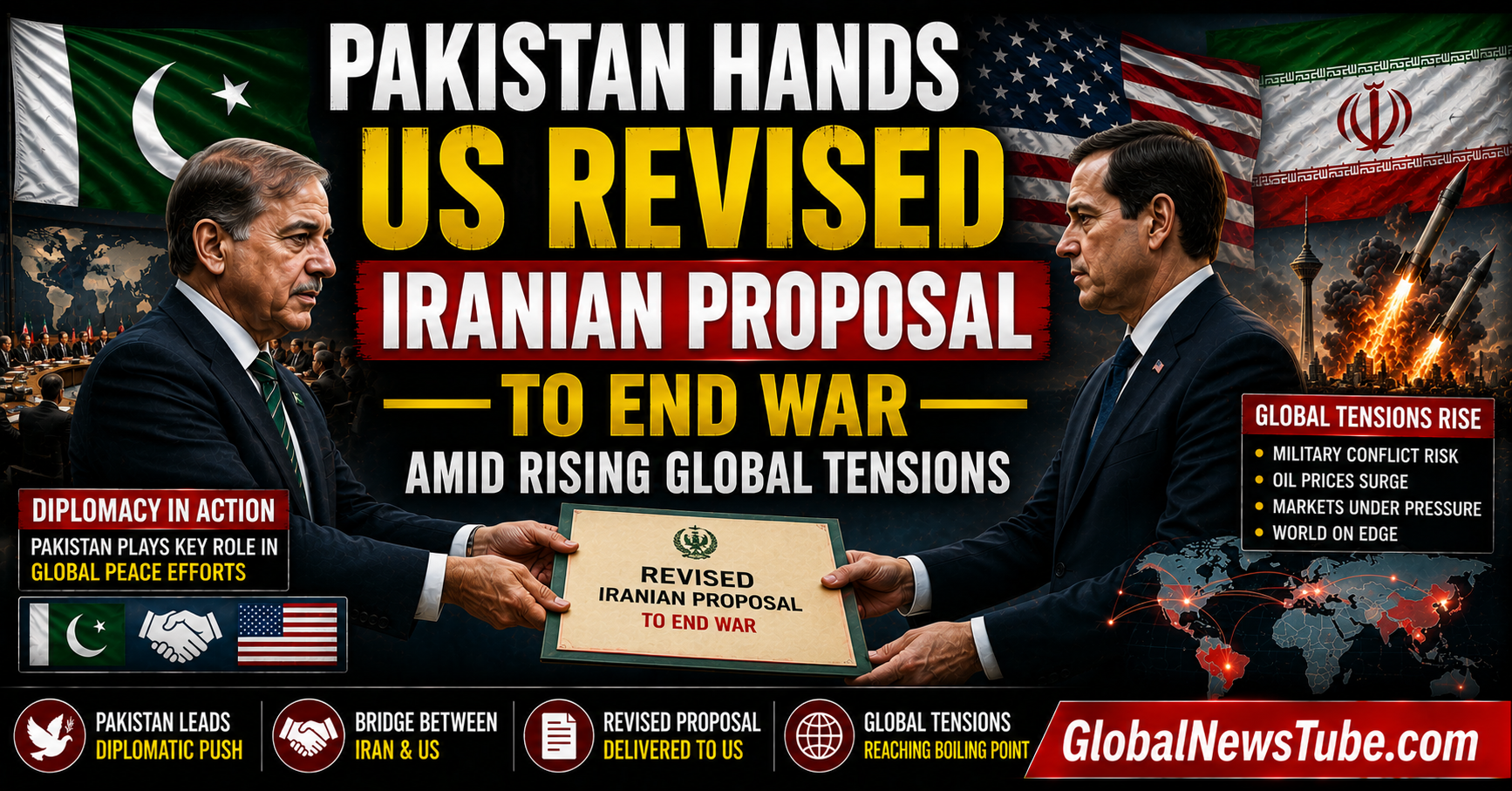
Pakistan Delivers Revised Iranian Proposal to the United States
In a significant diplomatic development, Pakistan has handed over a revised Iranian proposal to the United States aimed at ending the ongoing Iran war in 2026. This move reinforces Pakistan growing role as a key mediator in one of the most critical geopolitical crises.
The updated proposal was delivered as part of ongoing efforts to revive stalled peace negotiations between Washington and Tehran. The initiative comes at a time when a fragile ceasefire remains in place but is under pressure due to unresolved disputes.
Pakistan involvement highlights its strategic importance as a bridge between two adversaries, using its diplomatic ties with both nations to facilitate dialogue and de-escalation.
How the Iran War Reached This Stage
The Iran war, which began earlier in 2026, has escalated into a broader regional conflict involving multiple countries. The confrontation has significantly disrupted global energy markets and trade routes.
Despite a temporary ceasefire agreement reached earlier, tensions have remained high, with sporadic incidents and military threats continuing across the region. Negotiations have been ongoing but largely unsuccessful due to deep rooted disagreements between the United States and Iran.
Pakistan has played a central role throughout the conflict, hosting talks and facilitating communication between the two sides in an effort to prevent further escalation.
Key Elements of the Revised Iranian Proposal
The Iran war peace proposal Pakistan delivered to the United States reportedly includes several key demands and conditions aimed at ending hostilities.
Iran is seeking a comprehensive ceasefire that would halt military operations across all fronts. Additionally, it is demanding the lifting of sanctions and the removal of restrictions affecting its oil exports.
Another important component of the proposal involves compensation for war related damages, which Iran views as necessary for economic recovery after the conflict.
At the same time, Iran has resisted demands to limit its nuclear program, stating that such discussions should only take place after a permanent ceasefire is achieved.
These conditions highlight the significant gaps that still exist between the two sides, making negotiations complex and challenging.
US Demands and Sticking Points in Negotiations
While Iran has outlined its expectations, the United States has maintained a firm position on several key issues. Washington continues to push for restrictions on Iran nuclear activities and emphasizes the importance of keeping vital global trade routes open.
The Strait of Hormuz remains a major concern due to its importance in global oil transportation. Any disruption to this route has immediate economic consequences worldwide.
The United States has also expressed concerns about regional security and Iran broader role in the Middle East, further complicating negotiations.
These differences have created a diplomatic stalemate, with both sides unwilling to compromise on core strategic issues.
Pakistan Role as a Key Mediator
The Pakistan mediator Iran war role has become increasingly important as tensions continue. Islamabad has positioned itself as a neutral facilitator, maintaining diplomatic relations with both Washington and Tehran.
Pakistan has previously helped support ceasefire efforts and encouraged dialogue, demonstrating its ability to bring opposing sides to the negotiating table.
By delivering the revised Iranian proposal, Pakistan is once again attempting to revive negotiations and prevent a return to full scale conflict.
This role requires careful balance, as Pakistan must manage its relationships with multiple regional partners while maintaining neutrality.
Global Economic and Security Implications
The ongoing conflict and stalled negotiations have had wide reaching consequences beyond the Middle East. The Iran war has disrupted global energy markets, contributing to rising oil prices and economic uncertainty.
Inflation has increased in many regions, and businesses are facing higher operational costs due to supply chain disruptions.
From a security perspective, continued tensions raise concerns about a broader regional conflict that could involve additional countries and alliances.
Pakistan diplomatic efforts are therefore critical not only for regional peace but also for global economic stability.
Challenges Facing the Peace Process
Despite renewed diplomatic efforts, several challenges remain in achieving a lasting agreement. One major obstacle is the lack of trust between the United States and Iran.
Both sides have accused each other of failing to honor previous commitments, making it difficult to build confidence in negotiations.
Domestic political pressures also influence decision making, as leaders must consider public opinion and strategic interests.
Additionally, time is a crucial factor, as prolonged delays increase the risk of renewed military escalation.
Can Diplomacy Succeed?
The success of the Pakistan Iran proposal US 2026 initiative depends on whether both sides are willing to make compromises.
While the revised proposal represents progress, significant differences remain unresolved. The coming period will be critical in determining whether diplomacy can lead to a lasting peace or if tensions will escalate further.
Pakistan is expected to continue its mediation efforts, working to bring both parties closer to a mutually acceptable solution.
Global attention remains focused on these developments, as the outcome will have lasting implications for regional and international stability.
Pakistan decision to hand over a revised Iranian proposal to the United States marks an important step in efforts to end the Iran war in 2026. Acting as a mediator, Pakistan is playing a crucial role in facilitating dialogue between two opposing sides.
Although the proposal offers a possible path toward peace, major challenges remain, particularly regarding sanctions, nuclear policy, and regional security concerns.
As negotiations continue, the outcome will shape the future of the Middle East and influence global economic and political stability.