

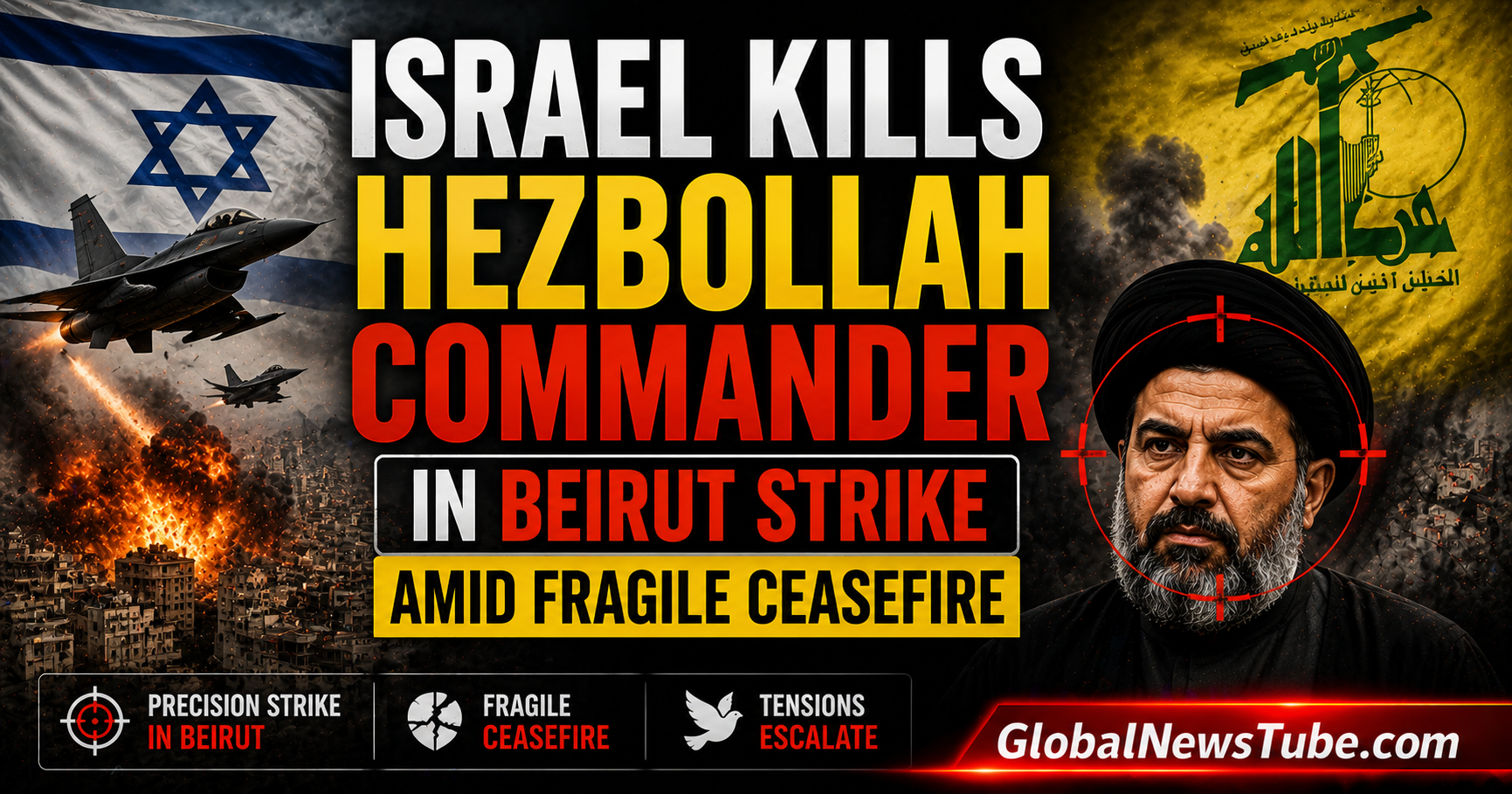
Tensions in the Middle East escalated once again after Israel launched a major airstrike in Beirut, killing a senior commander of Hezbollah. The attack marks the first strike on the Lebanese capital since a fragile ceasefire was established, raising serious concerns about the future of regional stability and ongoing diplomatic efforts. This development has become a key focus in global geopolitics, particularly as it intersects with broader negotiations involving Iran and the United States.
Background of the Israel Hezbollah Conflict
The conflict between Israel and Hezbollah is deeply rooted in decades of hostility, but it intensified significantly in 2026 following the wider regional war involving Iran. Hezbollah, a powerful political and military organization based in Lebanon, has played a central role in supporting Iran regional strategy. In response, Israel has conducted extensive military operations targeting Hezbollah positions across southern Lebanon and beyond.
Despite a ceasefire agreement reached in April 2026, clashes have continued, particularly in areas south of the Litani River. The situation remains volatile, with both sides accusing each other of violating the truce.
Details of the Beirut Airstrike
The recent Israeli strike targeted the southern suburbs of Beirut, a known Hezbollah stronghold. According to reports, the attack killed a commander from Hezbollah elite Radwan force, a unit known for its advanced combat capabilities and involvement in cross border operations.
Israeli officials, including Prime Minister Benjamin Netanyahu, confirmed that the operation was aimed at eliminating a key figure responsible for attacks against Israeli forces. The strike represents a significant escalation, as it is the first time since the ceasefire that Israel has hit central Beirut.
The attack caused damage in densely populated areas, raising concerns about civilian safety and the potential for further retaliation.
Impact on the Ceasefire and Regional Stability
The Beirut strike has placed the already fragile ceasefire under severe strain. While the agreement had reduced large scale violence, sporadic clashes continued in southern Lebanon. This latest escalation risks unraveling the truce entirely.
Lebanese officials have expressed concern that such actions could derail diplomatic efforts and lead to a broader conflict. The ceasefire is closely linked to wider negotiations involving Iran and the United States, meaning any breakdown could have far reaching consequences.
Hezbollah has yet to issue a full official response, but previous incidents suggest that retaliatory attacks, including rockets and drones, are likely.
Military and Strategic Implications
From a military perspective, the targeting of a Radwan force commander highlights Israel strategy of weakening Hezbollah leadership structure. The Radwan unit is considered one of Hezbollah’s most elite forces, tasked with carrying out high level operations against Israeli targets.
By eliminating key commanders, Israel aims to disrupt Hezbollah operational capabilities and deter future attacks. However, such strikes also carry risks, as they can provoke retaliation and escalate the conflict further.
Reports indicate that since the conflict began in March 2026, thousands of people have been killed in Lebanon, underscoring the human cost of the ongoing war.
Humanitarian and Civilian Impact
The humanitarian consequences of the conflict continue to worsen. Airstrikes in densely populated areas like Beirut increase the risk of civilian casualties and infrastructure damage. Hospitals, emergency services, and local communities are under immense strain as the conflict persists.
Thousands of residents have been displaced, and access to essential services such as healthcare, electricity, and clean water has been disrupted in several regions. The international community has repeatedly called for restraint and the protection of civilians, but achieving these goals remains challenging amid ongoing hostilities.
Role of International Diplomacy
The escalation comes at a time when international diplomacy is attempting to stabilize the region. The United States and other global powers are actively engaged in negotiations aimed at reducing tensions between Iran and Israel.
The ceasefire in Lebanon was seen as a critical component of these broader efforts. However, the recent strike threatens to undermine progress and complicate diplomatic initiatives.
Countries in the region, as well as international organizations, are urging all parties to return to dialogue and avoid actions that could lead to further escalation.
Global Reactions and Market Impact
The strike has drawn widespread attention from global markets and political leaders. Investors are closely monitoring developments, as instability in the Middle East often affects oil prices and global trade routes.
Any escalation involving Hezbollah and Israel has the potential to disrupt key shipping lanes and energy supplies, particularly if the conflict expands beyond Lebanon.
At the same time, governments around the world are assessing the implications for security and foreign policy, highlighting the global significance of the crisis.
Future Outlook
The situation remains highly uncertain, with the potential for both escalation and de escalation. If Hezbollah responds militarily, the conflict could intensify rapidly, drawing in additional regional actors.
On the other hand, sustained diplomatic efforts could help restore the ceasefire and create conditions for longer-term stability. Much will depend on how both sides choose to respond in the coming days.
The Beirut strike serves as a reminder of the fragile nature of peace in the region and the challenges of maintaining stability amid deep rooted conflicts.
Israel killing of a Hezbollah commander in Beirut marks a significant escalation in an already volatile conflict. While the operation reflects Israel strategic objectives, it also risks undermining the fragile ceasefire and triggering further violence.
As tensions rise, the need for effective diplomacy and restraint becomes increasingly urgent. The outcome of this crisis will not only shape the future of Israel Hezbollah relations but also influence the broader geopolitical landscape of the Middle East in 2026.


