

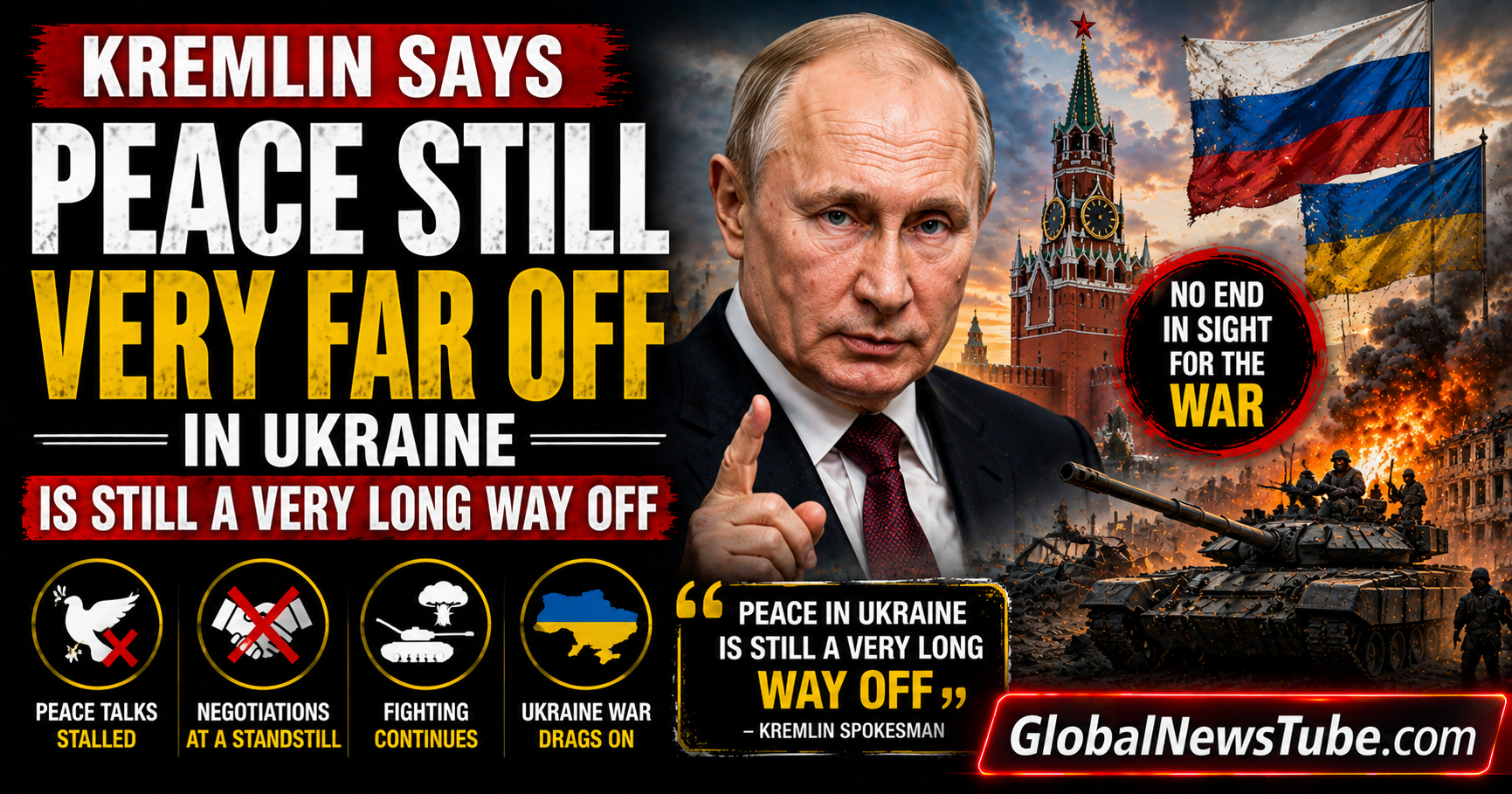
Ukraine Peace Talks 2026 Face Major Challenges
The future of the Ukraine peace talks 2026 remains uncertain after the Kremlin stated that a lasting peace agreement between Russia and Ukraine is still a very long way off. The statement came despite growing international diplomatic efforts and a temporary ceasefire announced during Russia Victory Day commemorations.
Kremlin spokesperson Dmitry Peskov said the conflict involves highly complex issues that cannot be resolved quickly. His remarks highlighted the continued gap between Moscow and Kyiv as the war enters another difficult phase. The conflict, which has now lasted for more than four years, continues to shape global politics, energy markets, and international security.
The comments from the Kremlin have reduced hopes for an immediate breakthrough, even as the United States and other international actors increase pressure for negotiations.
Temporary Ceasefire Raises Hope
A major development occurred when U.S. President Donald Trump announced a three day ceasefire between Russia and Ukraine from May 9 to May 11. The ceasefire included a temporary suspension of military activity and an agreement for a prisoner exchange involving detainees from each side.
The announcement briefly raised hopes that the fighting could move toward broader negotiations. However, both Moscow and Kyiv emphasized that the ceasefire was temporary and did not represent a final settlement.
Russia linked the truce to Victory Day celebrations, one of the country most important national holidays marking the Soviet victory over Nazi Germany during World War II. Ukraine agreed to participate in the ceasefire but remained cautious about Russia long-term intentions.
Despite the symbolic pause in fighting, military tensions remain high across eastern Ukraine.
Kremlin Says Peace Is Still Distant
The Kremlin latest statement made clear that Russia does not believe a comprehensive peace agreement will happen soon. According to Dmitry Peskov, the settlement process is extremely complicated because of the many political, military, and territorial disagreements involved.
Russia continues to insist on maintaining influence over disputed regions in eastern Ukraine, while Kyiv refuses to accept territorial concessions. These opposing positions remain one of the biggest obstacles preventing meaningful progress in negotiations.
Russian officials have also stated that future peace discussions must address broader security concerns, including NATO expansion and Western military support for Ukraine. Ukraine, meanwhile, continues to demand the full restoration of its territorial integrity and stronger international security guarantees.
The sharp differences between the two sides show why negotiations have repeatedly stalled despite multiple diplomatic initiatives.
Ongoing Fighting Continues in Eastern Ukraine
Although the ceasefire created a brief reduction in violence, fighting continues across several frontline areas, especially in eastern Ukraine Donbas region.
Russian forces have maintained pressure near key strategic cities, while Ukrainian troops continue defensive operations. Military analysts say both sides are trying to improve their battlefield positions before any potential long-term negotiations begin.
The city of Pokrovsk remains one of the main areas of heavy combat. Ukrainian officials say Russian forces are attempting to gain additional territory before international diplomatic pressure increases further.
Drone attacks, missile strikes, and artillery exchanges continue to damage infrastructure and civilian areas, making humanitarian conditions increasingly difficult.
Role of the United States in Peace Efforts
The United States has become one of the leading forces pushing for renewed negotiations between Russia and Ukraine.
President Donald Trump has repeatedly called the war unnecessary and urged both sides to move toward a settlement. American officials have held discussions with Ukrainian representatives and reportedly engaged in indirect contacts with Russian officials as part of wider diplomatic efforts.
Recent meetings involving Ukrainian negotiators and U.S. representatives suggest Washington is attempting to create conditions for future talks. However, officials close to the negotiations admit that progress remains slow and fragile.
The United States also faces pressure from European allies to maintain support for Ukraine while encouraging diplomacy that could eventually reduce the risk of a prolonged conflict.
Europe Watches Conflict Closely
European governments remain deeply concerned about the future of the war and its impact on regional security.
Countries such as France, Germany, and the United Kingdom continue supporting Ukraine politically and militarily. At the same time, some European leaders are exploring possible future frameworks for peacekeeping missions or security guarantees if a ceasefire eventually becomes permanent.
Discussions about multinational peacekeeping forces and reconstruction plans have intensified in recent months, though no final agreements have been reached. Russia strongly opposes the deployment of Western troops inside Ukraine, calling such proposals unacceptable.
European economies also continue facing challenges linked to energy prices, defense spending, and refugee pressures caused by the ongoing war.
Economic Impact of the War
The Russia Ukraine conflict continues to affect the global economy in several ways.
Energy markets remain volatile because of uncertainty surrounding Russian exports and regional instability. Investors are closely monitoring developments in Eastern Europe as geopolitical risks influence oil prices, currency markets, and trade flows.
Ukraine economy has suffered extensive damage to infrastructure, industry, and agriculture. Meanwhile, Russia faces ongoing sanctions from Western countries, although its economy has adapted to some restrictions through alternative trade partnerships.
The war has also accelerated military spending across Europe, with NATO members increasing defense budgets in response to security concerns.
Global financial markets react strongly to any signs of escalation or diplomatic progress, showing how important the conflict remains for international investors.
Humanitarian Concerns Continue Growing
The humanitarian impact of the war remains severe.
Millions of Ukrainians have been displaced since the conflict began, while thousands of civilians have lost their lives or suffered injuries. International aid organizations continue providing food, medical supplies, and emergency assistance to affected communities.
Healthcare systems, schools, transportation networks, and power infrastructure in many parts of Ukraine have been heavily damaged during years of fighting.
Rebuilding damaged regions could take many years even if peace negotiations eventually succeed.
The latest Kremlin statement shows that the Ukraine peace talks 2026 remain highly uncertain despite temporary ceasefires and growing diplomatic activity. Russia believes a settlement is still far away because of the conflict complex political and territorial issues.
Although international efforts continue to push for dialogue, the war remains deeply entrenched. Military operations, geopolitical tensions, and competing demands from both sides continue blocking rapid progress.
For now, hopes for immediate peace remain limited. However, continued diplomatic engagement and international pressure may eventually create conditions for future negotiations that could help bring the conflict closer to an end.


