

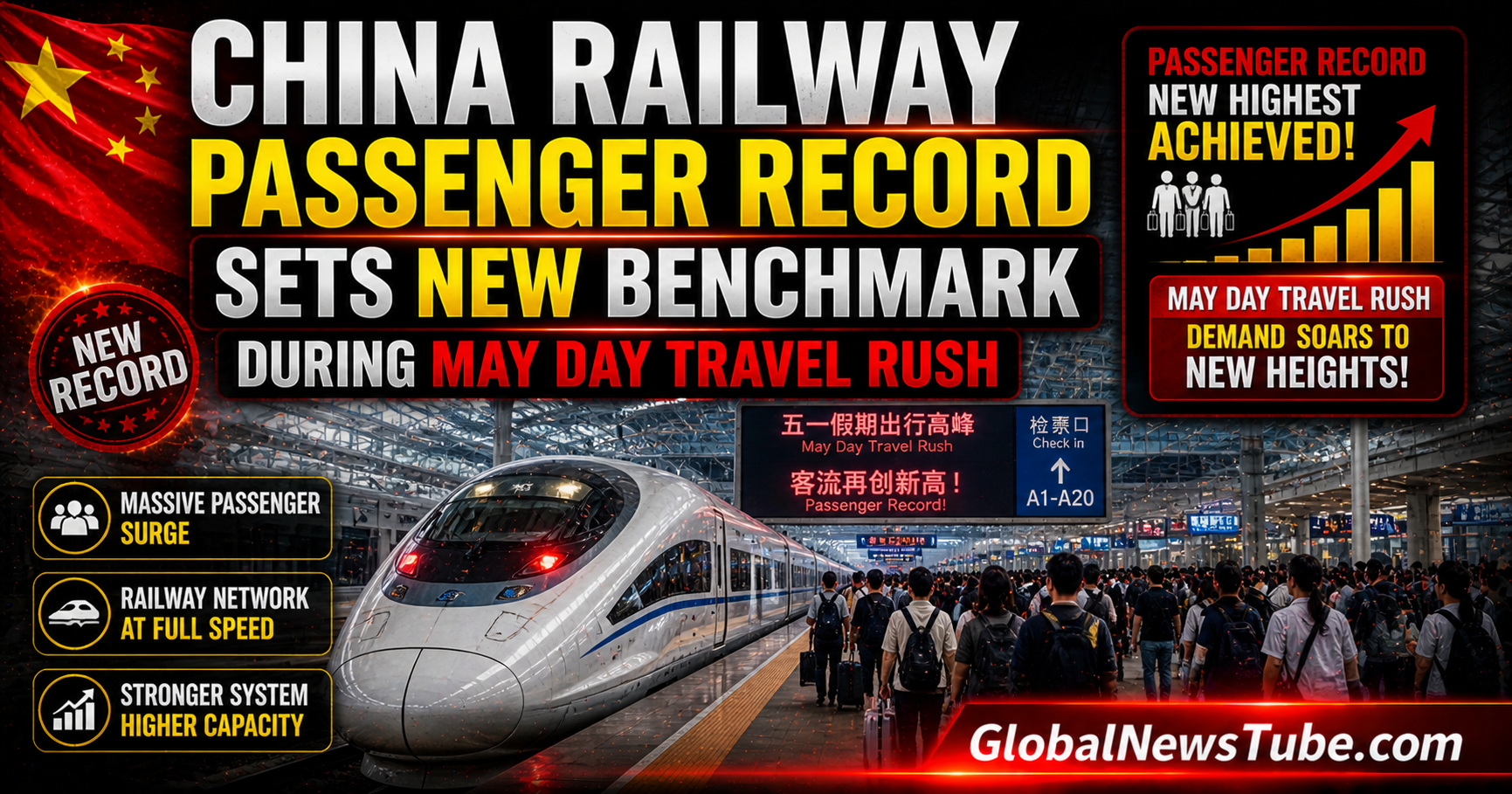
China has reached a historic transportation milestone with a new China railway passenger record set during the May Day holiday period in 2026. On the first day of the national holiday, the country’s railway network transported approximately 24.8 million passengers in a single day, marking the highest daily figure ever recorded. This achievement highlights the growing importance of railway transportation in supporting mobility across the country. The May Day holiday, known for increased tourism and family travel, consistently generates some of the busiest travel days of the year. The new record not only reflects rising passenger demand but also demonstrates the efficiency and capacity of China’s expanding rail infrastructure. As domestic travel continues to grow, railways are becoming the backbone of transportation systems that connect cities, rural areas, and major tourist destinations.
The increasing number of railway passengers also indicates strong activity in tourism and domestic movement. With millions of travelers choosing trains as their primary mode of transportation, railway systems are playing a key role in strengthening economic connections and supporting regional development across China.
May Day Holiday Travel Surge Drives Passenger Numbers
The May Day holiday season is widely recognized as one of the busiest travel periods in China, and in 2026 it produced an extraordinary surge in passenger numbers. Millions of individuals left major cities to visit tourist locations, reconnect with family members, or explore cultural attractions. This massive travel demand resulted in record breaking railway usage across multiple provinces.
Authorities responded to the surge by adding extra trains to accommodate passenger demand. Additional services were scheduled on major routes connecting large cities and popular tourist destinations. These measures helped maintain smooth operations and prevented overcrowding at railway stations. The ability to manage such high passenger volumes demonstrates the strength and reliability of China transportation system.
The holiday travel surge also reflects cultural traditions that encourage mobility during national celebrations. Families often take advantage of extended holidays to travel together, boosting tourism activity and increasing demand for transportation services. As travel habits continue to evolve, holiday periods will remain critical drivers of passenger growth. The consistent rise in railway usage during major holidays highlights the importance of planning and preparation in maintaining efficient travel systems.
Expansion of High-Speed Rail Supports Passenger Growth
A major factor contributing to the China railway passenger record is the rapid expansion of high speed rail networks. China operates the largest high speed railway system in the world, connecting major economic hubs and regional cities. These high speed trains significantly reduce travel time, making railway transportation more attractive than road or air travel for many passengers.
High speed rail lines allow passengers to travel between distant cities in just a few hours. This convenience encourages more people to choose rail travel for both business and leisure purposes. As new routes are introduced, travel becomes more accessible to previously underserved regions. Improved connectivity allows smaller cities to participate in national tourism and commerce, strengthening regional economies.
The expansion of high speed rail also supports sustainable transportation goals. Railways generally produce fewer emissions compared to automobiles and airplanes, making them a more environmentally friendly travel option. Governments continue to invest heavily in railway development because of its ability to move large populations efficiently while minimizing environmental impact.
Infrastructure improvements extend beyond tracks and trains. Modern railway stations are equipped with advanced facilities that improve passenger comfort and reduce waiting times. These upgrades ensure that the system remains capable of handling rising passenger numbers during peak travel seasons.
Economic Benefits of Rising Railway Passenger Numbers
The historic China railway passenger record has created significant economic benefits across multiple sectors. Increased passenger movement supports tourism, hospitality, retail, and local transportation services. During major travel periods, hotels, restaurants, and entertainment centers experience a sharp increase in visitors. This surge in consumer spending stimulates economic growth and creates new business opportunities.
Domestic tourism plays an especially important role in maintaining economic momentum. When millions of travelers visit different regions, local economies benefit from increased revenue. Tourist attractions, shopping districts, and cultural landmarks receive greater attention, leading to long-term investment in infrastructure and services.
Railway expansion also contributes to employment opportunities. Thousands of workers are involved in operating trains, managing stations, maintaining tracks, and providing customer service. These jobs support income generation and contribute to overall economic stability. In addition, improved railway connectivity enhances logistics and transportation networks, making it easier for businesses to distribute goods and services.
The continued rise in railway passenger numbers indicates strong confidence among travelers. As people feel more comfortable traveling across regions, economic activity becomes more dynamic. This connection between transportation and economic performance demonstrates how efficient rail systems can influence national growth.
Technological Innovations Driving China Transport Growth
Technology has played a critical role in enabling China to achieve its record breaking passenger numbers. Modern railway operations rely heavily on digital tools that improve efficiency and passenger experience. Online ticket booking systems allow travelers to reserve seats quickly and avoid long queues at stations. Electronic identification and automated gates help manage large crowds more effectively.
Advanced data analytics systems also support railway management. By analyzing travel patterns, authorities can predict passenger demand and adjust schedules accordingly. This proactive approach ensures that additional trains are available when needed, reducing congestion during peak periods.
Smart station technologies enhance passenger convenience by providing real-time information about train schedules and platform changes. Travelers receive updates through mobile applications, allowing them to navigate stations more efficiently. These digital tools reduce confusion and improve the overall travel experience.
Automation plays a growing role in maintaining safety and reliability. Monitoring systems track train movement, detect technical issues, and ensure that operations run smoothly. These innovations help prevent delays and enhance operational accuracy.
Technological advancements also support environmental sustainability. Energy efficient trains and modern infrastructure reduce fuel consumption and lower emissions. As technology continues to evolve, railway systems will become more capable of managing higher passenger volumes while maintaining efficiency and safety.
Future Outlook for China Railway and Tourism Development
The future outlook for China railway passenger record growth remains highly promising as travel demand continues to increase. Analysts expect passenger numbers to rise steadily due to expanding tourism opportunities and ongoing infrastructure development. New railway routes are expected to connect additional cities and regions, improving accessibility and encouraging travel.
Tourism development will continue to shape passenger trends. Cultural festivals, scenic destinations, and entertainment facilities attract visitors from across the country. As tourism expands, transportation systems must adapt to handle larger volumes of travelers. Railways provide an ideal solution due to their efficiency and capacity.
Urbanization is another key factor influencing future passenger growth. As cities expand, reliable public transportation becomes essential for daily commuting. Rail networks offer a cost effective solution for moving large populations within metropolitan areas. This makes railways an important component of urban development planning.
Government investment in railway infrastructure remains a driving force behind continued growth. Authorities are focusing on modernizing tracks, upgrading stations, and introducing advanced train technology. These improvements ensure that railway systems remain capable of meeting future travel demands.
Improved connectivity between rural and urban regions will also support balanced economic growth. By extending rail networks to remote areas, authorities can promote tourism and trade in previously isolated communities. These developments highlight the long-term importance of rail transportation in national planning.
A Historic Milestone in China Railway Passenger Record Achievement
The record breaking China railway passenger record achieved during the May Day holiday represents a remarkable milestone in transportation history. Carrying 24.8 million passengers in a single day demonstrates the strength and capacity of China’s railway system. This achievement reflects years of investment in infrastructure, technology, and operational planning.
The growth of high speed rail networks and the increasing popularity of domestic travel have transformed the way people move across the country. Railways now serve as one of the most efficient and reliable transportation methods available. Their ability to handle massive passenger volumes makes them essential for supporting tourism and economic development.
Looking ahead, continued innovation and expansion will likely lead to even higher passenger records. As travel demand increases, railway systems will remain central to maintaining connectivity and supporting regional growth. The May Day passenger surge serves as clear evidence of the importance of transportation infrastructure in modern societies.
By continuing to invest in technology, infrastructure, and planning, China railway network is expected to maintain its leadership in global rail development. The historic passenger record achieved during the May Day holiday highlights the role of railways in shaping the future of transportation and strengthening economic progress.


