


Changing China Consumer Habits and Global Impact
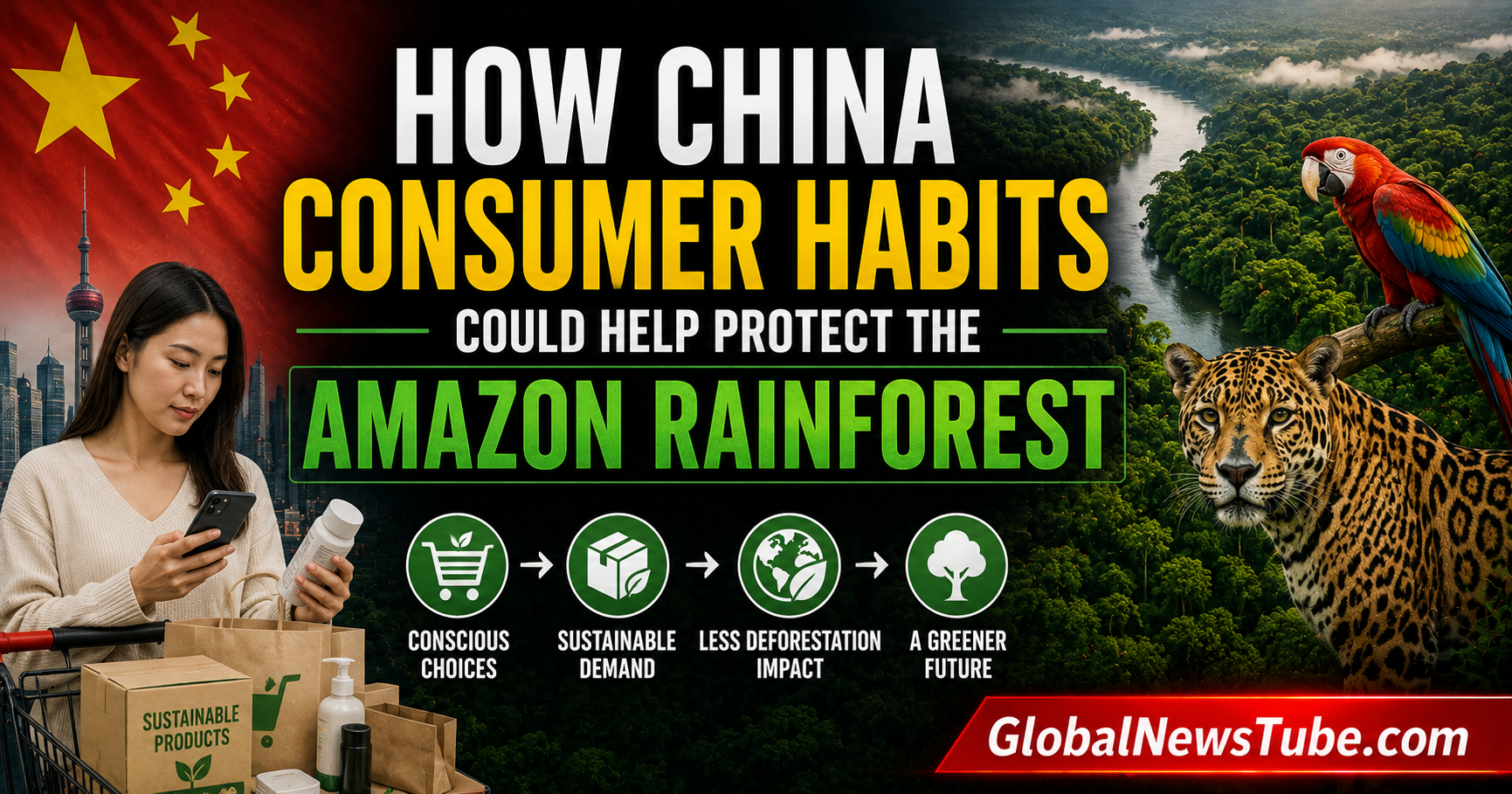
China consumer habits are undergoing a major transformation that could have important environmental consequences, particularly for Amazon rainforest protection. China has long been a price-sensitive market in global commodity trade, but this is gradually changing as consumers and importers place increasing importance on sustainability, traceability, and environmental responsibility.
Because China is one of the world largest importers of agricultural products such as beef and soy, its purchasing decisions have a direct influence on global supply chains. As awareness of environmental issues grows, China consumer habits are shifting away from purely cost driven decisions toward more sustainable choices. This evolution has the potential to reshape industries that have historically contributed to deforestation, especially in South America.
Beef Trade and Amazon Deforestation Link
The connection between China Brazil trade and Amazon rainforest deforestation is primarily driven by global demand for beef. Large portions of the Amazon are cleared to create pastureland for cattle, making livestock farming one of the leading causes of deforestation.
China plays a central role in this system as one of the largest importers of Brazilian beef. For years, suppliers assumed that Chinese buyers prioritized low prices over environmental concerns. However, this perception is now changing as China consumer habits evolve. Increasing attention to sustainability is pushing importers to consider environmental impact alongside cost, creating new pressure on suppliers to reduce deforestation practices.
Rising Demand for Deforestation-Free Beef
A key development in Amazon rainforest protection is the growing demand for deforestation free beef. Chinese importers and industry groups have begun committing to purchasing certified sustainable beef, even at higher prices. In some cases, buyers are willing to pay a premium for products that meet environmental standards, signaling a shift in market priorities.
This trend is significant because it challenges the long standing assumption that sustainability cannot compete with affordability in large markets. The growing interest in deforestation free beef encourages producers in Brazil to adopt more responsible land use practices, which could help reduce deforestation rates in the Amazon over time.
Certification and Supply Chain Transparency
A major factor supporting this shift is the development of certification and traceability systems. These systems are designed to track beef production from farm to market, ensuring that products are not linked to deforestation.
For Chinese importers, traceability is becoming increasingly important not only for environmental reasons but also for food safety and quality assurance. However, implementing reliable tracking systems across complex supply chains remains challenging. Issues such as data accuracy, monitoring gaps, and potential fraud still need to be addressed to ensure full transparency.
Despite these challenges, certification systems are a crucial step toward building more sustainable supply chains and aligning global trade with environmental protection goals.
Policy Support and Corporate Responsibility
The shift in China consumer habits is also supported by government policies and corporate commitments. China has introduced measures aimed at reducing illegal deforestation linked to international trade and has strengthened cooperation with Brazil on environmental standards.
At the same time, major Chinese companies involved in agricultural imports are increasingly committing to sustainability targets. These include pledges to eliminate deforestation from supply chains and improve environmental monitoring practices.
Together, government regulations and corporate responsibility initiatives are reinforcing the shift toward more sustainable trade practices and encouraging broader adoption of environmentally friendly standards.
Challenges and Future Outlook
Despite positive developments, several challenges remain in achieving fully sustainable supply chains. One major issue is the complexity of tracking cattle across multiple stages of production. In many cases, animals pass through several farms before reaching processing facilities, making it difficult to verify their environmental history.
Another challenge is economic resistance. Some producers worry that stricter sustainability requirements could increase costs or reduce competitiveness. At the same time, not all consumers are willing or able to pay higher prices for certified products, which may slow the pace of adoption.
Even with these obstacles, the long-term outlook suggests meaningful progress. As China consumer habits continue to evolve, demand for sustainable products is expected to grow. Given China’s influence in global trade, even gradual changes in purchasing behavior can have a significant impact on deforestation rates in the Amazon.
If supported by stronger certification systems, government cooperation, and corporate commitment, these changes could play an important role in protecting one of the world most critical ecosystems.