


A Controversial Policy Shift
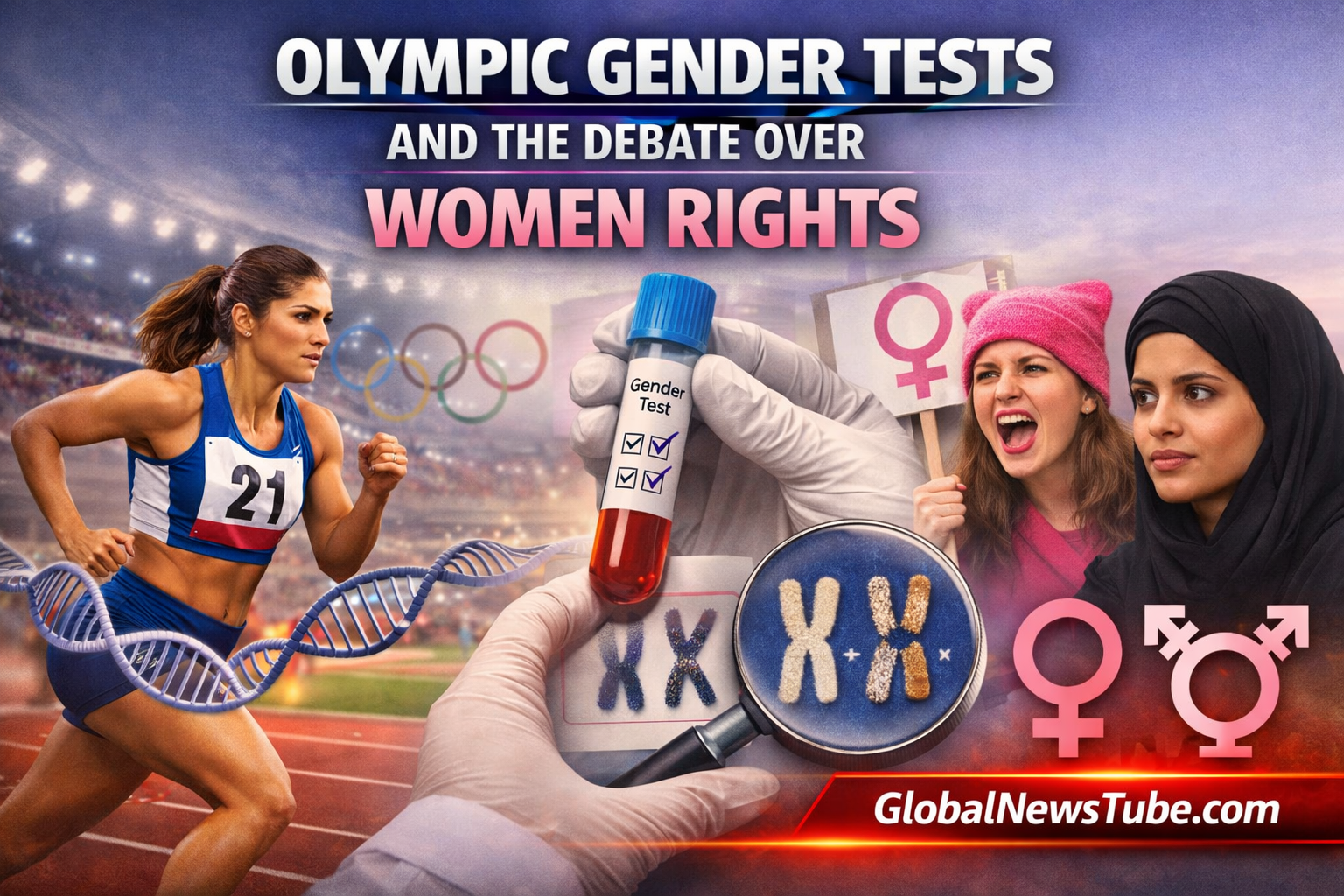
The International Olympic Committee (IOC) has announced that only biological females will be allowed to compete in women’s events at the 2028 Los Angeles Olympics. This decision reinstates gender verification tests, requiring athletes to undergo a one time SRY gene screening through saliva, cheek swab, or blood samples. The move has sparked outrage among athletes, activists, and medical experts, reigniting debates about fairness, discrimination, and the definition of womanhood in sports.
Caster Semenya Criticism
Caster Semenya, South Africa’s two time Olympic gold medalist in the 800 meters, has been at the center of gender and eligibility debates for more than a decade. She described the IOC’s decision as a disrespect for women, arguing that it forces female athletes to prove their legitimacy. Semenya emphasized that the policy disproportionately harms women from Africa and the Global South, who already face systemic barriers in sports. Her comments reflect broader concerns about how gender verification undermines dignity and equality.
Historical Context of Gender Testing
Gender verification in sports is not new. The IOC introduced chromosomal sex testing in 1968 but abandoned it in 1999 after criticism from scientists and athletes who questioned its accuracy and fairness. These tests often humiliated athletes and failed to account for natural biological variations, such as hyperandrogenism. Semenya herself became a symbol of this struggle after her dominance in middle distance running led to scrutiny of her testosterone levels.
Legal Battles and Human Rights
Semenya’s career has been shaped by legal disputes over sex eligibility rules. In 2025, she won a partial victory at the European Court of Human Rights, which ruled that her rights to a fair hearing had been violated. However, the court did not overturn World Athletics’ regulations that barred her from competing in the 800 meters without medical intervention to lower testosterone. These rulings highlight the tension between sports governance and human rights, with Semenya’s case symbolizing the fight for bodily autonomy and equality.
IOC’s Justification
IOC President Kirsty Coventry defended the new policy, claiming it is based on science and fairness. She argued that allowing biological males to compete in female categories would be unsafe and unfair, given the narrow margins that determine victory in elite sports. The IOC’s stance also aligns with political pressures, particularly from U.S. President Donald Trump, who issued an executive order banning transgender athletes from women’s sports in 2025. The IOC’s decision removes potential conflict with U.S. policy ahead of the Los Angeles Games.
Impact on Athletes and Sports
The reinstatement of gender testing will affect athletes across disciplines. Sports such as swimming, cycling, and athletics had already introduced restrictions on transgender women, while others allowed participation under certain conditions. The IOC’s blanket policy now overrides individual federations, creating uniform rules but also sparking backlash. Athletes like Semenya argue that the policy erases diversity and punishes women with natural biological variations.
Broader Social and Ethical Implications
The debate over gender testing extends beyond sports. It raises questions about how societies define gender, the role of science in shaping policy, and the balance between fairness and inclusion. Critics argue that the IOC’s approach reinforces stereotypes and undermines progress toward gender equality. Supporters claim it protects the integrity of women’s competitions. The controversy reflects broader cultural battles over identity, rights, and representation.
The Global South Perspective
Athletes from Africa, Asia, and Latin America often face additional scrutiny under gender testing policies. Many lack access to legal resources or medical support to challenge regulations. Semenya’s criticism highlights how these policies disproportionately affect athletes from marginalized backgrounds, reinforcing inequalities in global sports. The debate is not only about science but also about power, privilege, and representation.
Scientific Debate and Biological Complexity
Scientists remain divided on the issue. Some argue that testosterone levels provide a competitive advantage, while others emphasize that athletic performance depends on a wide range of factors including training, nutrition, and genetics. The complexity of biology makes it difficult to draw clear lines, and many experts caution against oversimplifying gender into binary categories. This scientific uncertainty adds weight to the argument that gender testing may be more political than medical.
Psychological and Emotional Impact
Beyond the physical and legal consequences, gender testing has profound psychological effects on athletes. Being forced to prove one’s identity can cause humiliation, stress, and long term emotional harm. Semenya has spoken openly about the toll these policies have taken on her mental health. For many athletes, the issue is not just about competition but about dignity, respect, and the right to exist without constant scrutiny.
The Future of Women Sports
As the 2028 Los Angeles Olympics approach, the reinstatement of gender verification tests will remain a flashpoint. The policy could reshape participation in women’s sports, forcing athletes to undergo invasive testing and potentially excluding those with natural biological variations. The outcome will influence how future generations of athletes experience competition, identity, and fairness.
A Divisive Turning Point
The IOC’s reinstatement of gender verification tests marks a turning point in the global debate over women’s sports. For athletes like Caster Semenya, it represents a continuation of discrimination and a denial of dignity. For the IOC, it is a measure to ensure fairness and safety. As the Games draw closer, the policy will remain a source of division, shaping not only the future of sports but also the broader struggle for equality and human rights.