


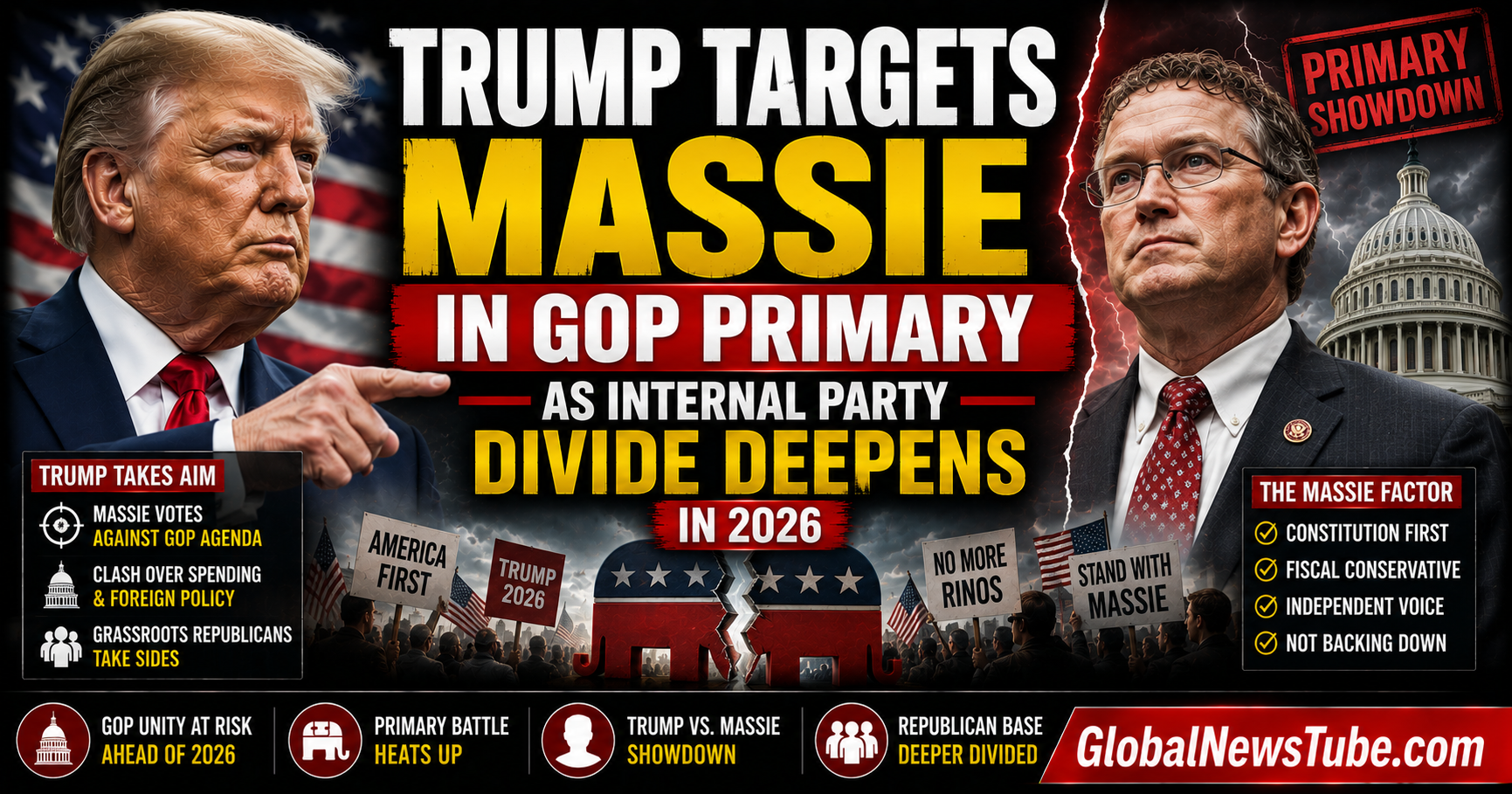
The political landscape within the Republican Party is undergoing a significant shift as Donald Trump intensifies efforts to reshape the GOP ahead of the 2026 elections. His latest move targeting Representative Thomas Massie in a primary challenge highlights a growing internal conflict that could redefine the party direction.
This confrontation reflects a broader strategy to consolidate influence by supporting loyal candidates while sidelining critics. As the Republican primary season unfolds, the implications are becoming increasingly clear across the political spectrum.
Trump vs Massie A High Profile GOP Showdown
The clash between Donald Trump and Thomas Massie represents more than a personal political disagreement. It reflects deeper ideological divisions within the Republican Party. Massie, known for his independent and libertarian leaning positions, has at times taken stances that differ from Trump approach.
Trump decision to support a challenger against Massie signals a willingness to confront even established Republicans who do not fully align with his agenda. What was once considered a secure seat has now become a competitive and closely watched primary race.
The Rise of Trump Backed Candidates
Across the United States, Trump has increasingly endorsed candidates who demonstrate strong alignment with his political vision. These Trump backed candidates are gaining momentum in multiple races, reshaping the Republican primary landscape.
The strategy focuses on replacing dissenting voices with individuals who support Trump leadership and policies. This has led to a wave of primary challenges against incumbent Republicans who have expressed criticism or taken independent positions.
Supporters believe this approach strengthens party unity, while critics argue it limits diversity of opinion within the GOP.
Republican Critics Face Increasing Pressure
The targeting of Thomas Massie is part of a broader trend in which Republican critics are facing growing political pressure. Lawmakers who have disagreed with Trump on key issues are increasingly vulnerable to primary challenges.
This environment has created a cautious atmosphere within the party, where political survival may depend on alignment with Trump views. Some Republicans have chosen to publicly support Trump, while others continue to advocate for independent policymaking.
This internal tension is reshaping how debates and decisions take place within the party.
Impact on the 2026 Republican Primary Elections
The 2026 Republican primaries are becoming highly significant as Trump influence continues to shape candidate selection and campaign dynamics. Many races are now seen as tests of loyalty and alignment rather than traditional policy debates.
Voters in key states are faced with choices between candidates representing different visions for the party future. This dynamic is creating a more competitive and polarized primary season.
The outcomes of these elections will play a crucial role in determining the direction of the Republican Party in the coming years.
Broader Political Implications for the GOP
The internal conflict within the Republican Party has broader political implications. Trump influence has energized a large segment of the party base, increasing engagement and participation.
However, these divisions may also pose challenges in attracting moderate voters and independents. Balancing internal unity with broader electoral appeal remains a key issue for the GOP.
Political observers note that the party long-term success will depend on how it navigates these competing pressures.
The decision to target Thomas Massie in a primary challenge marks an important moment in the evolution of the Republican Party. As Donald Trump continues to influence candidate selection and party dynamics, the GOP is experiencing a period of transformation.
The 2026 elections will be critical in shaping the party future, determining whether it moves toward greater unity under a single vision or continues to experience internal divisions.
The outcome will have lasting effects not only on the Republican Party but also on the broader political landscape in the United States.