


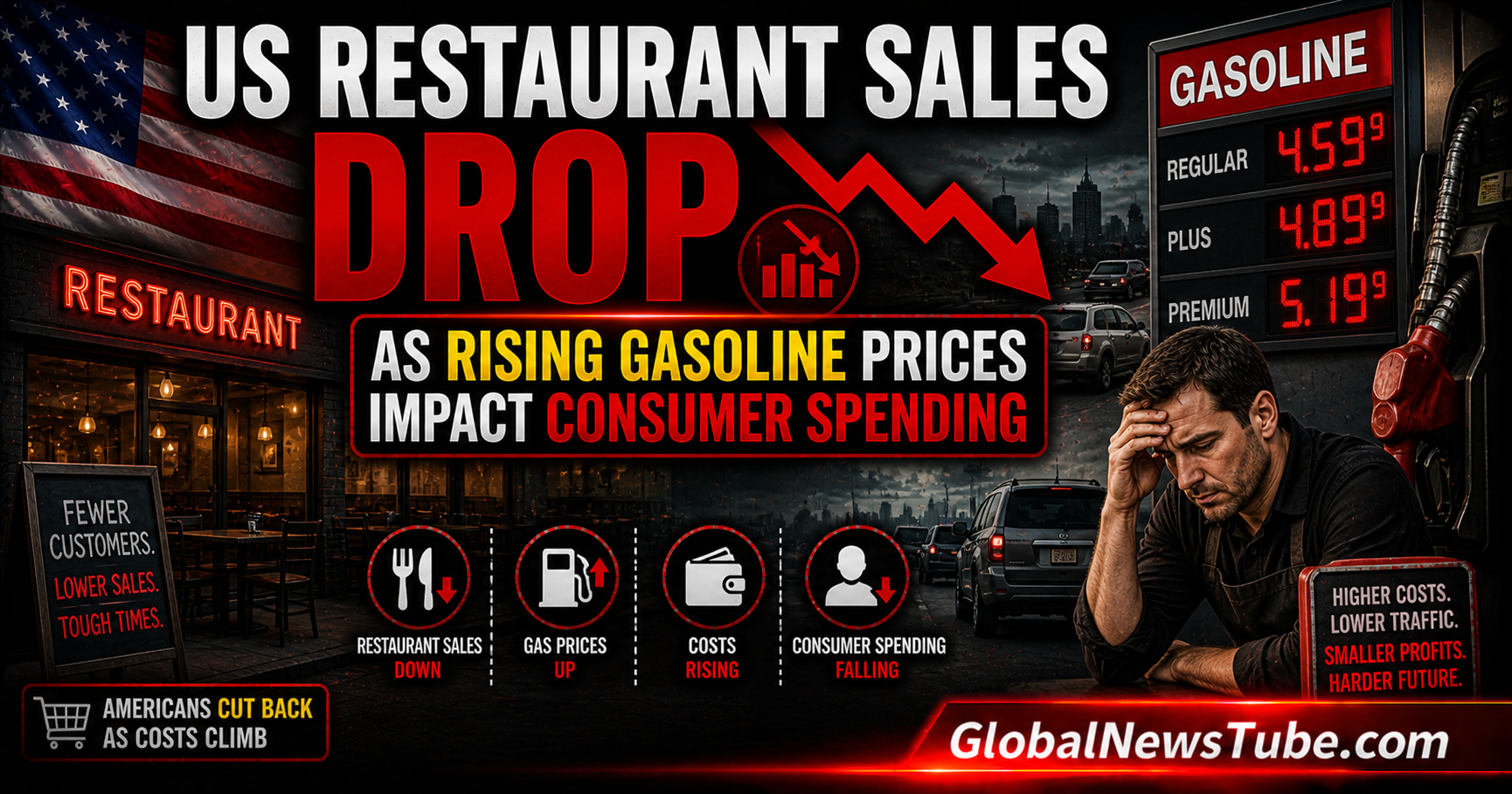
The recent US restaurant sales drop has raised concerns about the overall health of the American economy. As gasoline prices continue to rise due to global geopolitical tensions, consumers are being forced to rethink their spending habits. Dining out is often considered a non-essential expense, making it one of the first areas where households cut back when financial pressure increases. This shift in behavior reflects how external economic factors directly influence everyday consumer decisions.
Higher fuel costs are reducing disposable income for millions of Americans. With more money being spent on transportation and essential goods, less is available for leisure activities such as dining out. This change is having a noticeable impact on the restaurant industry, which depends heavily on consistent customer traffic. The decline in restaurant sales highlights the connection between energy prices, consumer confidence, and economic activity.
Impact of Rising Gasoline Prices on Consumer Behavior
Rising fuel costs are one of the main drivers behind the US restaurant sales drop. When gasoline prices increase significantly, consumers tend to prioritize essential expenses and reduce discretionary spending. This includes limiting visits to restaurants, entertainment venues, and other non-essential services.
Higher transportation costs affect both daily commuting and long distance travel. As households spend more on fuel, they become more cautious about other expenditures. This results in fewer dining out experiences and a shift toward home cooked meals. The psychological impact of rising prices also plays a role, as consumers feel less financially secure and become more conservative in their spending.
The increase in gasoline prices also affects businesses directly. Restaurants face higher delivery costs, increased prices for supplies, and rising operational expenses. These challenges force businesses to either raise prices or absorb the additional costs, both of which can negatively impact customer demand.
Overall, rising fuel prices create a ripple effect throughout the economy, influencing both consumers and businesses. The restaurant industry, being highly sensitive to changes in consumer behavior, is among the first to experience the impact.
How Fuel Costs Are Driving US Restaurant Sales Drop
The direct connection between fuel prices and the US restaurant sales drop is becoming increasingly clear. As gasoline prices approach higher levels, consumers begin to adjust their spending patterns. Dining out becomes less frequent, and budget conscious individuals seek more affordable alternatives.
Restaurants across different segments are experiencing reduced foot traffic. Casual dining establishments and mid range restaurants are particularly affected, as they rely heavily on regular customer visits. Fast food chains may perform slightly better due to their lower price points, but even these businesses are not immune to the overall decline in spending.
The decline is more pronounced among middle income households, which are more sensitive to changes in fuel costs. These consumers often reduce discretionary spending more quickly when faced with financial pressure. As a result, restaurants are seeing a drop in revenue and a decrease in customer engagement.
The impact is not limited to urban areas. Suburban and rural regions, where transportation costs are often higher, are also experiencing reduced restaurant activity. This widespread decline highlights the significant influence of fuel prices on consumer behavior and industry performance.
Restaurant Industry Response to Sales Decline
In response to the ongoing US restaurant sales drop, businesses are adopting various strategies to attract customers and maintain revenue. One common approach is offering value based promotions and discounts. By providing affordable meal options, restaurants aim to appeal to budget conscious consumers who are limiting their spending.
Many restaurants are also focusing on improving operational efficiency. This includes streamlining menus, reducing waste, and optimizing staff schedules. By controlling costs, businesses can better manage the financial impact of declining sales. Some establishments are also investing in technology, such as online ordering systems and delivery platforms, to reach customers more effectively.
Another strategy involves enhancing the overall customer experience. Restaurants are focusing on service quality, ambiance, and convenience to encourage repeat visits. However, these efforts must be balanced with cost considerations, as rising expenses make it challenging to invest heavily in improvements.
Despite these strategies, the industry continues to face uncertainty. The effectiveness of these measures depends largely on broader economic conditions and the ability of consumers to regain financial confidence.
Broader Economic Impact of Consumer Spending Decline
The US restaurant sales drop reflects a larger trend of reduced consumer spending across multiple sectors. When households cut back on dining out, it often signals broader economic challenges. Other industries, including retail, travel, and entertainment, may experience similar declines.
Reduced consumer spending can slow economic growth and affect employment levels. The restaurant industry alone employs millions of workers, and declining sales may lead to reduced hours or job losses. This creates a cycle in which lower income leads to further reductions in spending.
The decline in restaurant activity also affects supply chains. Food suppliers, distributors, and service providers all rely on consistent demand from restaurants. When sales decrease, these businesses may also experience financial pressure.
Economic analysts view changes in restaurant sales as an important indicator of consumer confidence. When people feel financially secure, they are more likely to spend on leisure activities. Conversely, a decline in spending suggests uncertainty about future economic conditions.
The broader impact of reduced spending highlights the interconnected nature of the economy. Changes in one sector can influence multiple industries, creating widespread effects.
Future Outlook for the Restaurant Industry
The future of the restaurant industry will depend largely on the direction of fuel prices and overall economic stability. If gasoline prices remain high, the US restaurant sales drop may continue, placing additional pressure on businesses.
However, there are potential opportunities for adaptation and growth. Restaurants that focus on affordability and convenience may be better positioned to attract customers. Value driven menus, efficient operations, and digital services can help businesses navigate challenging conditions.
Innovation will play a key role in the industry recovery. Restaurants that embrace new technologies and adapt to changing consumer preferences are more likely to succeed. Delivery services, mobile ordering, and loyalty programs can help maintain customer engagement even during periods of reduced spending.
Economic recovery will also depend on external factors such as global energy markets and geopolitical stability. If fuel prices stabilize or decrease, consumer confidence may improve, leading to increased spending. This would provide relief to the restaurant industry and support overall economic growth.
US Restaurant Sales Drop Highlights Economic Challenges
The ongoing US restaurant sales drop serves as a clear indicator of the challenges facing the American economy. Rising gasoline prices have forced consumers to adjust their spending habits, reducing demand for non-essential services such as dining out.
The restaurant industry is responding with strategic adjustments, but the broader economic environment remains uncertain. The situation highlights the impact of external factors on consumer behavior and business performance.
As economic conditions evolve, both consumers and businesses will need to adapt to changing circumstances. The ability to manage costs, innovate, and respond to consumer needs will determine the long-term success of the restaurant industry. Ultimately, the trend underscores the importance of economic stability in supporting consumer confidence and sustaining growth across all sectors.