

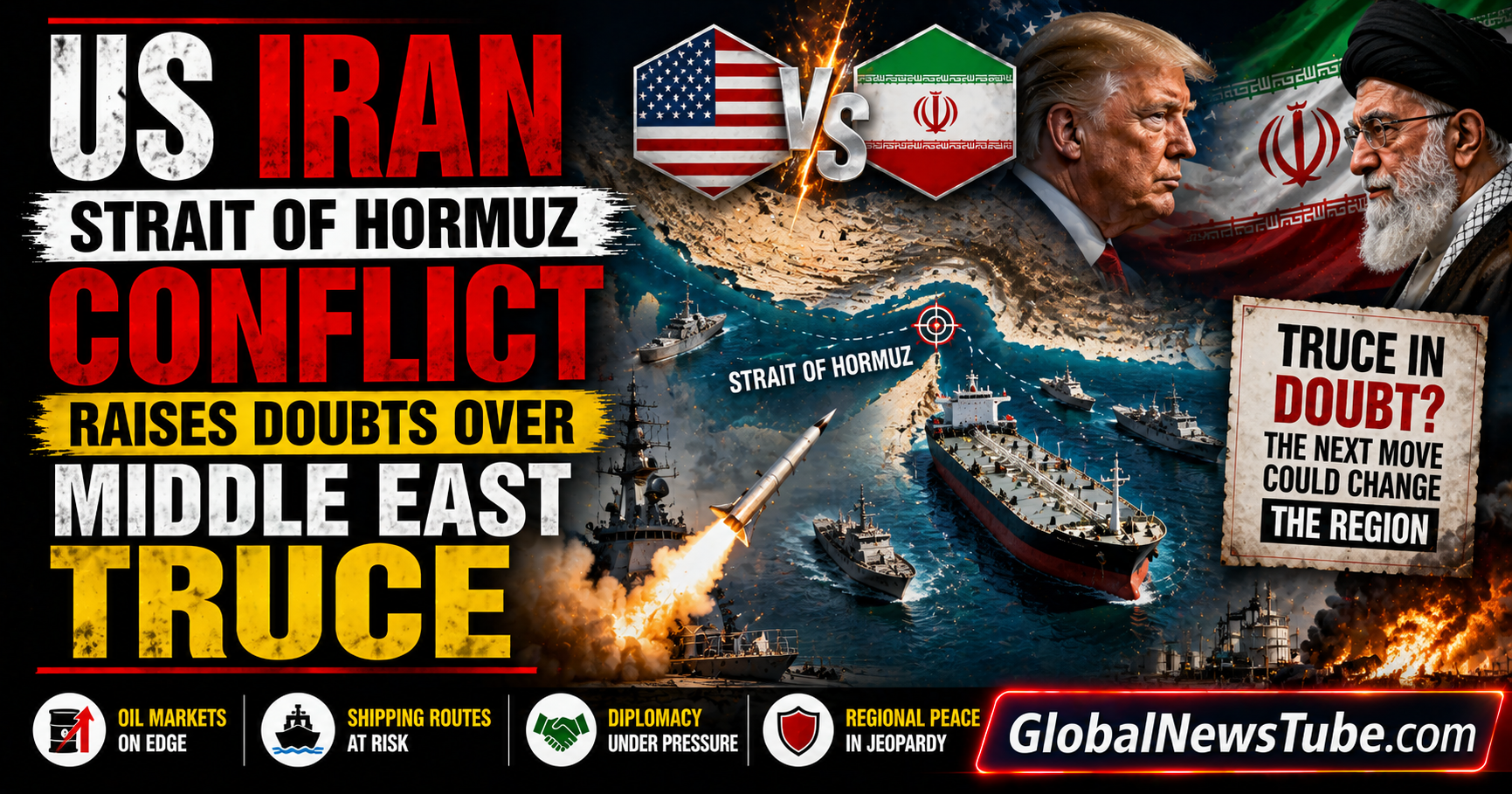
The escalating US Iran Strait of Hormuz conflict has cast serious doubt over the fragile truce in the Middle East, raising concerns about regional stability and global energy security. What was initially seen as a temporary pause in hostilities has now been shaken by renewed military actions between the United States and Iran, particularly in one of the world most critical maritime routes.
The Strait of Hormuz serves as a vital chokepoint for global oil shipments, making any disruption in the region a matter of international concern. As tensions intensify, the risk of prolonged conflict threatens not only regional peace but also global economic stability. The situation highlights the complex interplay between military strategy, diplomacy, and economic interests in a rapidly evolving geopolitical environment.
Background of the US Iran Strait of Hormuz Conflict
The current US Iran Strait of Hormuz conflict stems from ongoing hostilities that began earlier in 2026. Although a ceasefire was established to reduce tensions, it has remained fragile due to unresolved disputes over control of the strategic waterway. The Strait of Hormuz is a narrow passage connecting the Persian Gulf to global markets, and it handles a significant portion of the world oil supply.
Recent developments have seen both the United States and Iran engage in military operations aimed at asserting control over the strait. U.S. forces have conducted operations to protect commercial shipping, while Iran has responded with measures designed to restrict access and challenge foreign presence in the region.
The conflict reflects broader geopolitical tensions involving multiple actors, including Gulf states and international allies. The struggle for control over this critical route has become a central issue in negotiations and military strategies, complicating efforts to maintain peace.
Renewed Military Clashes Threaten Fragile Truce
The US Iran Strait of Hormuz conflict has intensified with renewed military clashes, putting the already fragile truce at risk. Reports indicate that both sides have engaged in direct confrontations, including naval incidents, drone operations, and missile activity.
The United States has launched operations aimed at ensuring safe passage for oil tankers, while Iran has used a combination of naval forces and advanced technologies to assert its influence over the waterway. These actions have led to a series of incidents involving commercial ships, further escalating tensions.
The situation has been described as a dangerous standoff, with both sides maintaining military presence and readiness for further escalation. Analysts warn that continued clashes could quickly lead to a breakdown of the ceasefire, resulting in a broader conflict across the region.
The inability to maintain stability in the Strait of Hormuz underscores the challenges of managing conflicts in strategically important areas. As both nations pursue their objectives, the risk of unintended escalation remains high.
Impact on Global Oil Supply and Energy Markets
The US Iran Strait of Hormuz conflict has had a significant impact on global oil markets and energy supply chains. The Strait of Hormuz is one of the most important routes for transporting oil, with a large percentage of global energy supplies passing through it. Disruptions in this area can lead to sharp increases in oil prices and uncertainty in global markets.
Recent tensions have already resulted in reduced shipping activity, with many vessels avoiding the region due to security concerns. This decline in maritime traffic has created supply constraints, contributing to rising fuel costs worldwide.
Energy analysts warn that prolonged disruption could have far reaching consequences for the global economy. Higher oil prices can lead to increased transportation costs, inflation, and reduced economic growth. Countries that rely heavily on imported energy are particularly vulnerable to these fluctuations.
The conflict also affects insurance and shipping costs, as companies must account for the increased risk of operating in a conflict zone. These additional costs are often passed on to consumers, further amplifying the economic impact.
Diplomatic Efforts and Challenges to Peace Negotiations
Efforts to resolve the US Iran Strait of Hormuz conflict through diplomacy have faced significant challenges. Peace talks mediated by regional and international actors have struggled to produce meaningful progress, as both sides remain firm in their positions.
Iran has proposed ceasefire conditions that include delaying discussions on certain strategic issues, while the United States has insisted on addressing broader security concerns. These differences have created a stalemate in negotiations, making it difficult to achieve a lasting agreement.
The involvement of multiple stakeholders further complicates diplomatic efforts. Gulf states, international organizations, and global powers all have vested interests in the outcome of the conflict. Coordinating these interests requires careful negotiation and compromise, which has proven challenging under current conditions.
Despite these difficulties, diplomatic channels remain open, and efforts continue to find a peaceful resolution. However, ongoing military activities suggest that a quick resolution is unlikely.
Strategic Importance of the Strait of Hormuz
The US Iran Strait of Hormuz conflict highlights the strategic importance of this critical maritime route. The strait serves as a gateway for oil exports from major producers in the Middle East, making it essential for global energy security. Any disruption in the region has immediate and widespread consequences.
Control over the Strait of Hormuz provides significant leverage in geopolitical negotiations. For Iran, asserting influence over the waterway strengthens its position in regional politics. For the United States and its allies, ensuring free navigation is crucial for maintaining global trade and energy supply.
The strategic value of the strait has made it a focal point of military and political activity. Both sides have deployed significant resources to protect their interests, including naval forces, surveillance systems, and defensive measures.
The ongoing conflict underscores the importance of securing critical infrastructure in maintaining global stability. As tensions continue, the Strait of Hormuz remains a key area of concern for policymakers and international observers.
Future Outlook for US Iran Strait of Hormuz Conflict
The future of the US Iran Strait of Hormuz conflict remains uncertain, with several possible scenarios emerging. Continued military escalation could lead to a broader regional conflict, involving additional countries and further destabilizing the Middle East.
Alternatively, diplomatic efforts may eventually lead to a negotiated settlement, although this would require significant concessions from both sides. Achieving such an agreement would depend on addressing key issues, including security concerns, economic pressures, and regional influence.
Analysts also consider the possibility of a prolonged stalemate, where tensions remain high but do not escalate into full scale conflict. This scenario would continue to disrupt global markets and create uncertainty for businesses and governments.
The role of international organizations and mediators will be critical in shaping the outcome. Coordinated efforts to reduce tensions and promote dialogue could help prevent further escalation and support long-term stability.
US Iran Strait of Hormuz Conflict Puts Global Stability at Risk
The ongoing US Iran Strait of Hormuz conflict represents a significant challenge to regional and global stability. The breakdown of a fragile truce and the escalation of military activities highlight the complexity of resolving conflicts in strategically important areas.
The impact of the conflict extends beyond the Middle East, affecting global energy markets, economic conditions, and international relations. As tensions continue, the need for effective diplomacy and conflict resolution becomes increasingly urgent.
The situation serves as a reminder of the interconnected nature of global systems, where regional conflicts can have far reaching consequences. Maintaining stability in the Strait of Hormuz is essential for ensuring the smooth functioning of global trade and energy supply.
Ultimately, the future of the conflict will depend on the ability of involved parties to balance their strategic interests with the need for peace. The path forward remains uncertain, but the stakes are undeniably high for both the region and the world.


