

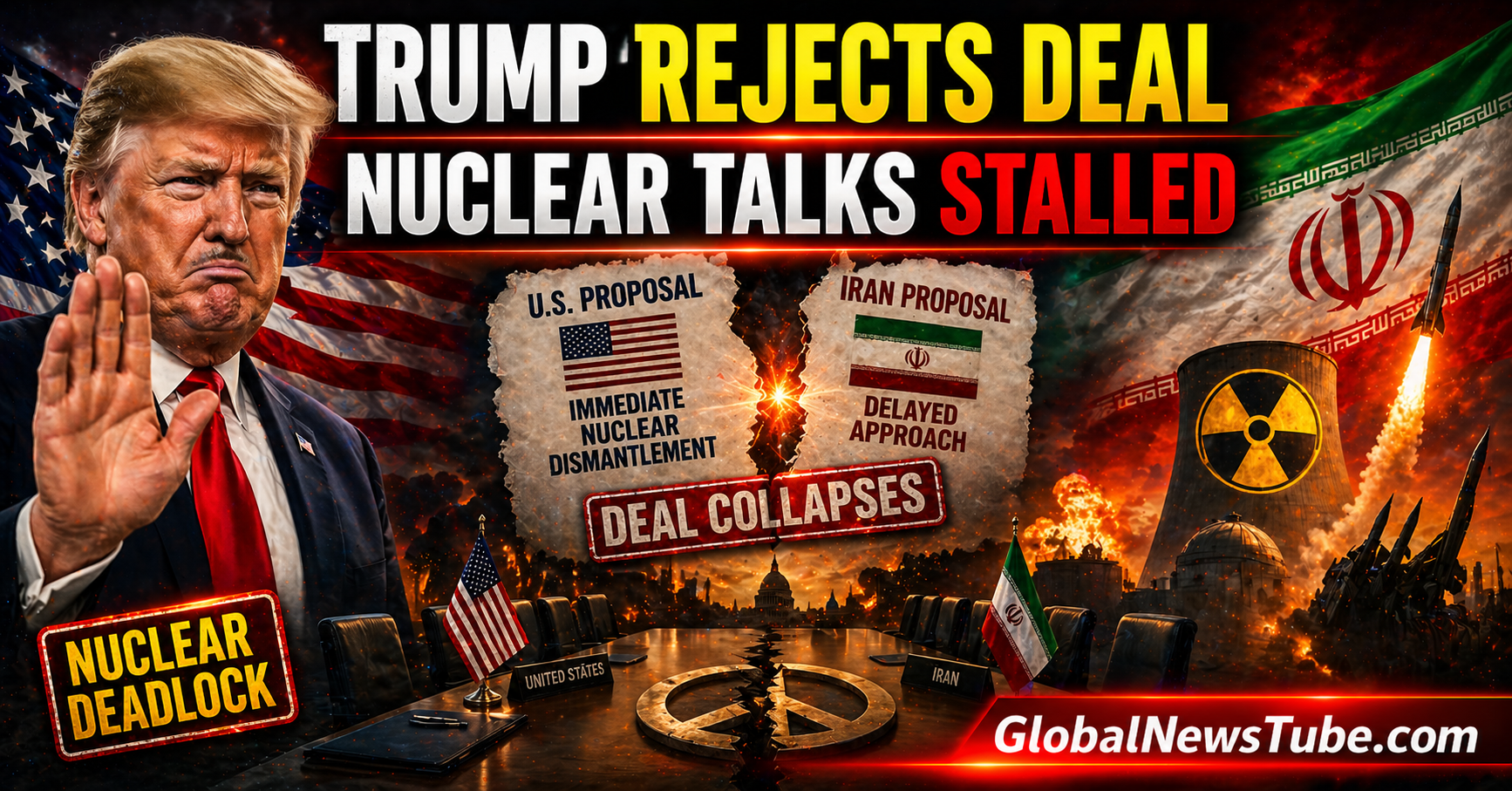
The ongoing tensions between the United States and Iran have reached another critical turning point after Donald Trump rejected Tehran’s latest proposal to end the war. The development has significantly reduced hopes for a near term diplomatic breakthrough and highlights the deep rooted disagreements between the two nations. At the center of the dispute is Iran’s nuclear program, which continues to be the most contentious issue in negotiations. As global markets react and geopolitical tensions remain high, the rejection of the proposal signals a prolonged and uncertain path toward peace.
Trump Rejects Iran Proposal
The latest proposal put forward by Iran aimed to reduce immediate hostilities by focusing first on a ceasefire and regional stability measures. However, it deliberately postponed discussions regarding Iran’s nuclear program to later stages of negotiations. This approach did not align with the stance of Donald Trump, who has consistently emphasized that nuclear concerns must be addressed upfront. U.S. officials indicated that the proposal was unacceptable in its current form, effectively halting progress in ongoing peace talks and reinforcing the diplomatic deadlock.
Iran Phased Negotiation Strategy
Iran’s approach reflects a calculated phased strategy designed to ease tensions gradually. The proposal includes immediate steps such as ending hostilities, stabilizing maritime routes, and reopening critical trade channels. Only after these measures would more complex issues, particularly nuclear negotiations, be addressed. Iranian leaders believe this method could help build trust between both sides. However, from the U.S. perspective, delaying nuclear discussions could allow Iran to continue advancing its capabilities, which Washington views as a significant risk.
The Core Issue Nuclear Program Dispute
The disagreement over Iran’s nuclear program remains the central obstacle to peace. The United States has long demanded that Iran halt uranium enrichment, dismantle key nuclear facilities, and allow strict international inspections. Donald Trump has repeatedly stated that any agreement must guarantee that Iran cannot develop nuclear weapons. On the other hand, Iran maintains that its nuclear program is intended for peaceful purposes and insists on its sovereign right to pursue nuclear technology. This clash of positions continues to block meaningful progress in negotiations.
Strait of Hormuz and Global Impact
A significant aspect of the proposed agreement involved reopening the Strait of Hormuz, one of the world’s most critical oil transit routes. The ongoing conflict has severely disrupted shipping through the strait, leading to reduced oil flows and rising global prices. The situation has placed immense pressure on international markets, with energy costs surging and supply chains facing disruptions. The United States has imposed restrictions aimed at limiting Iran’s oil exports, further escalating tensions in the region.
Diplomatic Efforts and Regional Mediation
Various countries have attempted to mediate the conflict and bring both sides back to the negotiating table. Pakistan has played a notable role by hosting diplomatic discussions aimed at easing tensions. Despite these efforts, recent developments suggest a slowdown in mediation progress, with key diplomatic engagements being postponed or canceled. The involvement of regional players highlights the broader implications of the conflict, as neighboring nations seek to prevent further escalation and instability.
Role of Global Powers
The conflict has also drawn the attention of major global powers. Russia, under the leadership of Vladimir Putin, has shown support for Iran’s diplomatic outreach efforts. Meanwhile, European nations have expressed concern over the potential economic and security consequences of prolonged conflict. The involvement of these actors adds another layer of complexity to the situation, as geopolitical alliances and strategic interests influence the direction of negotiations.
Military Tensions and Economic Fallout
The ongoing war has already resulted in significant human and economic costs. Military engagements have caused casualties and infrastructure damage, while disruptions in oil exports have affected global markets. Rising energy prices have contributed to inflation, impacting economies worldwide. The heightened military presence in the region has also increased the risk of further escalation, with incidents involving commercial shipping adding to the uncertainty.
Why Peace Talks Are Struggling
Several key factors explain why peace negotiations have failed to produce results. The primary issue is the disagreement over the timing of nuclear discussions, with both sides unwilling to compromise. Additionally, a deep lack of trust continues to hinder progress, as each side questions the intentions of the other. Strategic considerations also play a role, as both nations seek to maintain leverage in negotiations. Furthermore, the involvement of regional and global powers complicates the diplomatic landscape, making it more difficult to reach a consensus.
Impact on Global Markets
The uncertainty surrounding the conflict has had a noticeable impact on global financial markets. Oil prices have surged due to supply disruptions, while stock markets have experienced increased volatility. Investors remain cautious as they monitor developments, aware that any escalation could further destabilize the global economy. The situation underscores the interconnected nature of modern geopolitics, where regional conflicts can have far reaching economic consequences.
Looking ahead, the path to peace remains uncertain. If both sides continue to hold firm on their positions, the conflict could persist, leading to further instability. However, there is still a possibility that renewed diplomatic efforts could bring about a revised agreement. International mediators may attempt to bridge the gap by proposing compromises that address both immediate concerns and long-term issues. The outcome will largely depend on whether the United States and Iran can find common ground on the nuclear issue.
The rejection of Iran’s latest proposal by Donald Trump marks a significant setback in efforts to end the ongoing war. The fundamental disagreement over Iran’s nuclear program continues to block progress and prolong the conflict. While Iran’s phased approach aims to reduce tensions gradually, the United States insists on addressing nuclear concerns at the outset. As a result, negotiations remain stalled, and the prospects for a quick resolution appear limited. Until both sides are willing to compromise, the conflict is likely to continue, with wide ranging implications for regional stability and the global economy.


