

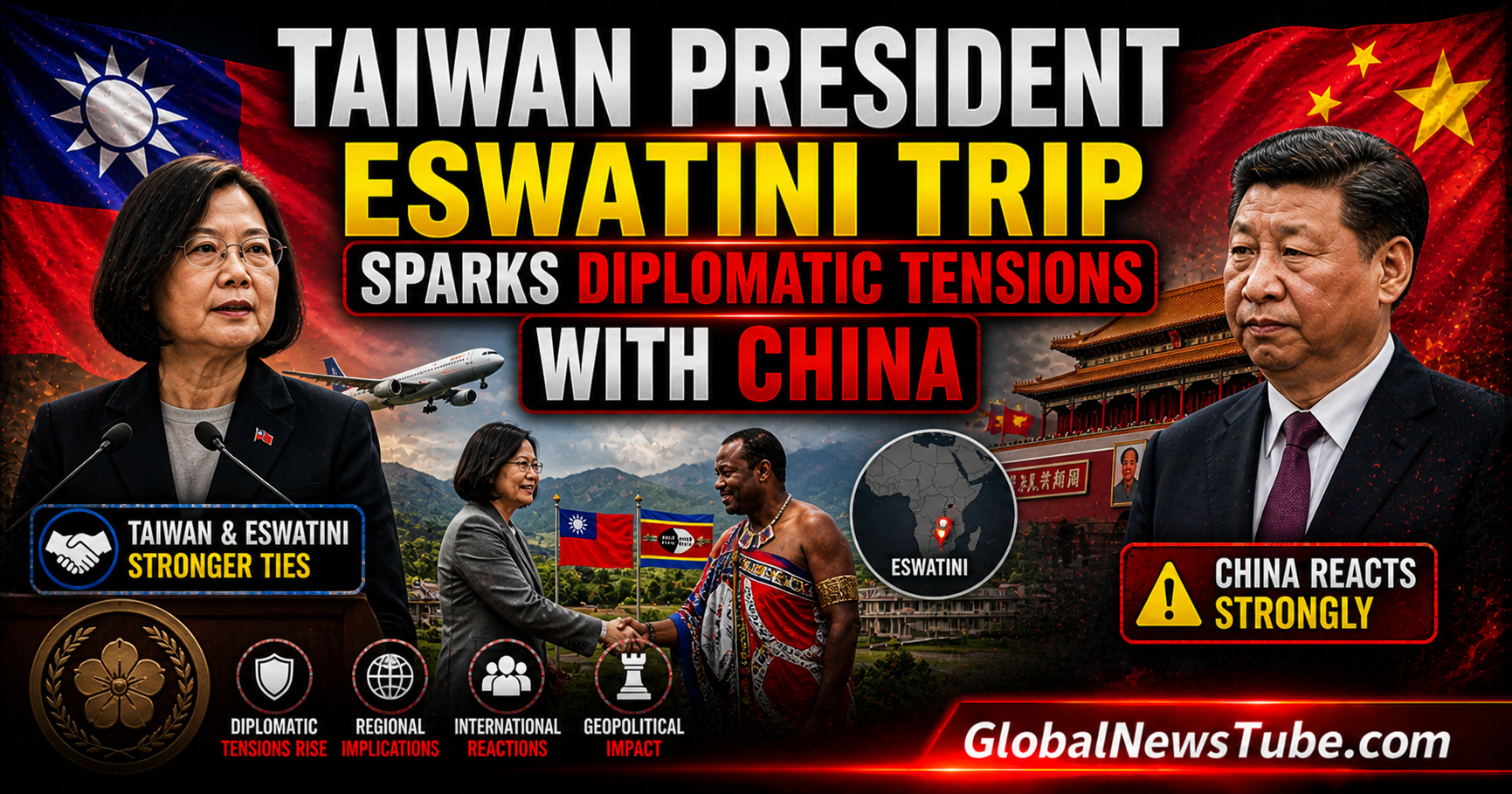
The recent Taiwan President Eswatini trip has intensified diplomatic tensions between Taiwan and China, drawing global attention to the sensitive geopolitical situation surrounding Taiwan international relations. Taiwan President Lai Ching te began an official visit to Eswatini, one of Taiwan few remaining diplomatic allies, in a move widely viewed as a demonstration of Taiwan determination to maintain international partnerships despite pressure from Beijing. The trip highlights Taiwan continued efforts to preserve relationships with countries that formally recognize its sovereignty.
China reacted strongly to the visit, criticizing Taiwan leadership and expressing opposition to the strengthening of diplomatic ties between Taiwan and foreign nations. Taiwan officials defended the trip as a legitimate diplomatic mission and emphasized their right to engage with global partners. The visit also highlights Taiwan broader strategy to maintain alliances with countries that continue to recognize its independence. The situation reflects ongoing geopolitical competition between Taiwan and China, particularly in regions where diplomatic recognition remains contested.
Background of the Taiwan President Eswatini Trip
The Taiwan President Eswatini trip was carefully organized and carried out with strict planning due to concerns about possible disruptions. Travel details were kept confidential until the president had safely arrived in Eswatini. This approach demonstrates the increasing challenges Taiwan faces when conducting diplomatic travel under growing international pressure.
Eswatini holds special importance in Taiwan foreign policy because it remains the only African country maintaining official diplomatic relations with Taiwan. The visit also coincided with major national celebrations in Eswatini, strengthening the symbolic significance of the trip. During the visit, Taiwan reaffirmed its commitment to enhancing cooperation in sectors such as agriculture, healthcare, education, and infrastructure development.
Keeping travel plans undisclosed until arrival helped reduce the risk of interference or logistical complications. The secrecy surrounding the trip reflects the strategic challenges Taiwan encounters in maintaining diplomatic ties. This visit serves as a strong example of Taiwan commitment to sustaining relationships with its remaining allies despite political pressures.
China Reaction and Escalating China Taiwan Tensions
China response to the Taiwan President Eswatini trip was immediate and forceful. Officials in Beijing criticized the visit and repeated their long standing stance that Taiwan does not have the right to maintain state level diplomatic relationships. China considers Taiwan part of its territory and strongly opposes any actions that appear to support Taiwan independence.
The strong reaction from China demonstrates how sensitive Taiwan diplomatic activities remain. Taiwan authorities responded by stating that their president does not require approval from China to conduct international visits. Taiwan leadership emphasized that the country has the right to maintain diplomatic relations and participate in global affairs.
The tensions surrounding the visit highlight the broader political conflict between China and Taiwan over sovereignty and international recognition. China continues to promote policies aimed at limiting Taiwan global presence. Taiwan, however, remains committed to strengthening its relationships with supportive nations. This ongoing conflict contributes to regional uncertainty and influences international political discussions.
Global observers note that such diplomatic conflicts can affect trade, security, and political cooperation across multiple regions. The situation surrounding this visit highlights the importance of diplomatic engagement and the challenges associated with managing international tensions.
Importance of Taiwan Diplomatic Allies Like Eswatini
The Taiwan President Eswatini trip demonstrates the importance of maintaining strong diplomatic relationships with countries that officially recognize Taiwan. Taiwan currently maintains formal diplomatic ties with a limited number of nations, making each partnership highly valuable. These relationships allow Taiwan to maintain an international presence and participate in diplomatic activities.
Eswatini has maintained diplomatic relations with Taiwan for decades, creating a strong foundation for cooperation between the two countries. Taiwan has supported development projects in Eswatini through financial assistance, infrastructure investments, and technical support programs. These efforts have strengthened bilateral relations and promoted long-term collaboration.
Maintaining alliances with countries like Eswatini also supports Taiwan international identity. Each diplomatic partnership represents an opportunity for cooperation in economic development, cultural exchange, and humanitarian programs. These partnerships help Taiwan maintain its visibility in global affairs.
The gradual decline in Taiwan diplomatic allies over recent years has increased the importance of preserving existing relationships. China diplomatic efforts have encouraged some nations to shift recognition away from Taiwan. As a result, Taiwan has placed greater emphasis on strengthening ties with countries that continue to recognize it.
Eswatini remains particularly significant because it is Taiwan only diplomatic partner in Africa. Maintaining this relationship ensures that Taiwan retains representation within the African region and continues to participate in international collaboration efforts.
Travel Challenges and Diplomatic Pressure on Taiwan
The Taiwan President Eswatini trip was preceded by significant travel challenges that highlighted the diplomatic pressure Taiwan faces. Taiwan officials reported delays and logistical complications while arranging travel routes. Some transit permissions became difficult to secure, reflecting the influence of international diplomatic pressures.
These travel challenges demonstrate how geopolitical tensions can affect routine diplomatic missions. Countries along travel routes may face political pressure when deciding whether to allow Taiwanese officials to pass through their airspace. Such situations reveal the complexity of organizing international travel under sensitive political conditions.
China policies regarding Taiwan sovereignty continue to influence diplomatic interactions worldwide. Many countries follow policies that limit official recognition of Taiwan, creating obstacles for diplomatic travel. This environment requires Taiwan to plan visits carefully and adopt strategies that reduce risks.
Despite these difficulties, the successful completion of the visit demonstrates Taiwan determination to maintain relationships with its allies. The ability to overcome logistical challenges highlights the resilience of Taiwan diplomatic strategy and its commitment to international engagement.
These travel related challenges also emphasize the importance of global cooperation in maintaining diplomatic communication channels. As geopolitical tensions evolve, Taiwan ability to navigate complex travel arrangements will remain essential for sustaining its foreign relations.
Strategic Importance of Taiwan Foreign Relations
The Taiwan President Eswatini trip underscores the broader importance of Taiwan foreign relations in maintaining its global presence. Diplomatic partnerships provide Taiwan with opportunities to participate in international discussions and collaborate on development projects. Without strong foreign relations, Taiwan could face increased isolation in global affairs.
Taiwan diplomatic strategy includes strengthening partnerships in sectors such as technology, agriculture, healthcare, and education. These collaborations support mutual development and strengthen bilateral relationships. Through these partnerships, Taiwan contributes to economic growth and social development in partner countries.
Maintaining diplomatic ties also supports Taiwan economic interests. International partnerships encourage trade, investment, and knowledge exchange. These interactions help Taiwan remain competitive in global markets and maintain stable economic growth.
Foreign relations also play a role in promoting cultural exchange and humanitarian cooperation. Taiwan has participated in various international initiatives that support disaster relief, public health programs, and educational development. These contributions enhance Taiwan reputation as a responsible and cooperative global partner.
By strengthening diplomatic ties, Taiwan demonstrates its commitment to maintaining a meaningful role in global affairs. The continued development of international partnerships remains essential for sustaining Taiwan political and economic stability.
Future Outlook for China Taiwan Relations
The future of China Taiwan relations remains uncertain as tensions continue to shape diplomatic interactions. The Taiwan President Eswatini trip reflects a broader pattern of ongoing political competition between Taiwan and China. Taiwan seeks to strengthen its international presence, while China continues efforts to limit Taiwan diplomatic recognition.
Political analysts expect that similar diplomatic tensions may arise in the future as Taiwan continues to engage with its allies. China may respond with additional diplomatic pressure aimed at discouraging countries from maintaining formal relationships with Taiwan. This ongoing rivalry creates uncertainty in regional and global politics.
At the same time, Taiwan leadership remains focused on maintaining diplomatic stability and strengthening existing partnerships. Continued engagement with allied nations will play a crucial role in preserving Taiwan international influence. The development of new economic and cultural partnerships may help Taiwan maintain relevance in global affairs.
Technological cooperation, trade agreements, and humanitarian initiatives are expected to influence future diplomatic strategies. These activities provide opportunities for Taiwan to expand its international connections and strengthen relationships with supportive nations.
Taiwan President Eswatini Trip Highlights Global Diplomatic Challenges
The Taiwan President Eswatini trip represents an important development in international diplomacy and highlights the ongoing tensions between Taiwan and China. The visit demonstrates Taiwan determination to maintain relationships with its remaining diplomatic allies despite logistical and political challenges.
China strong reaction to the trip reflects deep-rooted disagreements over sovereignty and international recognition. The situation also illustrates how diplomatic relationships influence geopolitical stability. Maintaining strong alliances allows Taiwan to preserve its international presence and contribute to global cooperation.
As global political dynamics continue to evolve, Taiwan diplomatic strategy will remain critical to its future. Strengthening relationships with allied nations and maintaining international engagement will be essential for sustaining Taiwan global role. The visit to Eswatini serves as a clear example of the complex challenges faced by nations navigating sensitive political environments while striving to maintain international partnerships.


