

Pakistan Deploys Troops and Jets Amid Escalating Iran War
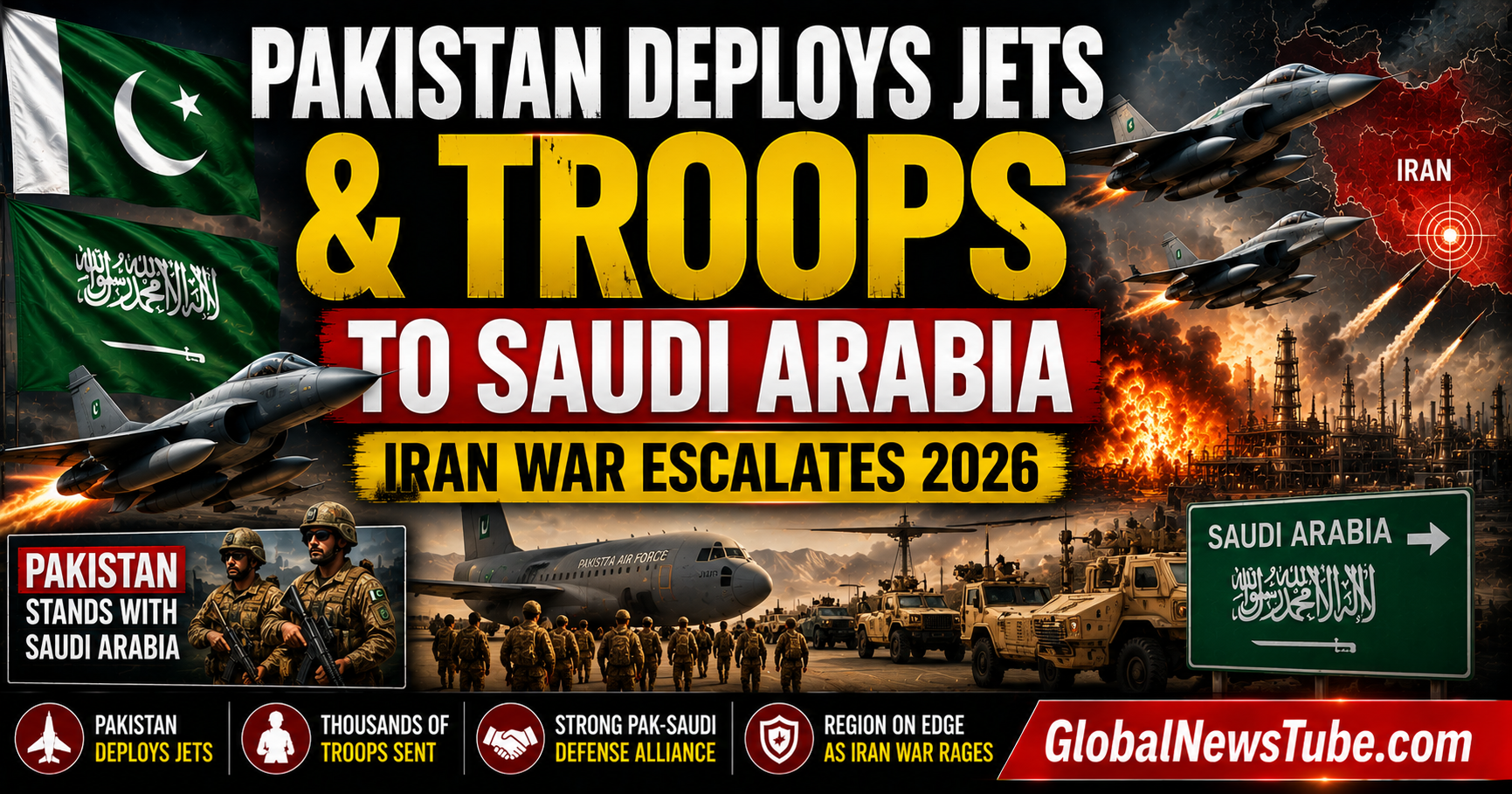
In a major geopolitical development, Pakistan has deployed a jet squadron along with thousands of troops to Saudi Arabia during the ongoing Iran war in 2026. This move marks a significant shift in the regional security landscape and highlights Pakistan complex role as both a military partner and a diplomatic mediator.
Reports indicate that Pakistan has sent thousands of troops, a squadron of fighter jets, drone units, and advanced air defense systems to Saudi Arabia under a mutual defense arrangement.
The deployment reflects growing tensions in the Middle East, where the Iran war has already drawn in multiple regional and global powers, raising concerns about a broader conflict.
Strategic Importance of Pakistan Military Deployment
The Pakistan troops Saudi Arabia Iran war deployment is not merely symbolic it represents a substantial military commitment. The forces include modern fighter jets, drone squadrons, and advanced air defense systems operated by Pakistani personnel.
Although officially described as a training and advisory mission, the scale and sophistication of the deployment indicate that Pakistan is prepared to assist Saudi Arabia in defending its territory if the conflict escalates further.
The presence of combat capable assets underscores the seriousness of the situation, especially as Saudi Arabia faces increasing security threats.
Saudi Arabia and Pakistan Defense Pact Explained
The deployment is rooted in a strategic defense understanding between Pakistan and Saudi Arabia, strengthening their long standing military partnership.
Under this framework, Pakistan has historically provided military training and advisory support to Saudi forces. However, the current deployment goes beyond past cooperation, signaling a more active security role during the Iran war.
Saudi Arabia remains a key economic and strategic ally of Pakistan, reinforcing the importance of this partnership in times of regional instability.
Pakistan Dual Role Mediator and Military Partner
One of the most important aspects of the Iran war Pakistan role is Islamabad attempt to balance military involvement with diplomatic mediation.
While deploying troops to Saudi Arabia, Pakistan has also positioned itself as a potential mediator in the conflict, advocating for dialogue and de-escalation.
This dual strategy allows Pakistan to maintain relations with both Saudi Arabia and Iran, despite their rivalry. Analysts describe this approach as a delicate balancing act aimed at protecting national interests while avoiding direct participation in the war.
Pakistan geographic proximity to Iran and its economic ties with Gulf countries make neutrality both essential and challenging.
Regional Tensions Continue to Escalate
The Middle East conflict 2026 has intensified in recent months, with rising tensions between Iran and Saudi Arabia. These developments have increased the risk of a wider regional war, drawing in additional countries and military alliances.
Pakistan deployment is seen as part of this broader escalation, as nations prepare for potential spillover effects.
The involvement of advanced weapon systems and air defense platforms further indicates that the conflict is evolving into a more complex military confrontation.
Military Capabilities Deployed by Pakistan
Pakistan deployment includes a range of modern military assets designed to enhance Saudi Arabia defensive capabilities.
Fighter jets provide air superiority, while drone units offer surveillance and reconnaissance capabilities. Advanced air defense systems are intended to protect against potential missile and aerial threats.
These capabilities significantly strengthen Saudi Arabia ability to respond to regional security challenges.
The deployment also demonstrates Pakistan growing military strength and its willingness to support allies when strategic interests are at stake.
Economic and Political Implications for Pakistan
The Iran war has created both security and economic challenges for Pakistan. The country relies heavily on energy imports from the Gulf, and any disruption in regional stability can directly impact its economy.
Additionally, millions of Pakistani workers in Gulf countries contribute significantly to remittances, making stability in Saudi Arabia and surrounding regions vital for Pakistan financial health.
By supporting Saudi Arabia, Pakistan aims to protect these economic interests while maintaining its diplomatic engagement with Iran.
However, this approach carries potential risks, including diplomatic tensions and internal political pressure.
Global Implications of Pakistan Move
Pakistan’s decision to deploy troops and jets to Saudi Arabia has broader implications for global geopolitics. It highlights the increasing involvement of regional powers in the Iran war and the possibility of shifting alliances.
The move also signals deeper defense cooperation between Pakistan and its strategic partners, reflecting changing dynamics in international relations.
At the same time, the deployment raises questions about how long Pakistan can maintain its neutral stance while supporting one side militarly.
A Delicate Balancing Act
As the Iran war continues, Pakistan faces a challenging path forward. Its dual role as both a mediator and a military partner will require careful navigation to avoid deeper involvement in the conflict.
The situation remains uncertain, with ongoing developments likely to shape the future of the region. Analysts warn that any escalation could further complicate Pakistan position.
Maintaining balance will be critical not only for Pakistan stability but also for broader peace efforts in the Middle East.
The Pakistan troops Saudi Arabia Iran war deployment marks a significant moment in the 2026 Middle East conflict. By sending fighter jets, troops, and advanced defense systems, Pakistan has demonstrated its commitment to regional security while continuing to support diplomatic solutions.
This dual approach reflects the complexities of modern geopolitics, where nations must carefully balance alliances and neutrality. As the conflict evolves, Pakistan role will remain crucial in shaping both military developments and potential peace initiatives in the region.


