

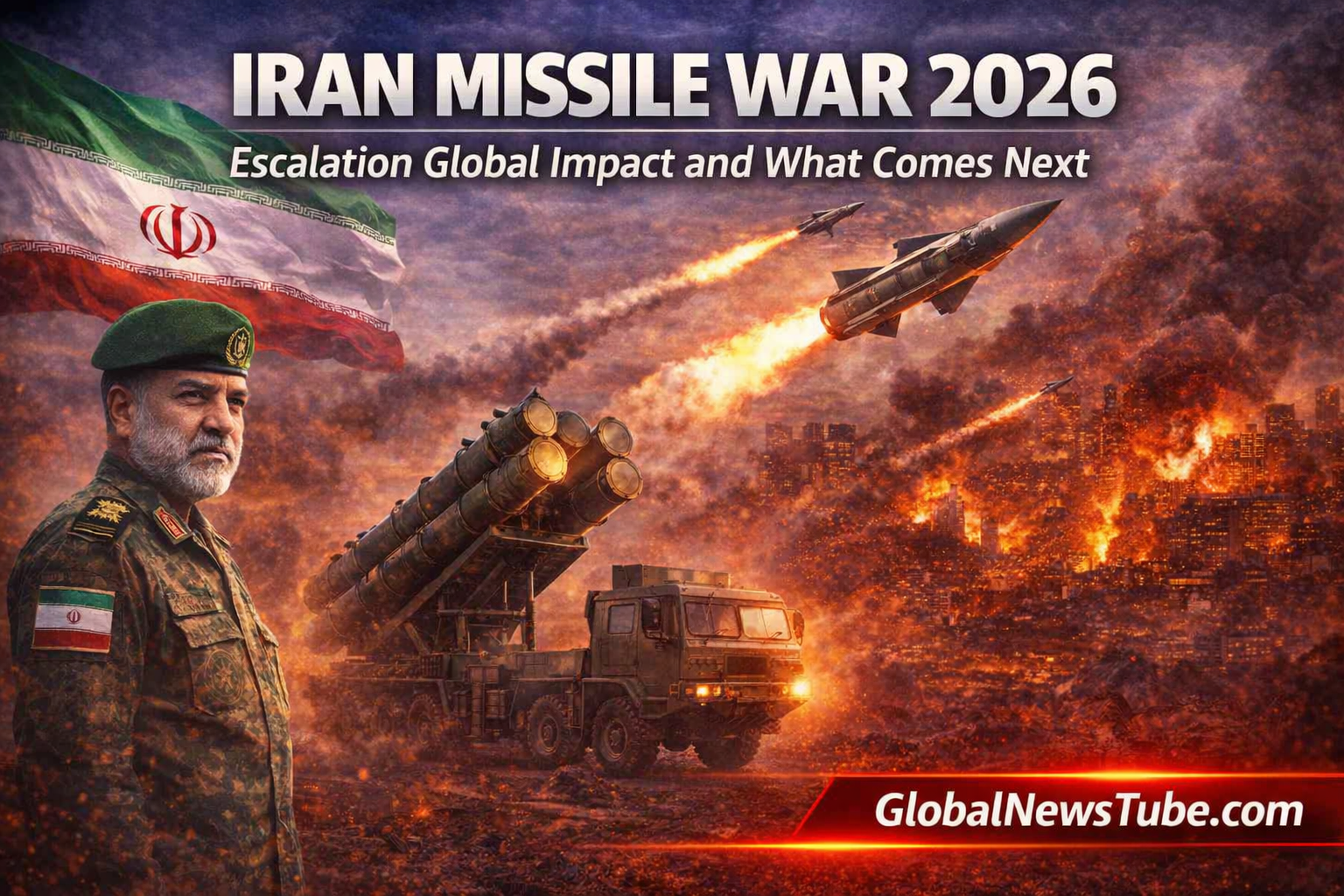
The Iran missile war 2026 has rapidly escalated into one of the most dangerous geopolitical crises in recent history, transforming from limited airstrikes into a broader regional conflict with far reaching global consequences. What initially began as coordinated strikes by the United States and Israel on Iran’s military and nuclear infrastructure has now triggered an intense cycle of retaliation. Iran has responded with ballistic missiles and drone attacks targeting US bases and Israeli cities, significantly raising tensions across the Middle East. This escalation has shifted the regional balance of power, creating a volatile and unpredictable situation that threatens to spiral into a prolonged and devastating war. As global leaders monitor the situation closely, concerns are growing about the potential for a wider international conflict.
Background of the Conflict
The roots of the Iran missile war 2026 lie in years of geopolitical tension, nuclear disputes, and regional rivalries. The situation intensified when intelligence reports suggested increased nuclear activity, prompting preemptive military action by the United States and Israel. These initial strikes aimed to weaken Iran’s strategic capabilities and delay its military advancements. However, Iran’s swift retaliation demonstrated both its preparedness and willingness to engage in a sustained conflict. The situation quickly escalated beyond expectations, with missile exchanges becoming more frequent and more destructive. As diplomatic efforts struggled to keep pace with military developments, the conflict expanded, drawing attention from global powers and international organizations concerned about regional stability.
Iran Missile Capabilities and Strategy
A defining feature of the Iran missile war 2026 is Iran’s advanced missile arsenal and its strategic use of asymmetric warfare. Despite repeated airstrikes on its facilities, Iran has retained a substantial portion of its missile capabilities. Its arsenal includes short range and long range ballistic missiles, precision guided munitions, and a growing fleet of unmanned aerial vehicles. Iran’s strategy relies on overwhelming adversaries through high volume attacks, combining missiles with drone swarms to bypass advanced air defense systems. This approach has proven effective in certain instances, where missiles have successfully penetrated defenses and struck critical infrastructure. The use of such tactics highlights the evolving nature of warfare, where technological innovation and strategic planning play a crucial role in determining outcomes on the battlefield.
Expansion Across the Middle East
The conflict has expanded far beyond a direct confrontation between Iran and its immediate adversaries, turning into a broader regional crisis. Armed groups aligned with Iran, including Hezbollah in Lebanon and Houthi forces in Yemen, have intensified their operations, launching missiles and drones toward strategic targets. This multi front escalation has increased the risk of a full scale Middle East war, as neighboring countries face growing security threats. The involvement of these groups underscores the interconnected nature of conflicts in the region, where alliances and proxy forces significantly influence the course of events. As more actors become involved, the complexity of the conflict increases, making it more difficult to contain and resolve through diplomatic means.
Global Economic Impact
The Iran missile war 2026 is having a significant impact on the global economy, particularly in the energy sector. Iran’s geographical position near the Strait of Hormuz, a critical chokepoint for global oil shipments, gives it considerable leverage over international trade routes. Even the possibility of disruption in this region has led to fluctuations in oil prices, affecting markets worldwide. Rising energy costs are contributing to inflation in many countries, while disruptions in shipping routes are causing delays in global supply chains. Businesses and governments alike are grappling with uncertainty as the conflict continues. This situation illustrates how regional conflicts can quickly escalate into global economic challenges, affecting industries and consumers across the world.
Humanitarian Crisis
The humanitarian consequences of the Iran missile war 2026 are severe and continue to worsen as the conflict intensifies. Civilians are bearing the brunt of the violence, with missile strikes hitting densely populated urban areas. Casualties are rising, and thousands of people have been displaced from their homes. Critical infrastructure, including hospitals, schools, and utilities, has been damaged or destroyed, placing immense pressure on already strained systems. Humanitarian organizations are struggling to provide aid amid ongoing security risks. Large scale evacuations are underway in several areas, contributing to a growing refugee crisis that could have long term implications for the region and beyond. The human cost of the conflict highlights the urgent need for a peaceful resolution.
Challenges for Air Defense Systems
Another significant aspect of the conflict is the challenge it poses to modern air defense systems. While countries involved in the conflict have invested heavily in advanced defensive technologies, the sheer scale and sophistication of missile attacks have exposed vulnerabilities. High frequency launches, combined with the use of drones and complex attack patterns, have made interception more difficult. In some cases, defense systems have been overwhelmed, allowing missiles to reach their targets. This has raised concerns among military analysts about the effectiveness of existing defense strategies and the need for new approaches to counter emerging threats in modern warfare.
Global Political Implications
On a global level, the Iran missile war 2026 is reshaping political and military dynamics. The United States has deployed significant military resources to the region, potentially affecting its strategic focus in other parts of the world. Meanwhile, other global powers are closely monitoring the situation, with some seeking opportunities to expand their influence. The risk of miscalculation remains high, particularly in a conflict involving multiple actors with competing interests. Diplomatic efforts are ongoing, but progress has been limited due to the complexity of the situation and the intensity of the fighting. The conflict serves as a reminder of how regional disputes can have far reaching implications for global stability.
Future Outlook
The future of the Iran missile war 2026 remains uncertain, with several possible scenarios. The conflict could continue as a prolonged war of attrition, with ongoing missile exchanges and increasing regional instability. Alternatively, diplomatic efforts could lead to a ceasefire, although achieving a lasting agreement may prove challenging. There is also the possibility of further escalation, including direct ground operations or increased involvement from additional countries. Each scenario carries significant risks and potential consequences, making it difficult to predict how the situation will evolve in the coming weeks and months.
The Iran missile war 2026 represents a critical turning point in global geopolitics, with far reaching consequences for security, economic stability, and humanitarian conditions. The combination of advanced missile warfare, regional escalation, and global economic disruption makes this conflict one of the most significant crises of the decade. As the situation continues to unfold, the actions of key international players will play a decisive role in determining whether the conflict can be contained or if it will escalate further. The coming weeks are likely to be crucial in shaping the future of the Middle East and the broader international order.


