


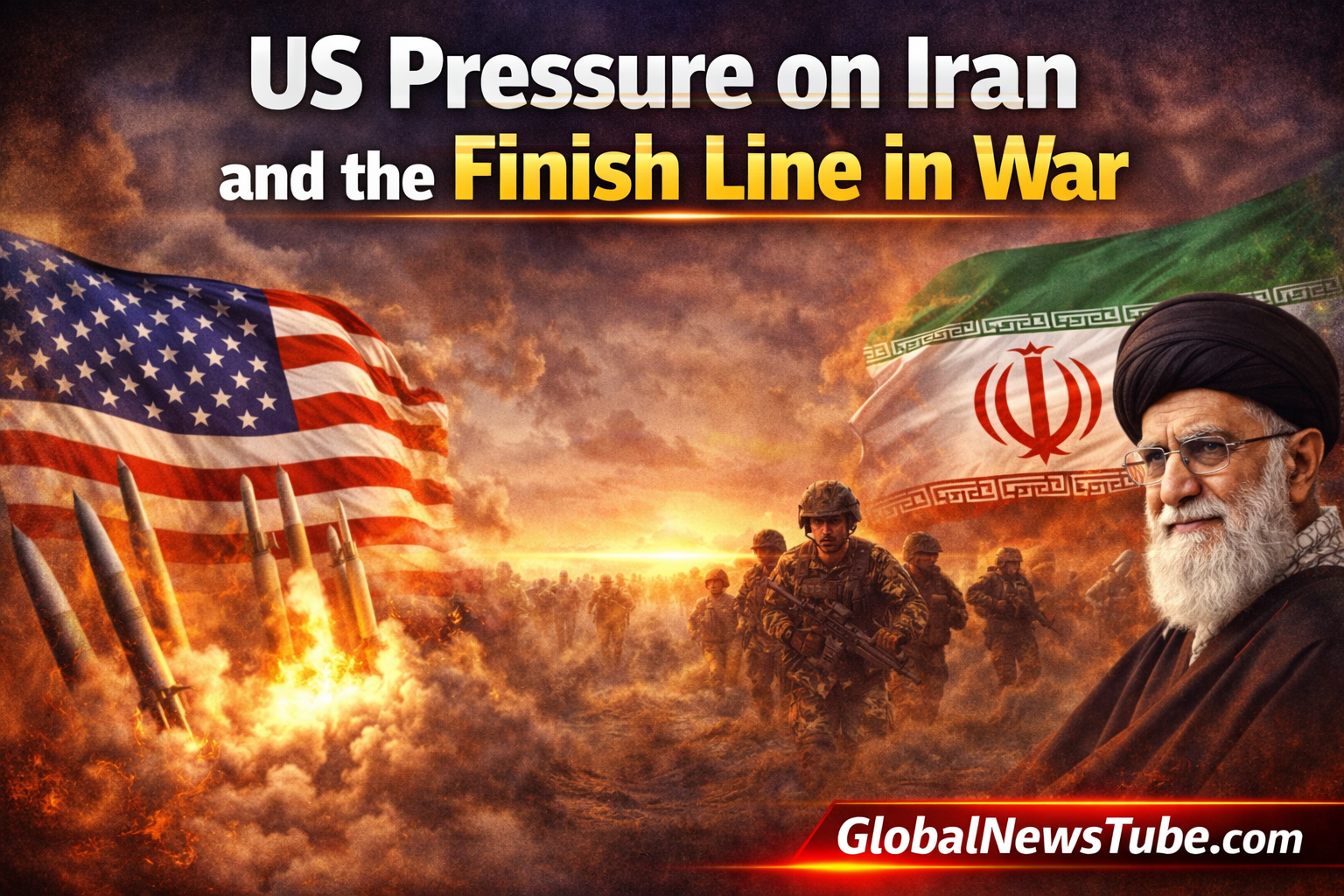
The Iran war, now in its fifth week, has become one of the most consequential conflicts in recent Middle Eastern history. Sparked by escalating tensions over Iran’s nuclear program and regional proxy activities, the war has drawn in the United States, Israel, and several Gulf allies. Against this backdrop, U.S. Secretary of State Marco Rubio recently stated that Washington can see the finish line, suggesting cautious optimism about the trajectory of the conflict. His remarks also hinted at a broader reassessment of U.S. alliances, particularly NATO, once the war concludes. This article explores the military, economic, and geopolitical dimensions of the war, while analyzing the implications of Rubio’s statement for U.S. foreign policy.
Background of the Conflict
The war began in late February 2026 after a series of provocations involving Iran’s nuclear program and its support for proxy militias across the Middle East. The United States, working closely with Israel, launched coordinated strikes on Iranian military infrastructure. Iran retaliated by mobilizing its proxies in Iraq, Syria, and Lebanon, sparking widespread clashes. The conflict quickly escalated into a regional confrontation, disrupting global energy markets and raising fears of a broader war.
This war is not an isolated event but part of a long history of U.S. Iran tensions. Decades of sanctions, military skirmishes, and diplomatic breakdowns have shaped the relationship. The current conflict represents the culmination of years of mistrust and strategic rivalry, with both sides seeking leverage in a volatile region.
Rubio’s Statement and Its Implications
Rubio’s assertion that the U.S. can see the “finish line” reflects cautious optimism. He emphasized that while the war is ongoing, diplomatic channels remain open, with indirect messages being exchanged between Washington and Tehran. There is even speculation about a potential direct meeting between U.S. and Iranian officials.
This dual track approach combining military pressure with diplomatic engagement suggests that Washington believes it has achieved sufficient leverage to push toward negotiations. Rubio’s remarks also signal that the U.S. is preparing for the post war phase, where questions about alliances, particularly NATO, will come to the forefront. His suggestion of reassessing NATO ties indicates that Washington may prioritize bilateral partnerships in the Middle East over multilateral frameworks.
Economic and Energy Dimensions
The economic consequences of the war have been severe, particularly in the energy sector. Iran’s oil exports, already constrained by sanctions, have been further disrupted by military strikes. This has contributed to volatility in global energy prices, affecting economies worldwide.
The Strait of Hormuz, through which a significant portion of the world’s oil supply passes, has become a focal point of concern. Any disruption in this vital shipping lane has global repercussions, underscoring the strategic importance of energy security in the conflict. For the U.S., maintaining pressure on Iran while stabilizing energy markets is a delicate balance.
Domestically, Iran faces a deepening economic crisis. Inflation has surged, the currency has depreciated, and ordinary citizens struggle with shortages of essential goods. These economic pressures have fueled domestic unrest, challenging the government’s ability to sustain the war effort.
Military Strategy and Regional Security
The U.S. military strategy has focused on deterrence and containment. Naval forces patrol the Persian Gulf to secure shipping lanes, while airstrikes target Iranian military assets. Cooperation with allies such as Israel and Gulf states has been critical in maintaining regional security.
At the same time, U.S. forces have engaged in counterterrorism operations against Iran backed militias in Iraq, Syria, and Yemen. These operations aim to weaken Iran’s regional influence and prevent the conflict from spreading further. Rubio’s comments suggest that Washington believes the military campaign has achieved enough leverage to push toward negotiations, though the risk of escalation remains high.
Iran’s Response
Iran has relied on asymmetric tactics to counter U.S. pressure. Cyber operations have targeted U.S. and allied infrastructure, while proxy militias have intensified attacks across the region. Hezbollah, in particular, has played a central role in escalating tensions, launching strikes against Israeli targets.
Domestically, Iran has sought to maintain resilience through its “resistance economy,” emphasizing self sufficiency and internal production. However, the prolonged conflict has strained resources and increased internal pressure. Despite these challenges, Iran remains determined to resist U.S. pressure, using its proxies and asymmetric capabilities to maintain leverage.
Geopolitical Consequences
The war has reshaped regional dynamics in significant ways. Israel has strengthened its security posture, intensifying military operations against Iranian proxies. Saudi Arabia has positioned itself as a key U.S. partner in countering Iran, deepening its strategic ties with Washington.
NATO’s role has been more limited, prompting Rubio to suggest a reevaluation of U.S. NATO ties after the conflict. This raises questions about whether Washington will shift toward more bilateral alliances in the Middle East rather than relying on multilateral frameworks. Such a shift would reflect broader trends in U.S. foreign policy, where regional partnerships are prioritized over global institutions.
International Reactions
Global powers have responded differently to the conflict. European nations have called for restraint and diplomacy, wary of escalation and its impact on energy markets. Russia and China, meanwhile, have criticized U.S. actions and sought to deepen ties with Iran. This divergence highlights the multipolar nature of global politics, where U.S. strategies face counterbalancing efforts from rival powers.
The international response underscores the complexity of the conflict. While Washington seeks to isolate Iran, rival powers are working to undermine U.S. influence, creating a contested geopolitical landscape.
Humanitarian Concerns
Beyond geopolitics, the human cost of the war is significant. Civilian populations in Iran and neighboring countries have borne the brunt of the conflict. Shortages of medicine, rising unemployment, and displacement have created a humanitarian crisis.
While sanctions and military pressure aim to weaken the Iranian government, they often disproportionately affect ordinary citizens. This raises ethical questions about the balance between strategic objectives and humanitarian consequences. Policymakers must consider whether maximum pressure achieves its intended goals without causing undue suffering.
Rubio’s statement that the U.S. can see the “finish line” in the Iran war reflects both optimism and strategic calculation. The combination of military pressure, economic sanctions, and diplomatic engagement appears to be steering the conflict toward resolution. Yet, the broader implications ranging from energy security to NATO relations suggest that the end of the war will mark not just a conclusion of hostilities but a reconfiguration of U.S. foreign policy in the Middle East.
As the war enters its sixth week, the path forward remains uncertain. The U.S. must balance military objectives with diplomatic engagement, economic stability, and humanitarian concerns. The finish line may be in sight, but the challenges of post war reconstruction and alliance management will shape the future of U.S. Iran relations and the broader Middle East for years to come.