


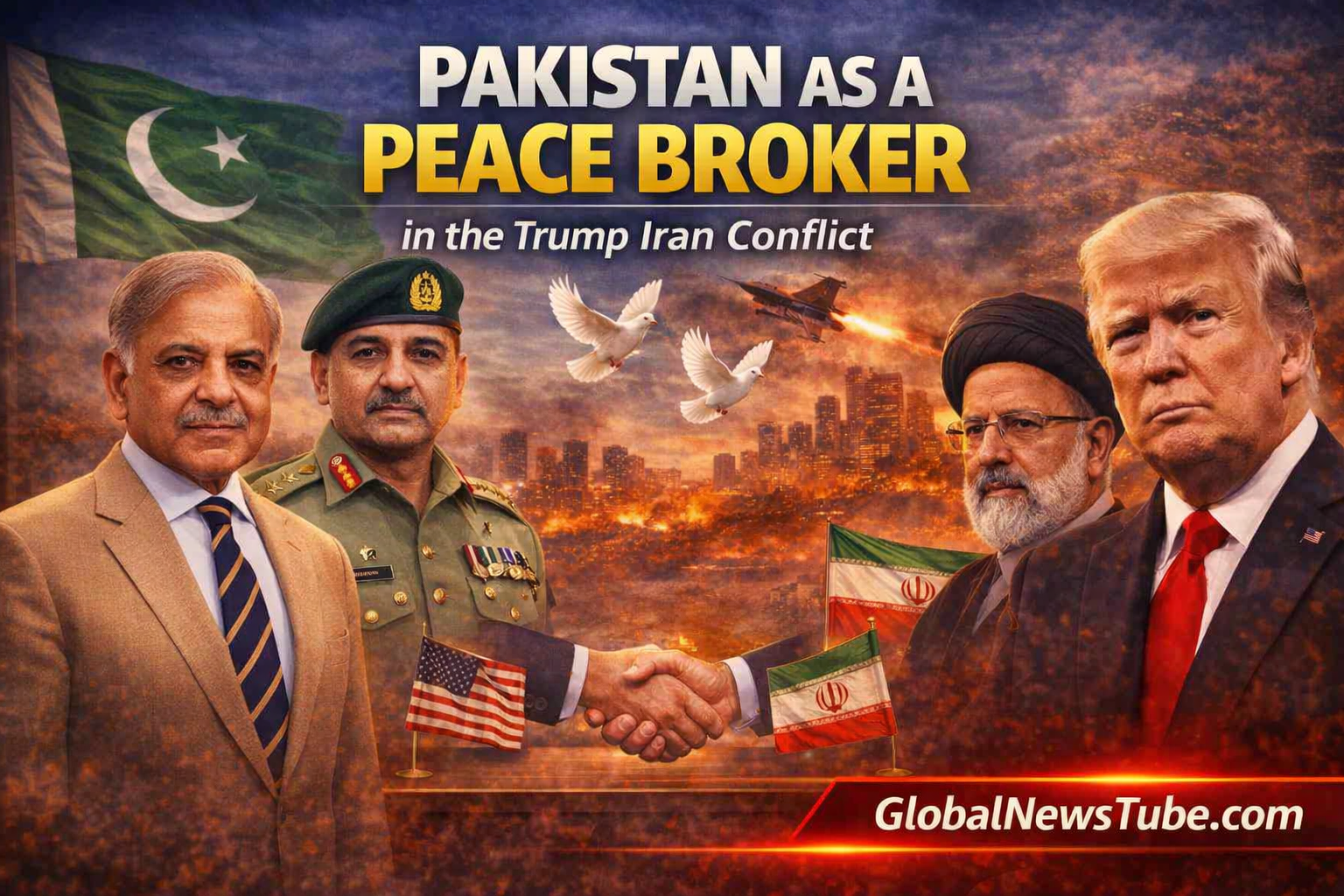
Pakistan Diplomatic Ambitions
Pakistan has long been a pivotal player in South Asian and Middle Eastern geopolitics. In recent years, it has sought to elevate its role by positioning itself as a peace broker in the Trump Iran conflict. This ambition reflects Islamabad’s desire to strengthen Pakistan U.S. relations, maintain Pakistan Iran relations, and assert itself as a stabilizing force in Middle East diplomacy. With tensions between Washington and Tehran escalating, Pakistan’s mediation efforts highlight both its geopolitical importance and its diplomatic challenges.
Pakistan Foreign Policy Approach
Under Prime Minister Shehbaz Sharif and Army Chief Asim Munir, Pakistan foreign policy has increasingly emphasized dialogue and mediation. By cultivating ties with Donald Trump’s administration, Pakistan aimed to present itself as a reliable partner in Iran war negotiations. Islamabad’s outreach was not limited to Washington it also leveraged its historical and cultural ties with Tehran to maintain credibility as a neutral mediator. This dual track diplomacy allowed Pakistan to act as a bridge between two adversaries, positioning itself as a unique player in Middle East diplomacy.
Why Pakistan Seeks the Peace Broker Role
Pakistan’s pursuit of the peace broker role is driven by several strategic imperatives. First, its geopolitical location at the crossroads of South Asia and the Middle East makes stability in Iran vital for its security and economy. Any escalation of conflict between the U.S. and Iran would directly affect Pakistan through refugee flows, border tensions, and disrupted trade routes. Second, peace in the region could open energy corridors and trade opportunities, boosting Pakistan struggling economy. Third, the Pakistani military’s influence in shaping Pakistan foreign policy ensures that Islamabad’s mediation efforts carry weight in global diplomacy. By acting as a peace broker, Pakistan seeks to enhance its international relevance and strengthen Pakistan U.S. relations while preserving its ties with Tehran.
Challenges Facing Pakistan Diplomacy
Despite its ambitions, Pakistan faces significant hurdles in its peace broker role. The United States remains skeptical of Pakistan’s reliability due to its past associations with militant groups. Iran, on the other hand, doubts Islamabad’s independence from American influence, making it cautious of Pakistan’s mediation efforts. Regional rivals such as Saudi Arabia and India also view Pakistan’s diplomatic initiatives with suspicion, fearing that Islamabad’s involvement could tilt regional power balances. Moreover, Pakistan’s domestic instability marked by political turmoil, economic crises, and governance challenges undermines its credibility as a neutral mediator. These obstacles complicate Pakistan’s ability to act effectively in Middle East diplomacy and weaken its position in Iran war negotiations.
Strategic Implications for Global Politics
The implications of Pakistan’s peace broker role extend beyond its borders. For the United States, Pakistan offers a potential backchannel to Iran, though Washington remains cautious about relying too heavily on Islamabad. For Iran, Pakistan provides a non hostile interlocutor, but Tehran remains wary of Pakistan’s alignment with the U.S. For Pakistan itself, success in this role could elevate its global standing, enhance Pakistan U.S. relations, and strengthen its influence in Middle East diplomacy. However, failure could result in diplomatic isolation, strained relations with both Washington and Tehran, and diminished credibility in the international arena.
Pakistan Balancing Act in Middle East Diplomacy
Pakistan’s mediation efforts highlight its delicate balancing act in regional politics. On one hand, it seeks to maintain strong ties with the U.S., which provides military aid, economic support, and international legitimacy. On the other hand, Pakistan must preserve its relationship with Iran, a neighboring country with deep cultural and religious ties. This balancing act is further complicated by Pakistan’s close relationship with Saudi Arabia, which views Iran as a rival. Navigating these complex dynamics requires skillful diplomacy and careful management of competing interests.
The Role of Leadership in Pakistan Foreign Policy
Leadership plays a crucial role in shaping Pakistan foreign policy. Prime Minister Shehbaz Sharif has emphasized diplomacy and dialogue, while Army Chief Asim Munir has underscored the importance of military influence in foreign relations. Together, they have sought to present Pakistan as a responsible actor in global politics. Their efforts to cultivate ties with Donald Trump’s administration reflect a broader strategy to enhance Pakistan U.S. relations and position Islamabad as a peace broker in the Trump Iran conflict.
Future Prospects for Pakistan Mediation Efforts
Looking ahead, Pakistan’s success as a peace broker will depend on several factors. First, it must address domestic instability to strengthen its credibility as a neutral mediator. Second, it must navigate regional rivalries carefully, ensuring that its mediation efforts do not alienate key partners such as Saudi Arabia. Third, it must build trust with both Washington and Tehran, demonstrating its ability to act independently and responsibly. If Pakistan can overcome these challenges, it could establish itself as a key player in Middle East diplomacy and enhance its global relevance.
Pakistan Diplomatic Test
Pakistan’s attempt to act as a peace broker between the U.S. and Iran under Trump’s administration reflects its ambition to be seen as a stabilizing force in the Middle East. While the strategy demonstrates geopolitical pragmatism, it faces hurdles from regional rivalries, domestic instability, and skepticism from both Washington and Tehran. Ultimately, Pakistan’s role in Middle East diplomacy is both an opportunity to enhance its global relevance and a test of its diplomatic credibility. Success could elevate Pakistan’s standing in international politics, while failure could undermine its influence and weaken Pakistan U.S. relations.