


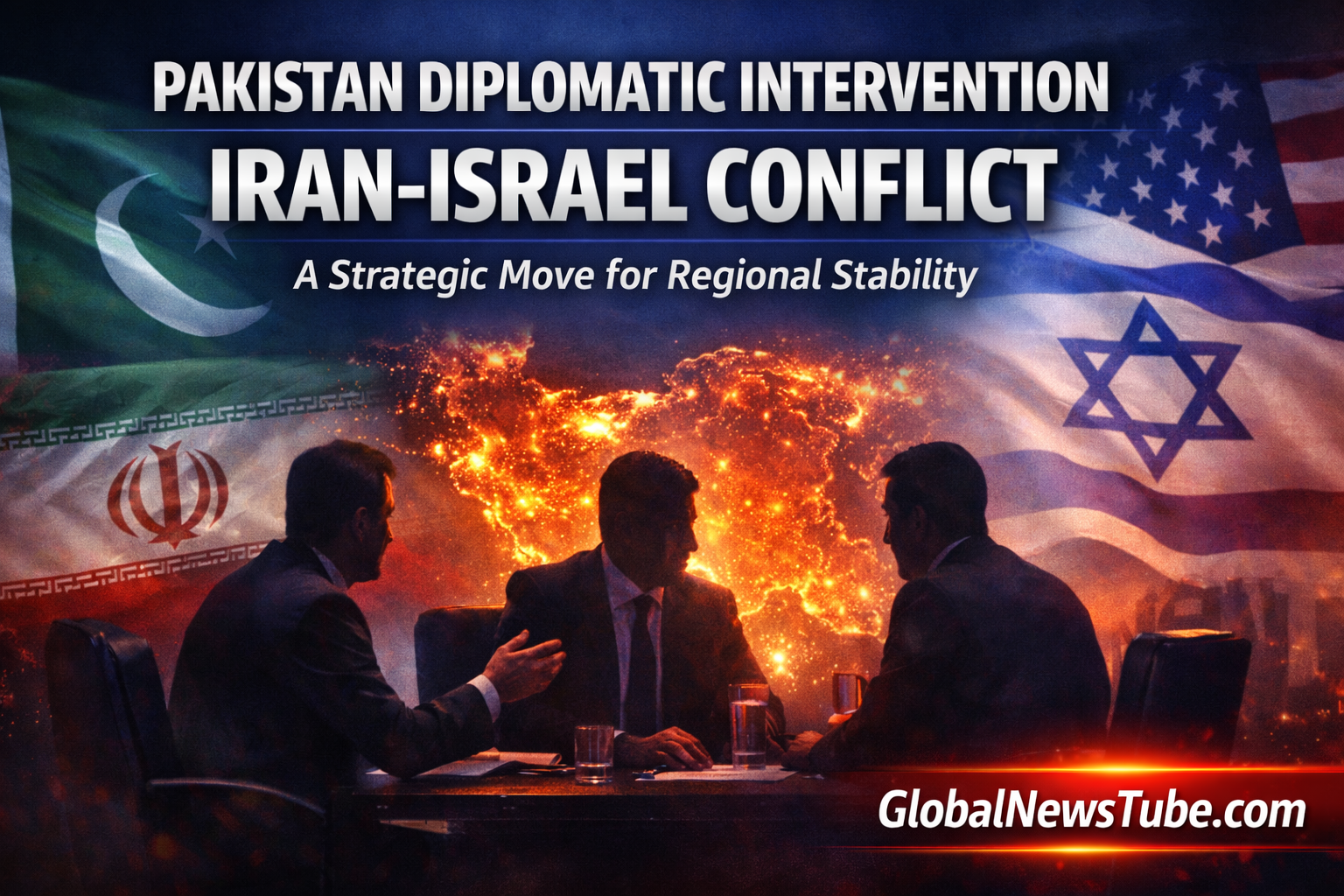
The Israel Iran conflict 2026 has taken a significant turn with reports that Israel removed two top Iranian leaders from its hit list following diplomatic efforts involving Pakistan. This development highlights Pakistan growing role in international diplomacy and its importance in preventing further escalation in the Middle East. As tensions continue to rise, Pakistan intervention demonstrates how strategic diplomacy can help preserve peace and maintain communication channels during conflict.
Pakistan Diplomatic Role in the Iran Israel Conflict
Pakistan has emerged as an important mediator in the ongoing crisis. Officials reportedly urged the United States to influence Israel decisions regarding high profile Iranian targets, arguing that eliminating key Iranian leaders would shut down diplomatic opportunities. This effort led to Israel removing Abbas Araqchi and Mohammad Baqer Qalibaf from its target list, reflecting Pakistan influence in sensitive geopolitical situations. Pakistan’s involvement is based on its long-standing policy of promoting regional stability and maintaining ties with both Middle Eastern and Western countries.
Importance of Araqchi and Qalibaf in Diplomacy
The decision to spare these Iranian leaders carries major strategic importance. Abbas Araqchi is a key figure in Iran’s foreign policy and plays a central role in diplomatic negotiations. Mohammad Baqer Qalibaf holds significant political influence within Iran. Removing these figures could have eliminated the possibility of dialogue. Their continued presence keeps communication channels open, which is critical during conflict.
Overview of the 2026 Iran Israel Conflict
The conflict escalated earlier in 2026, leading to increased military actions across the region. Airstrikes, missile attacks, and rising tensions have made the situation unstable. Key developments include increased military exchanges between Iran and Israel, rising tensions affecting Gulf countries, disruptions in global energy supply routes, and growing international concern over regional instability.
Pakistan Strategy of Neutral Mediation
Pakistan has maintained a position of neutrality throughout the crisis. Instead of taking sides, it has focused on facilitating communication and reducing tensions. Its approach includes acting as a diplomatic channel between Iran and global powers, supporting peace negotiations, and coordinating with other countries involved in mediation. This strategy allows Pakistan to maintain balanced relationships while contributing to peace efforts.
Impact on Peace Talks
Pakistan intervention has important implications for future negotiations. By preventing the targeting of key leaders, Pakistan has ensured that diplomatic discussions remain possible. Avoiding high profile assassinations reduces the chances of further retaliation and conflict expansion. This also strengthens Pakistan credibility as a neutral mediator, although challenges remain as tensions are still high.Pakistan’s diplomatic intervention has significant implications for ongoing and future peace negotiations. By preventing the targeting of key Iranian leaders, it has ensured that diplomatic channels remain open. This is particularly important in conflicts where communication often breaks down due to mistrust and hostility. The decision also reduces the likelihood of retaliatory actions that could escalate the situation further. Moreover, Pakistan’s involvement reinforces the importance of third party mediation in resolving complex international disputes. While challenges remain and tensions continue, the preservation of dialogue offers hope for a peaceful resolution.
Global Significance of Pakistan Role
The situation highlights the increasing importance of regional powers in global diplomacy. Pakistan involvement shows that countries outside major power blocs can influence critical decisions. This may lead to greater reliance on neutral mediators, increased diplomatic collaboration, and a shift toward dialogue based conflict resolution.The evolving situation highlights the increasing importance of regional powers in global diplomacy. Pakistan role demonstrates that influence in international affairs is no longer limited to major superpowers. By successfully intervening in a critical moment, Pakistan has shown that strategic diplomacy can shape outcomes even in high stakes conflicts. This development may encourage greater reliance on neutral mediators and promote collaborative approaches to conflict resolution. It also signals a shift toward more inclusive diplomatic frameworks where multiple countries contribute to peace efforts.
Challenges Facing Pakistan
Despite its successful intervention, Pakistan faces several challenges including maintaining balance between competing regional interests, managing economic impacts of instability, and preventing the conflict from affecting its own borders. The evolving situation requires continuous diplomatic efforts and careful strategy.Despite its successful intervention, Pakistan faces several challenges in maintaining its role as a mediator. Balancing relationships with competing regional and global powers requires careful diplomacy and strategic planning. Economic pressures resulting from regional instability also pose a significant concern, as prolonged conflict can impact trade and energy security. Additionally, Pakistan must ensure that the conflict does not spill over into its own borders, particularly given its proximity to Iran. These challenges highlight the complexity of its position and the need for continued diplomatic engagement.
Pakistan’s role in the Israel Iran conflict 2026 highlights the power of diplomacy in preventing escalation. By helping remove key Iranian leaders from a potential target list, Pakistan has preserved the possibility of peace talks and reduced immediate tensions. This underscores the importance of strategic mediation in today’s complex geopolitical environment.