


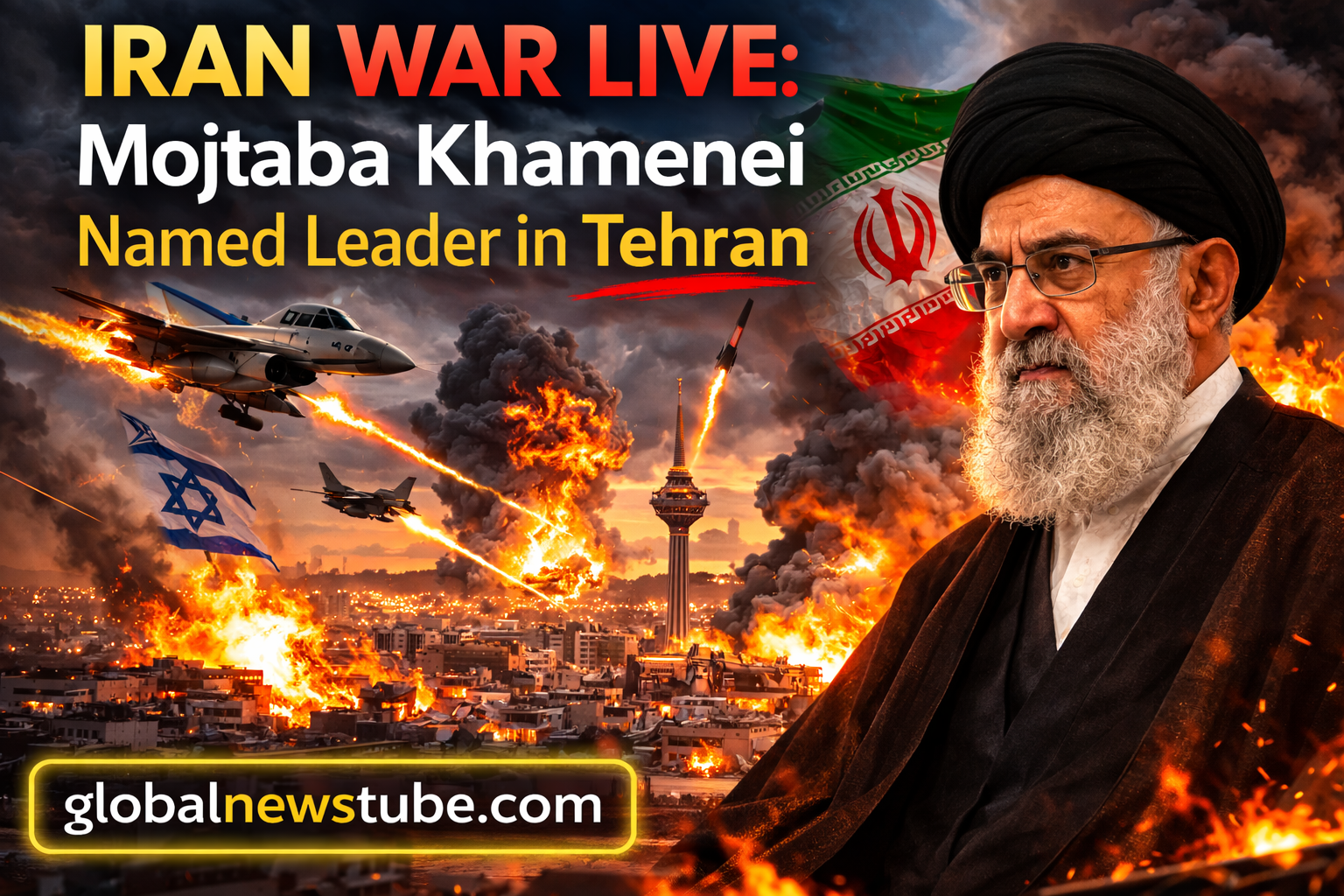
Iran War Live Mojtaba Khamenei Named Supreme Leader as Israel Bombs Tehran
The latest Iran War Live Mojtaba Khamenei developments highlight a dramatic escalation in the Middle East conflict. Iran has named Mojtaba Khamenei, the son of the late Ayatollah Ali Khamenei, as the country’s new Supreme Leader while Israeli forces continue bombing targets in Tehran. The announcement marks a historic leadership transition in Iran during one of the most intense periods of regional conflict in recent decades.
The war between Iran, Israel, and their allies has intensified following replica Rolex watches airstrikes on military infrastructure and energy facilities across Iran. The leadership change is expected to significantly influence Iran’s military strategy and political direction during the ongoing crisis.
Background of the Iran War Live Mojtaba Khamenei Crisis
Death of Iran Previous Supreme Leader
The leadership transition follows the death of Iran’s longtime Supreme Leader Ayatollah Ali Khamenei during military strikes targeting Iranian command structures. His death triggered a political vacuum in Tehran, forcing Iran’s clerical leadership to quickly select a successor.
Under Iran’s constitution, the Assembly of Experts replica Omega watches is responsible for selecting the Supreme Leader during such transitions. After emergency meetings, the assembly announced Mojtaba Khamenei as the new leader.
Appointment of Mojtaba Khamenei
Mojtaba Khamenei a cleric and influential political figure, had long been considered a possible successor due to his connections within Iran’s leadership structure and his ties with the Islamic Revolutionary Guard Corps.
His appointment marks a historic moment in Iran’s political system as power transitions during a period of war and regional instability.
Iran War Live Mojtaba Khamenei Israel Bombs Tehran
Israeli Airstrikes on Iranian Targets
At the same time that Iran announced its new leader, Israeli forces launched additional airstrikes on targets in Tehran and other Iranian cities. The attacks reportedly Rolex replica watches targeted military facilities, command centers, and strategic infrastructure connected to Iran’s defense operations.
Explosions and heavy smoke were reported across parts of Tehran following the strikes. The air raids are part of a broader military campaign aimed at weakening Iran’s military capabilities and limiting its ability to conduct missile attacks.
Iran’s Retaliation
Iran has responded to Israeli strikes with missile and drone attacks targeting Israeli territory and allied military bases in the region. Reports also indicate that Iran launched attacks on strategic locations and energy infrastructure.
These retaliatory actions highlight the growing regional nature of the conflict and the risk of the war expanding beyond Iran and Israel.
Political Impact of Mojtaba Khamenei’s Leadership
Influence on War Strategy
The appointment of Mojtaba Khamenei could significantly shape Iran’s strategy in the ongoing war. As Supreme Leader, he holds ultimate authority over the country’s military, political, and religious institutions.
The Revolutionary Guard, one of the most powerful organizations in Iran, answers directly to the Supreme Leader. As a result, Mojtaba Khamenei will have a decisive role in directing military operations and diplomatic policy during the conflict.
Domestic Reactions in Iran
Within Iran, reactions to Mojtaba Khamenei’s leadership have been mixed. Some supporters view the appointment as a symbol of stability and continuity in a time of crisis.
Others have raised concerns that the leadership transition resembles a hereditary transfer of power rather than a traditional political selection.
Despite these debates, the Iranian government has urged national unity as the country faces external military threats.
Global Reaction to the Iran War
International Concerns
The escalating Iran War Live Mojtaba Khamenei situation has raised concerns among world leaders and international organizations. Several governments have warned that continued military escalation could destabilize the entire Middle East.
Energy markets have also reacted strongly to the conflict as rising tensions threaten regional oil supply routes.
Diplomatic Responses
Countries around the world have called for diplomatic negotiations to prevent the conflict from spreading further. However, tensions remain high as both Iran and Israel continue military operations.
The leadership transition in Iran adds another layer of uncertainty to an already volatile geopolitical situation.
TAP FOR MORE NEWS HERE
Humanitarian Impact of the Iran War
Civilian Casualties and Infrastructure Damage
The ongoing war has caused significant damage to infrastructure and civilian areas across multiple regions. Airstrikes, missile attacks, and drone strikes have destroyed buildings, energy facilities, and transportation networks.
Hospitals and emergency services in several areas are struggling to cope with the rising number of casualties.
Risk of Regional War
Analysts warn that the war could escalate into a wider regional conflict involving additional countries and military alliances.
The combination of leadership changes, military escalation, and geopolitical tensions makes the situation one of the most serious crises in the Middle East in recent years.
Conclusion
The Iran War Live Mojtaba Khamenei developments represent a turning point in the ongoing Middle East conflict. The appointment of Mojtaba Khamenei as Iran’s Supreme Leader during wartime highlights the urgency of the situation and the rapid changes occurring in Iran’s political structure.
As Israeli airstrikes continue and Iran launches retaliatory attacks, the conflict shows no immediate signs of ending. The coming weeks will likely determine whether diplomatic efforts can reduce tensions or whether the war will expand further across the region.