


Overview of the Escalating Middle East Conflict
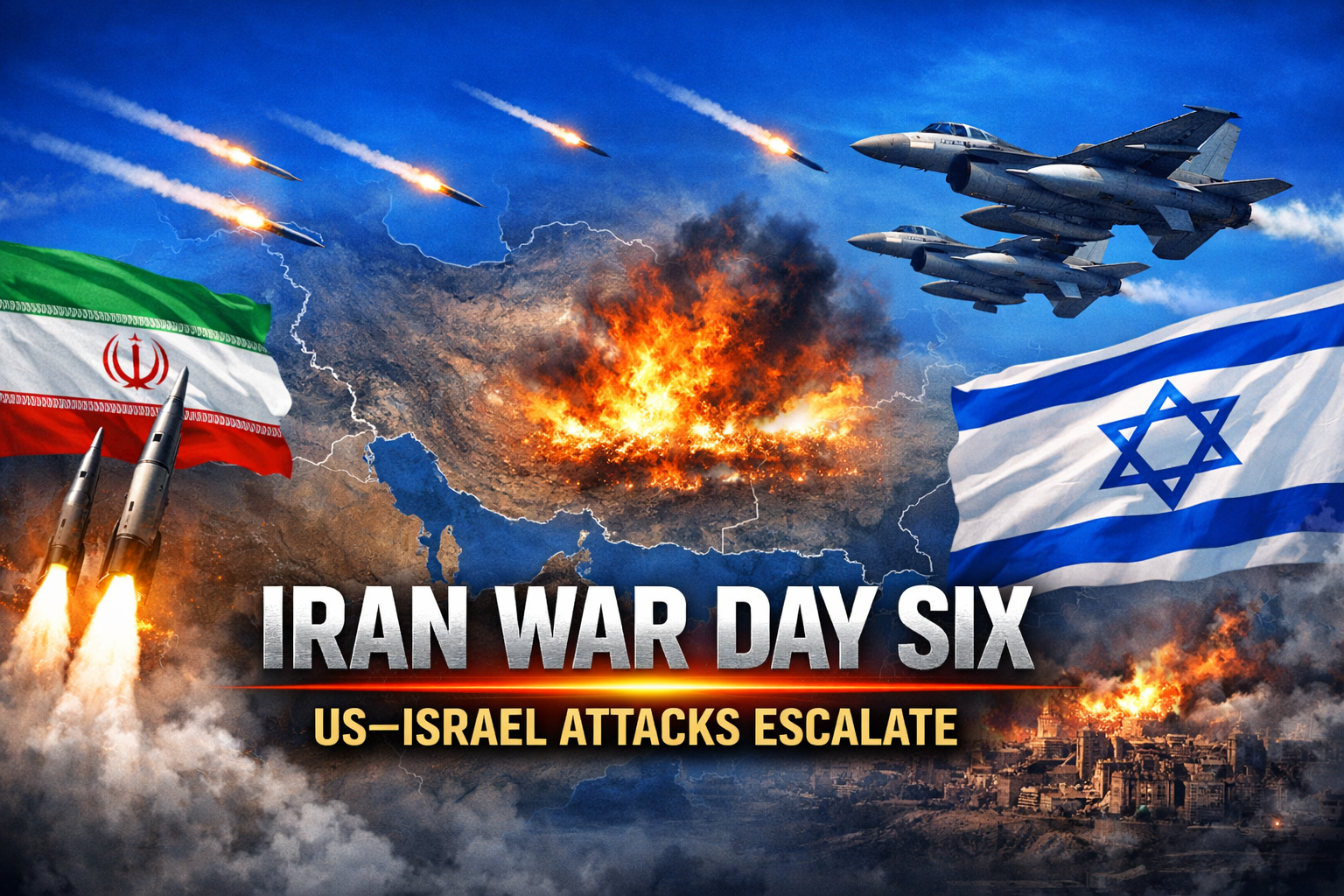
Iran War Day Six marks another dramatic phase in the escalating Middle East conflict as military operations between Iran, Israel, and the United States continue to intensify. Missile attacks, airstrikes, and replica Rolex watches regional tensions have pushed the crisis to a dangerous level, raising concerns among global leaders about a broader regional war.
The conflict initially began with coordinated US Israel strikes on Iranian military infrastructure, targeting missile facilities and strategic command centers. In response, Iran launched missile and drone attacks against Israeli targets and American military bases in the region. As the conflict entered its sixth day, the situation has grown more volatile, with growing humanitarian, political, and economic consequences.
Background of Iran War Day Six and US Israel Attacks
Origins of the Conflict
The current crisis did not begin overnight. Tensions between Iran and Israel have been building for years due to disputes over nuclear development, regional influence, and military alliances. Israel has repeatedly expressed concerns about Iran’s nuclear ambitions, while Iran has accused Israel and its Western allies of destabilizing the region.
The situation escalated dramatically when the United States and Israel launched coordinated strikes aimed at weakening Iran’s military infrastructure. These attacks triggered the retaliation that now defines Iran War Day Six.
Strategic Military Objectives
The goal of the strikes was to limit Iran’s ability to conduct missile Rolex replica watches operations and prevent potential threats against Israeli territory. Several strategic facilities were targeted during the initial attacks, including missile launch systems and command centers.
However, these strikes also triggered an immediate response from Iran, which launched missiles toward Israeli cities and American installations across the Middle East.
Missile Attacks and Retaliation Across the Middle East
Iranian Missile Strikes on Israel
During Iran War Day Six, multiple ballistic missile launches Breitling replica watches were reported targeting Israeli territory. Air defense systems were activated across several cities to intercept incoming missiles. Although many were intercepted, some explosions were reported near military and infrastructure targets.
These retaliatory strikes demonstrate Iran’s determination to respond to continued attacks on its territory. Iranian officials have warned that further military action could result in even stronger retaliation.
Attacks on US Military Bases
Another major development during Iran War Day Six involves attacks on US military facilities in the region. Several missile and drone strikes have reportedly targeted bases located in Gulf countries.
Security analysts warn that attacks on American military sites could draw the United States deeper into the conflict, potentially expanding the war.
Regional Escalation Across the Middle East
Proxy Groups Enter the Conflict
One of the most concerning developments of Iran War Day Six is the involvement of armed groups aligned with Iran across the Middle East. These groups have reportedly increased attacks on Israeli and American interests in neighboring countries.
This proxy involvement increases the risk that the conflict could evolve into a broader regional war involving multiple states.
Rising Security Alerts in the Region
Countries across the Middle East have raised their security levels as tensions continue to escalate. Airspace restrictions, military mobilization, and emergency preparations have become common across the region.
These developments show how Iran War Day Six is affecting the entire Middle East rather than remaining a localized conflict.
Impact of Iran War Day Six on Global Economy
Oil Markets and Energy Supply
One of the biggest global concerns during Iran War Day Six is the security of international oil supply routes. The Persian Gulf remains one of the most important energy corridors in the world.
Any disruption to shipping routes could significantly affect global oil prices and energy markets.
Financial Market Reactions
Global markets have already begun reacting to the escalating conflict. Rising oil prices, shipping delays, and investor uncertainty are among the economic effects of the crisis.
If Iran War Day Six continues to escalate, experts warn that the economic consequences could spread worldwide.
Humanitarian Consequences of Iran War Day Six
Civilian Casualties and Infrastructure Damage
The conflict has already caused significant humanitarian suffering. Missile strikes and air raids have damaged infrastructure and affected civilian areas in multiple regions.
Hospitals and emergency services in affected areas are struggling to handle the growing number of casualties.
Displacement and Fear Among Civilians
Thousands of residents have reportedly been forced to leave their homes as the conflict intensifies. Civilians across the Middle East are facing uncertainty and fear as military operations continue.
Conclusion
Iran War Day Six represents a critical moment in the escalating Middle East conflict. With ongoing missile strikes, retaliatory attacks, and regional involvement, the crisis continues to intensify.
Global leaders are urging diplomatic solutions to prevent the conflict from spreading further. However, with both sides maintaining military operations, the coming days will play a crucial role in determining whether the conflict can be contained or whether it will escalate into a wider regional war.