


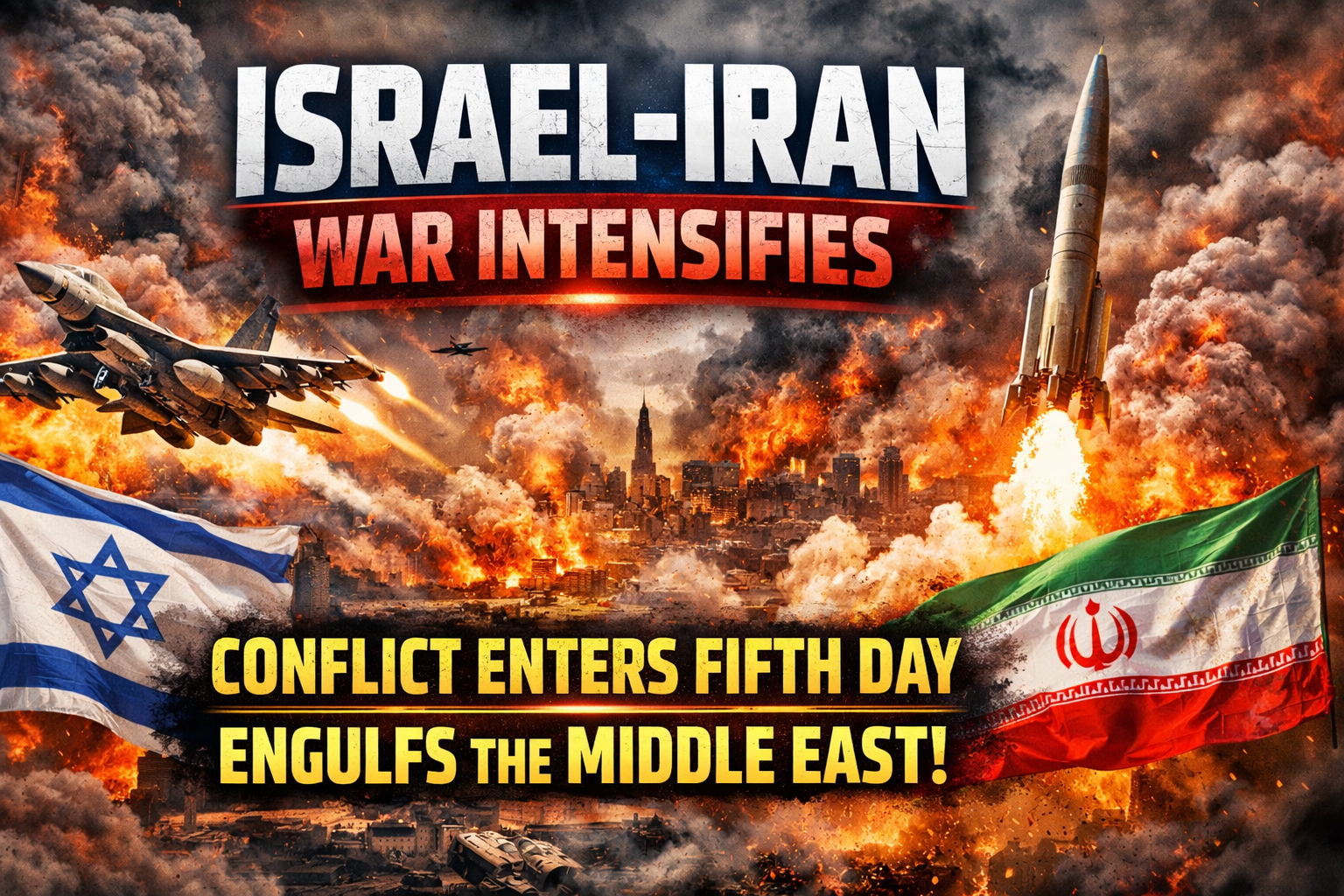
Israel Iran War Intensifies as Conflict Enters Fifth Day and Engulfs the Middle East
The Israel Iran war has entered its fifth day, intensifying fears of a wider Middle East conflict that could reshape regional stability and global security. Continuous missile strikes, drone attacks, and air raids from both sides have pushed tensions to a dangerous level. The conflict began after large-scale military strikes targeted Iranian facilities, triggering swift retaliation and expanding military activity across the region.
As the fighting continues, governments around the world are closely monitoring the situation. The replica Breitling watches war has not only created a humanitarian crisis but also raised concerns about global energy supplies, international trade routes, and geopolitical stability. Analysts warn that if the conflict between Israel and Iran continues to escalate, it could involve additional regional actors and significantly destabilize the Middle East.
Background of the Israel Iran Conflict
Longstanding Geopolitical Rivalry
The hostility between Israel and Iran has developed over decades due to political, military, and ideological differences. Israel has repeatedly expressed concerns about Iran’s nuclear ambitions and its influence across the Middle East through alliances with various regional groups.
Iran, on the other hand, has accused Israel and its allies replica Rolex watches of attempting to weaken its sovereignty and influence in the region. These tensions have resulted in a long history of covert operations, cyberattacks, and proxy conflicts across the Middle East.
Over time, these rivalries have created a fragile security environment where even small incidents can trigger large-scale confrontations.
Escalation into Open Conflict
The current war began when coordinated military operations targeted several Iranian strategic sites. These strikes were designed to weaken Iran’s military infrastructure and prevent further development of advanced defense capabilities.
In response, Iran launched a series of retaliatory attacks using Rolex replica watches missiles and drones targeting Israeli territory and strategic locations across the region. The exchange of attacks quickly transformed into one of the most serious confrontations between the two countries in recent history
Israel Intensifies Airstrikes on Iranian Targets
Large-Scale Military Operations
As the war entered its fifth day, on Iranian military infrastructure. Several explosions were reported in major Iranian cities as Israeli forces targeted missile launch sites, air defense systems, and military command centers.
These operations are part of a broader strategy aimed at weakening Iran’s ability to carry out retaliatory strikes. Israeli officials argue that the military campaign is necessary to prevent Iran from expanding its military capabilities and threatening Israel’s national security.
Expanding the Conflict Across the Region
The conflict has not remained limited to Iran and Israel alone. Israeli forces have also carried out operations against groups aligned with Iran in neighboring countries. This includes strikes on positions associated with armed groups in Lebanon and other parts of the Middle East.
These developments have significantly increased the risk of the war expanding into a broader regional conflict involving multiple actors.
Humanitarian Impact of the Israel Iran War
Civilian Casualties and Damage
The ongoing conflict has caused significant human suffering. Reports indicate that hundreds of civilians have been killed or injured as a result of missile strikes, air raids, and military operations.
Hospitals and emergency services in several cities are struggling to handle the growing number of casualties. Infrastructure damage has also been reported, including destruction of buildings, roads, and public services.
The humanitarian impact of the war continues to grow as fighting intensifies across the region.
Displacement and Public Fear
Thousands of people have been forced to leave their homes due to the ongoing attacks. Civilian populations in affected areas are living under constant fear of missile strikes and air raids.
Governments across the Middle East have implemented emergency measures, including closing airspace, strengthening security around critical infrastructure, and advising citizens to remain indoors during attacks.
Threats to Global Energy and the Strait of Hormuz
Strategic Importance of the Strait of Hormuz
One of the biggest international concerns during the Israel–Iran conflict is the potential disruption of shipping through the Strait of Hormuz. This narrow waterway connects the Persian Gulf to global maritime routes and is one of the most important energy corridors in the world.
A large portion of global oil shipments passes through the Strait of Hormuz, making it a critical route for international energy supply.
Any disruption in this area could lead to major consequences for global oil markets and economic stability.
Rising Oil Prices and Market Uncertainty
As tensions increase, global oil prices have already begun to rise due to fears of supply disruptions. Investors and energy markets are closely monitoring developments in the Middle East.
If the conflict continues or expands further, the impact on global energy markets could become more severe. Higher transportation costs, shipping delays, and market volatility could affect economies worldwide.
International Reactions and Diplomatic Efforts
Global Calls for De-escalation
World leaders and international organizations have urged both sides to exercise restraint and avoid further escalation. Many countries have called for immediate diplomatic efforts to prevent the conflict from spreading across the region.
Global powers are increasingly concerned that continued military confrontation could destabilize the Middle East and create long-term geopolitical consequences.
Conclusion
The Israel Iran war entering its fifth day highlights the fragile security environment in the Middle East. Continued missile strikes, drone attacks, and military operations have created one of the most dangerous geopolitical crises in the region.
The humanitarian impact is growing, while global markets remain uncertain due to the potential disruption of energy supplies and trade routes. The involvement of regional allies and the strategic importance of the Strait of Hormuz make the situation even more complex.