


Iran War Global Companies Face $25 Billion Losses
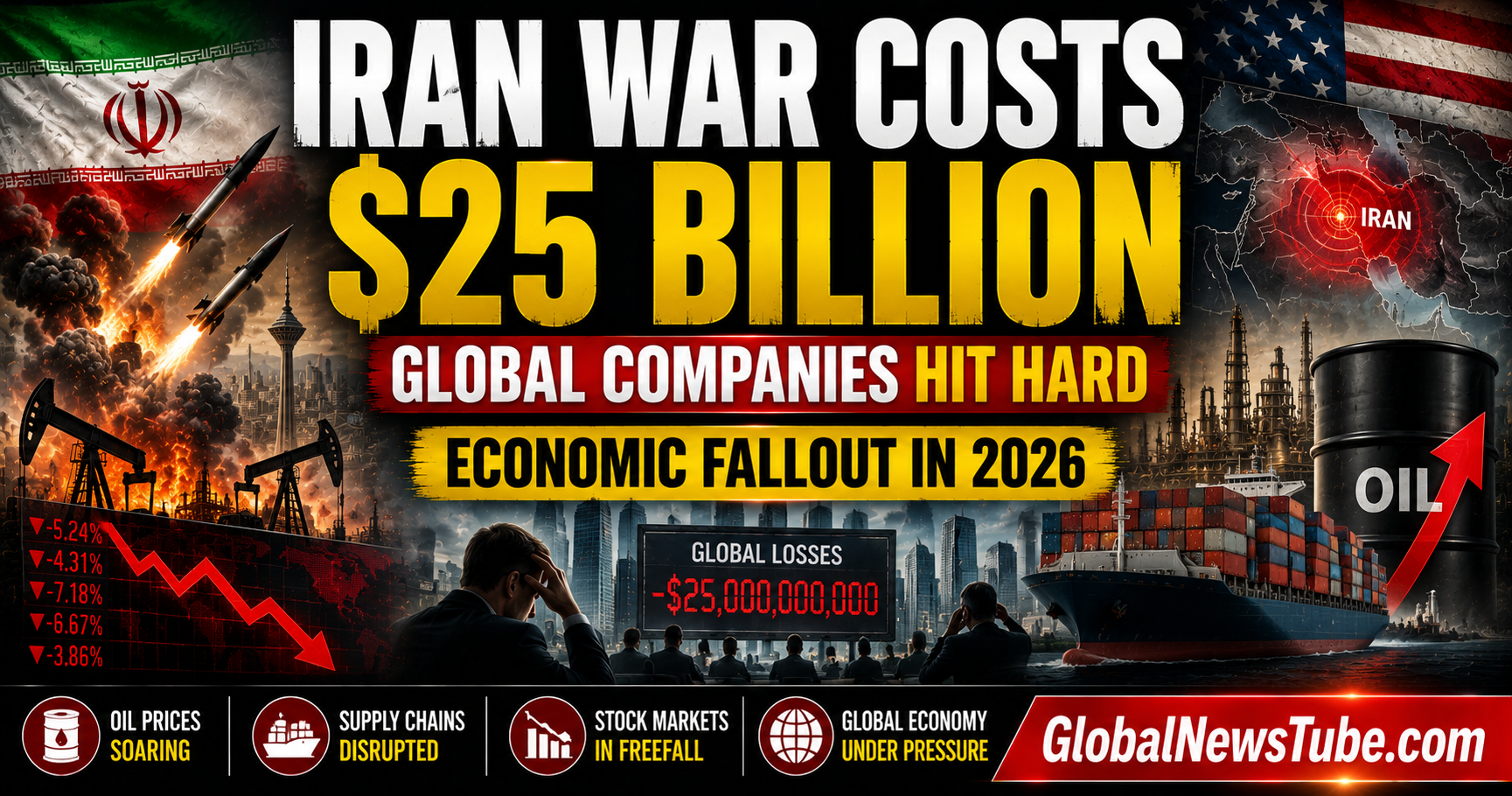
The ongoing Iran conflict has inflicted a major financial blow on businesses worldwide, with global companies already facing losses exceeding $25 billion in 2026. The Iran war global companies crisis has quickly escalated into a serious economic concern, affecting industries across the United States, Europe, and Asia.
Hundreds of multinational corporations have reported financial damage as a direct result of the conflict. Rising costs, disrupted logistics, and declining consumer demand have created a challenging environment for businesses trying to maintain stability.
This growing financial burden highlights how geopolitical conflicts can rapidly transform into global economic crises, impacting not just governments but also private enterprises operating across borders.
Oil Prices Surge as Strait of Hormuz Disruption Intensifies
One of the most significant drivers of the Iran war economic impact 2026 is the sharp rise in oil prices. The Strait of Hormuz, a critical global energy route, has faced disruptions due to the conflict, severely affecting oil supply chains.
Oil prices have surged significantly, increasing fuel and transportation costs worldwide. This has placed immense pressure on industries that rely heavily on energy, including aviation, manufacturing, and logistics.
The spike in oil prices Iran war scenario has also contributed to inflation, making goods and services more expensive for consumers and reducing purchasing power globally.
Supply Chain Disruptions Impact Global Trade
The Iran conflict has triggered widespread supply chain disruption Iran war effects, with companies struggling to maintain operations amid logistical challenges. Trade routes have been affected, and shipping costs have risen sharply due to increased risks in key maritime zones.
Essential raw materials such as aluminum, fertilizers, and petrochemicals have become harder to access, leading to production delays and increased costs.
Businesses that depend on timely delivery of goods are particularly vulnerable, as delays ripple through global supply chains, affecting everything from manufacturing timelines to retail availability.
Cost Cutting and Price Increases
In response to mounting losses, companies are taking defensive measures to manage the financial impact of the Iran war global companies crisis. Many companies have already implemented strategies such as raising prices, cutting production, and reducing operational costs.
Some firms have suspended dividends, delayed investments, or sought government assistance to stay afloat. Others have introduced fuel surcharges or adjusted pricing strategies to offset rising expenses.
These actions reflect the severity of the crisis and the urgent need for companies to adapt to rapidly changing economic conditions.
Key Industries Hit Hardest by the Conflict
Several sectors are experiencing disproportionate effects from the Iran war economic impact 2026. The aviation industry, for example, is facing significant increases in fuel costs, while automakers and consumer goods companies are also reporting financial setbacks.
Manufacturers are struggling with higher input costs and reduced demand, while retailers are dealing with cautious consumers who are cutting back on spending.
Europe and Asia, in particular, are feeling the brunt of the crisis due to their heavy reliance on Middle Eastern energy supplies. This regional impact underscores the interconnected nature of the global economy.
Inflation and Consumer Demand Under Pressure
The economic consequences of the Iran conflict extend beyond corporate losses to broader macroeconomic challenges. Rising costs are fueling inflation, which in turn is weakening consumer demand.
As prices increase, consumers are delaying purchases and opting for cheaper alternatives, affecting company revenues. Analysts warn that sustained inflation could further slow economic growth in the coming months.
This decline in demand creates a cycle where companies face both rising costs and falling sales, further squeezing profit margins.
Comparison to Past Global Economic Crises
Experts have begun comparing the current situation to previous global downturns. The scale of the Iran war global companies losses and the speed at which they have accumulated are particularly concerning.
Some corporate leaders have noted that the current decline in industrial activity is comparable to past recessionary periods.
This comparison highlights the potential long-term implications of the conflict if it continues without resolution.
Uncertainty and Rising Risks
Looking ahead, the outlook remains uncertain as the Iran conflict shows no clear signs of ending. Businesses are bracing for continued volatility, with expectations of further cost increases and economic pressure in the coming quarters.
Analysts predict that the full impact of the Iran war economic impact 2026 may not yet be fully reflected in financial results, meaning further challenges could still lie ahead.
Global markets are closely watching developments, as any escalation could further disrupt energy supplies and trade flows.
The Iran war global companies crisis has already resulted in more than $25 billion in losses, marking one of the most significant economic disruptions of 2026. From rising oil prices to supply chain breakdowns, the conflict has affected nearly every aspect of the global economy.
As companies continue to adapt through cost cutting measures and strategic adjustments, the long-term impact will depend on how quickly stability can be restored in the region. Until then, businesses and economies worldwide remain under pressure from one of the most significant geopolitical conflicts of the decade.