


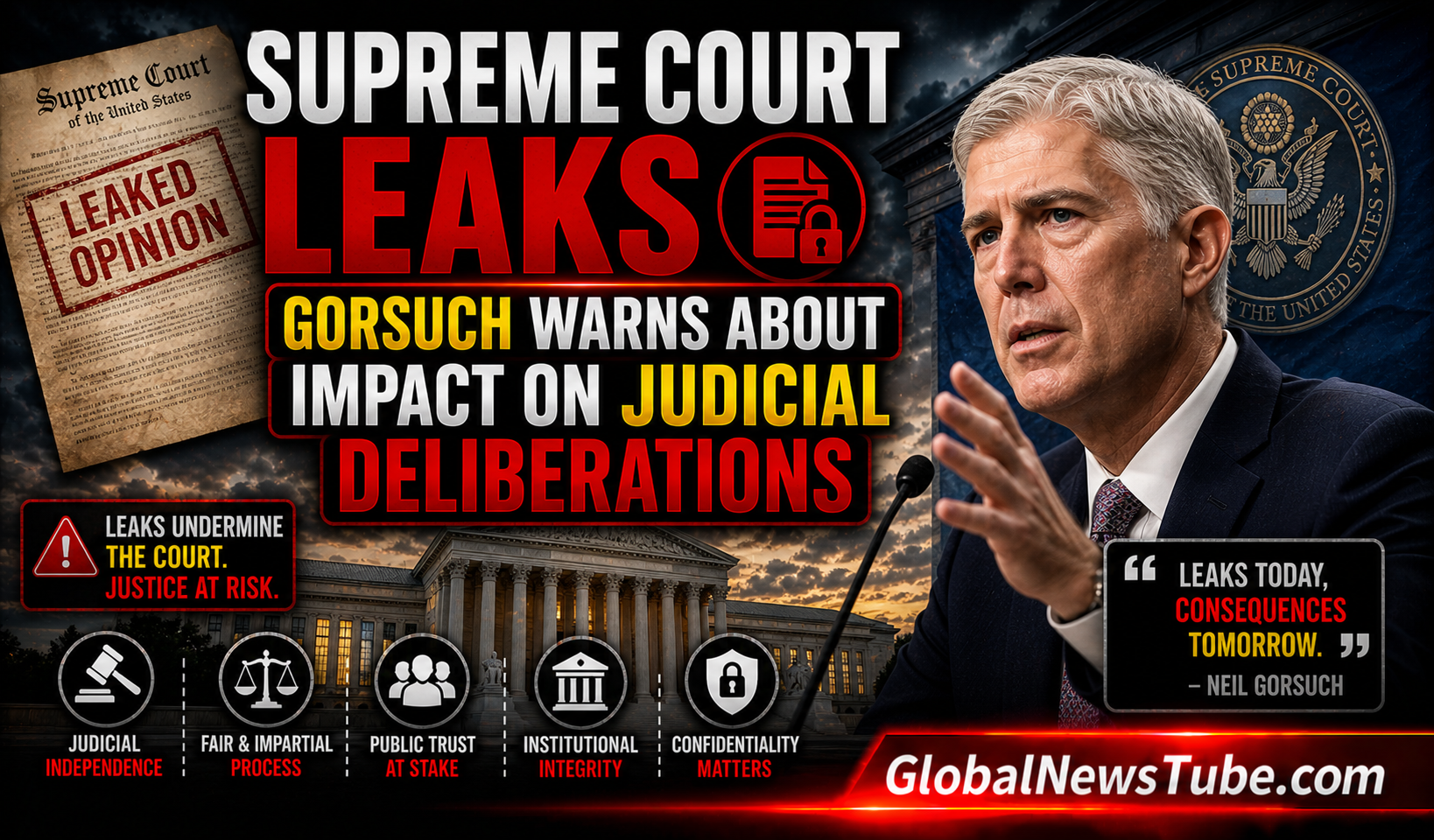
The issue of Supreme Court leaks Gorsuch has recently gained national attention following remarks by U.S. Supreme Court Justice Neil Gorsuch. He expressed concern over the increasing number of leaks involving internal court deliberations and emphasized the importance of maintaining confidentiality to preserve the integrity of judicial decision-making. His comments come at a time when the court is facing growing scrutiny regarding its internal processes and transparency.
Gorsuch highlighted that while transparency plays an important role in maintaining public trust, the court must also protect its ability to conduct private and candid discussions. Without this balance, the quality of judicial decisions could be compromised. The debate surrounding leaks reflects broader concerns about trust, accountability, and the functioning of one of the most influential institutions in the United States.
Background of Supreme Court Leaks and Rising Concerns
The discussion around Supreme Court leaks Gorsuch stems from a series of incidents that have raised questions about confidentiality within the court. One of the most significant moments occurred when a draft opinion in a major case was publicly disclosed before the official ruling. This unprecedented event sparked widespread debate about internal security and the risks associated with leaked information.
More recently, additional disclosures involving internal discussions have intensified concerns. These leaks have revealed details about how justices debate and form opinions on critical issues. Such revelations have led to increased calls for stronger safeguards to protect sensitive information and maintain the integrity of the judicial process.
Gorsuch emphasized that the court requires space for private discussions to function effectively. The ability to engage in candid conversations allows justices to explore different perspectives and reach well-considered decisions. Without this confidentiality, the deliberation process could be weakened.
Importance of Confidentiality in Judicial Deliberations
The Supreme Court leaks Gorsuch debate highlights the critical role of confidentiality in judicial deliberations. The Supreme Court relies on private discussions to allow justices to exchange ideas, debate legal interpretations, and build consensus. These conversations are essential for ensuring that decisions are based on careful analysis and thorough reasoning.
Confidentiality allows justices to speak openly without fear of external pressure or public criticism. This environment encourages honest dialogue and supports the development of balanced rulings. Gorsuch stressed that the ability to communicate privately is fundamental to achieving consensus among justices.
Without confidentiality, justices may become more cautious in their discussions, potentially limiting the depth of debate. This could lead to less effective decision-making and reduce the overall quality of judicial outcomes. Maintaining private deliberations is therefore essential for preserving the independence and effectiveness of the court.
At the same time, transparency remains an important aspect of the judicial system. Public access to court decisions and legal reasoning ensures accountability and allows citizens to understand how rulings are made. The challenge lies in balancing these two principles.
Balancing Transparency and Judicial Independence
A key aspect of the Supreme Court leaks Gorsuch discussion is the need to balance transparency with judicial independence. While the court has taken steps to improve transparency, such as providing public access to proceedings and decisions, it must also maintain areas of privacy for internal deliberations.
Gorsuch acknowledged that transparency helps build public trust, but he also warned that excessive exposure could undermine the court ability to function effectively. Justices need a private environment where they can discuss complex legal issues without external influence or pressure.
Finding the right balance is essential for maintaining both accountability and independence. Too much secrecy can lead to a lack of trust, while too much transparency can hinder meaningful discussion. The court must navigate these challenges carefully to preserve its credibility.
Public confidence in the judiciary depends on the perception that decisions are made fairly and independently. By ensuring that both transparency and confidentiality are respected, the court can maintain its role as a trusted institution.
Impact of Leaks on Public Trust in the Judicial System
The issue of Supreme Court leaks Gorsuch has significant implications for public trust in the judicial system. Leaks can create uncertainty about the court internal processes and raise concerns about its ability to operate impartially. When confidential information is made public, it may lead to speculation and misunderstandings about how decisions are reached.
Gorsuch addressed these concerns by emphasizing that the public can evaluate the court work through its published opinions. These documents provide a clear explanation of the legal reasoning behind decisions, offering transparency and accountability.
However, repeated leaks can weaken confidence in the court internal governance. They may suggest vulnerabilities in the system and raise questions about the ability to protect sensitive information. Maintaining trust requires addressing these issues and ensuring that proper safeguards are in place.
The impact of leaks extends beyond the court itself, influencing perceptions of the broader legal system. Trust in judicial institutions is essential for upholding the rule of law, and any erosion of this trust can have wide ranging consequences.
Role of the Supreme Court in a Changing Environment
The Supreme Court leaks Gorsuch discussion also reflects the evolving role of the Supreme Court in a changing political and social environment. The court is increasingly involved in high profile cases that shape national policies and public debate. This increased visibility has placed greater pressure on the institution to maintain transparency and accountability.
Recent developments have highlighted the importance of clear communication and strong internal processes. As the court addresses complex legal issues, it must ensure that its operations remain secure and effective. The challenges posed by leaks underscore the need for continuous improvement in managing confidential information.
The court ability to adapt to changing circumstances will be critical in maintaining its credibility. By addressing concerns related to leaks and transparency, the Supreme Court can continue to fulfill its role as a key pillar of the legal system.
Future Outlook for Supreme Court Confidentiality
The future of the Supreme Court leaks Gorsuch issue will depend on how the court responds to current challenges. Strengthening internal safeguards and improving procedures for handling confidential information may help reduce the risk of future leaks.
Legal experts suggest that enhanced security measures and clearer guidelines could improve the protection of sensitive discussions. At the same time, maintaining transparency through public communication will be essential for building trust.
The balance between confidentiality and openness will remain a central issue for the judiciary. By addressing these concerns proactively, the court can strengthen its reputation and ensure that it continues to operate effectively.
Supreme Court Leaks Gorsuch Highlights Need for Balance
The Supreme Court leaks Gorsuch debate highlights the importance of maintaining a balance between transparency and confidentiality in the judicial system. Justice Neil Gorsuch remarks emphasize the need for private deliberations to support effective decision-making while preserving public trust.
As the court navigates the challenges posed by leaks and increasing scrutiny, it must find ways to protect its internal processes without compromising accountability. The outcome of this debate will have long-term implications for the judiciary and its role in shaping national policy.
Ultimately, ensuring trust in the Supreme Court requires a careful balance between openness and discretion. By preserving the integrity of its deliberations and maintaining transparency in its decisions, the court can continue to serve as a respected and reliable institution.