


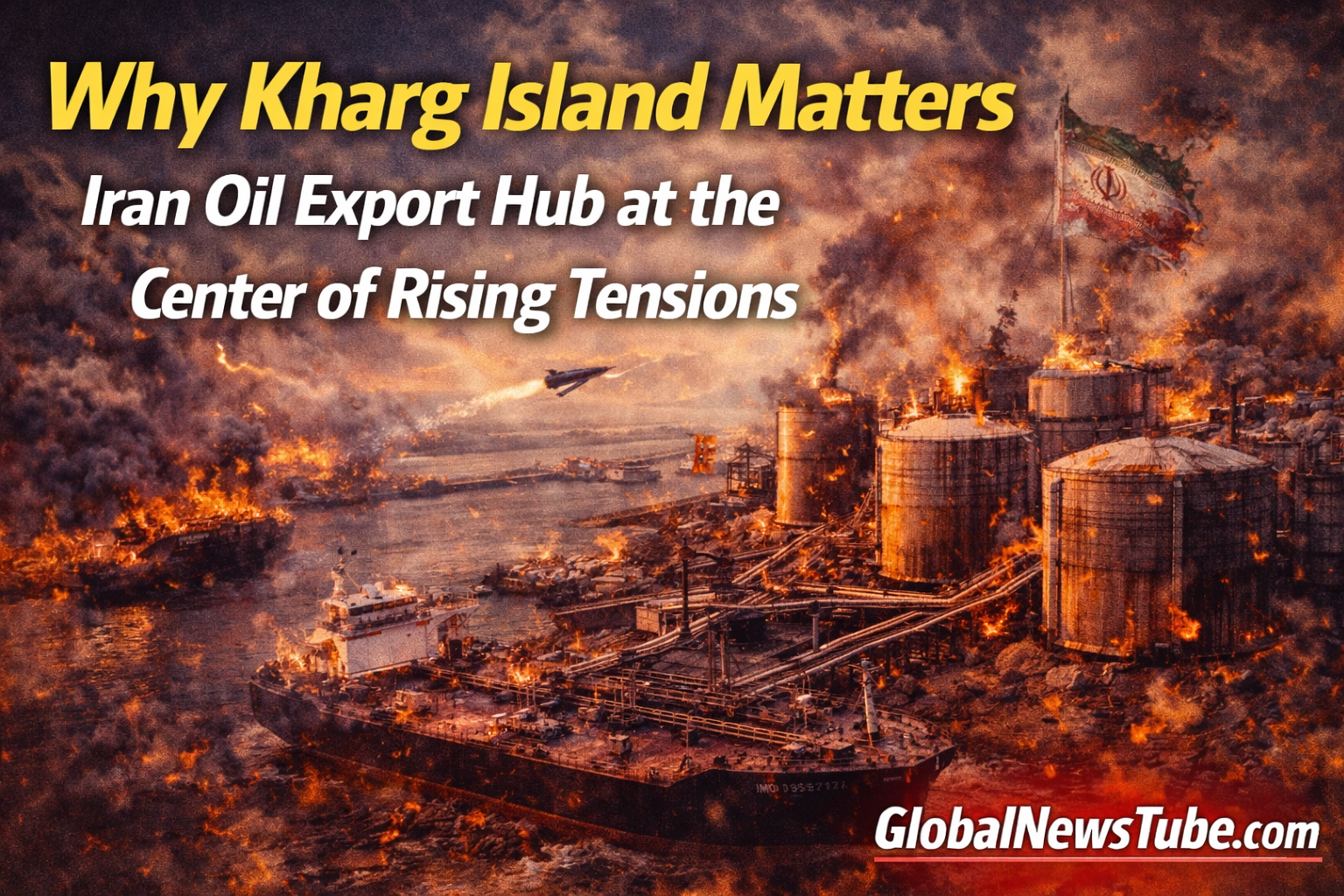
Why Kharg Island Matters Iran Oil Export Hub at the Center of Rising Tensions
Kharg Island has become one of the most closely watched locations in the Middle East because it sits at the heart of Iran’s oil economy. As tensions deepen in the region, attention has shifted to this small island in the Gulf not because of its size, but because of its extraordinary importance to Iran’s energy exports, state revenue, and strategic resilience. Kharg Island is widely seen as Iran’s main oil export terminal and the key point through which most of the country’s crude shipments move to world markets.
For years, Iran Kharg Island has been treated as more than just an energy facility. It is a national economic lifeline. Oil produced in Iran’s major fields is transported by pipeline to the island, where it is stored, prepared for shipment, and loaded onto tankers. From there, cargoes move through the Gulf toward international buyers. Because such a large share of Iran’s oil exports passes through Kharg Island, it has become one of the most strategically sensitive energy locations in the region.
Why Kharg Island Matters to Iran Economy
The reason Kharg Island oil exports matter so much is simple oil remains central to Iran’s economy, even under sanctions pressure. When a single terminal handles such a large share of export capacity, that facility becomes indispensable. Kharg Island is not merely a port. It is a concentration point for storage tanks, loading infrastructure, offshore support operations, and tanker movement. If that network were seriously disrupted, Iran could lose a major portion of its ability to sell crude abroad, cutting deeply into state income and foreign currency inflows.
That is why the island is often described as Iran’s oil lifeline. In geopolitical terms, it functions as both an economic asset and a strategic vulnerability. A country can possess large oil reserves underground, but without a reliable export route, those reserves do not translate into revenue. Kharg Island bridges that gap. It turns production into export earnings and helps sustain Iran’s wider economic system. This is also why any threat involving the island immediately attracts global attention from energy markets, governments, and military planners.
Kharg Island Strategic Importance in the Gulf
The Kharg Island strategic importance goes beyond energy economics. Its location in the Gulf makes it central to the wider contest over maritime security and regional deterrence. Energy infrastructure in this part of the world is tightly linked to shipping lanes, naval positioning, and the stability of the Strait of Hormuz. Because Kharg Island helps feed Iranian crude into global markets, any pressure on it can affect not only Iran but also wider concerns about supply security and oil pricing.
Its strategic value is amplified by concentration risk. When one site handles such a high share of exports, it becomes harder to replace quickly. Alternative routes and facilities may exist, but they usually cannot match the scale and established logistics of a major terminal like Kharg Island. That means even limited damage or prolonged uncertainty can have outsized consequences. In the current conflict environment, this makes the island a symbol of both Iranian endurance and Iranian exposure.
Why Kharg Island Is in Focus Now
The question of why Kharg Island matters has become more urgent because of the latest military and political escalation. The island has moved into focus as tensions rise over military operations, shipping security, and the wider risk of conflict spilling into energy infrastructure. Because Kharg Island is so essential to Iran’s export capacity, even indirect threats to it are enough to spark concern across the region.
That distinction matters. Military pressure around Kharg Island sends a strategic message even if energy infrastructure itself is not directly targeted. At the same time, avoiding direct strikes on oil facilities reflects an awareness of the enormous consequences of crossing that line. Directly targeting Kharg’s export system could sharply escalate the conflict and send shockwaves through oil markets. It would not only damage Iran economically, but could also provoke retaliation against regional energy facilities and shipping routes linked to rival powers and their partners.
The Broader Meaning of Iran Oil Export Hub
Calling Kharg Island an Iran oil export hub understates its broader significance. It is also a political symbol. In times of confrontation, infrastructure like this represents national leverage, vulnerability, and resilience all at once. As long as Kharg Island remains functional, Iran retains a critical channel for monetizing its oil resources. If it were disabled, Tehran would face far greater economic strain and strategic pressure.
This is why the island features so heavily in current analysis. It stands at the intersection of energy, war, and diplomacy. A small island with a concentrated industrial role now carries implications for regional stability, international shipping, and the global price of oil. The more tensions rise, the more Kharg Island becomes a measure of how far the conflict may spread.
What Happens Next
The future of Kharg Island will depend on whether the conflict continues to widen. If military operations intensify and oil infrastructure becomes a direct target, the island could shift from being a strategic pressure point to a central battlefield objective. That would likely bring much greater market volatility and a higher risk of retaliation across Gulf energy infrastructure.
For now, the island remains both protected and exposed protected because its oil infrastructure has not yet become the main focus of direct attack, and exposed because everyone understands its importance. That combination makes Kharg Island one of the most sensitive locations in the Middle East today.
Conclusion
Kharg Island matters because it is the backbone of Iran’s oil export system and one of the most strategically important energy sites in the Gulf. It connects Iran’s crude production to the world market, supports state revenue, and shapes regional military calculations. That is why any threat around the island is never just about one location. It is about energy security, conflict escalation, and the balance of power across the Middle East.