


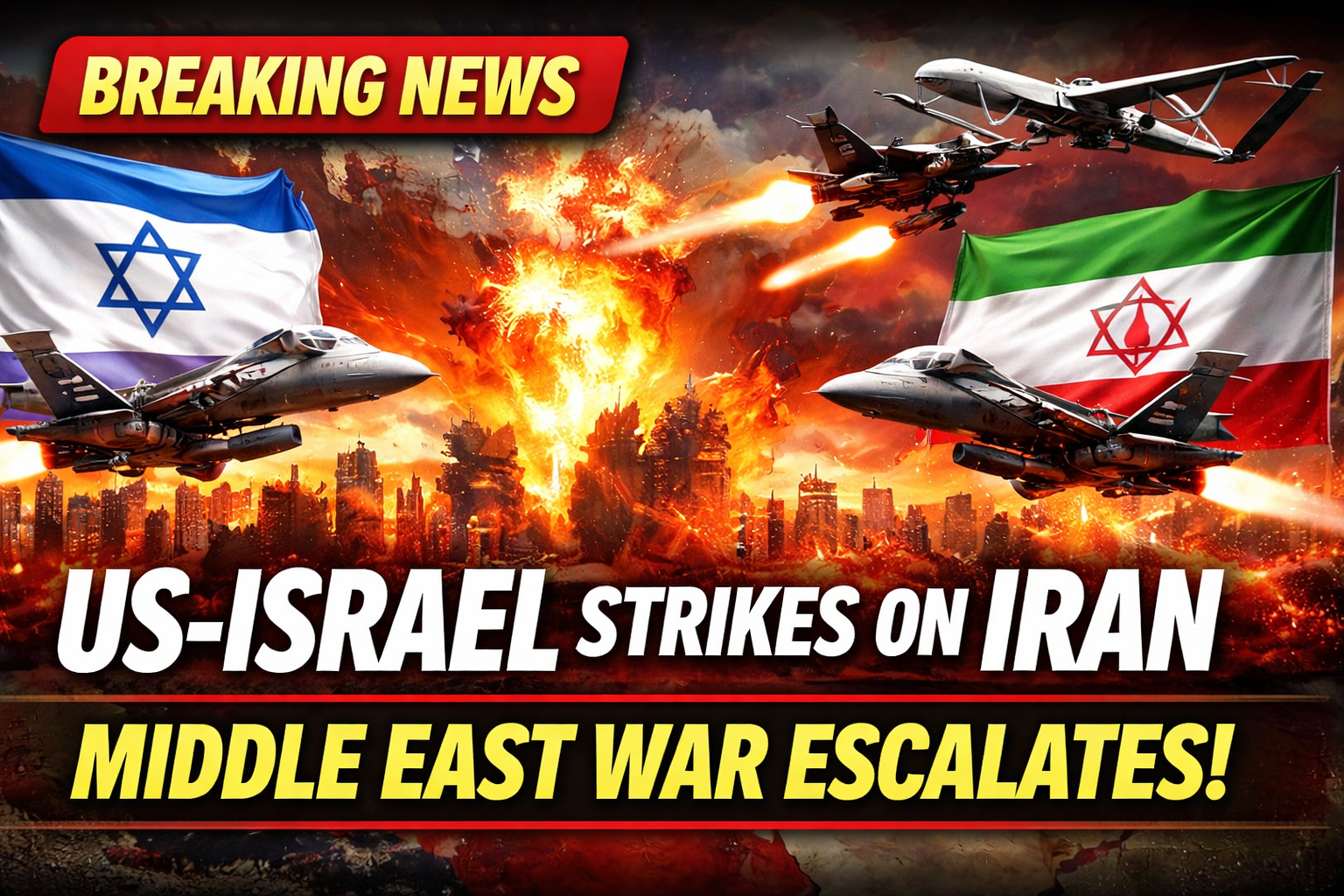
US Israel Strikes on Iran Escalate Middle East War as Global Tensions Rise
The US Israel strikes on Iran have triggered one of the most serious geopolitical crises in the Middle East in recent years. What began as targeted military operations against Iranian strategic facilities has rapidly escalated into a broader conflict involving missile attacks, drone strikes, and growing regional instability. As tensions rise between Iran, Israel, and the United States, global leaders are warning about the possibility of a wider war that could reshape the balance of power in the Middle East.
The conflict has already begun affecting global markets, energy supplies, and international diplomacy. With continued military actions and retaliatory attacks, the situation is becoming increasingly unpredictable. Analysts believe that if the conflict continues to escalate, it could draw additional regional actors into the confrontation and further destabilize the region.
Background of the US Israel Strikes on Iran
Longstanding Tensions Between Iran and Israel
The conflict between Iran and Israel has deep historical roots shaped by ideological differences, regional competition, and disputes over Iran’s nuclear program. Israel has long expressed concerns that Iran’s nuclear ambitions and missile capabilities pose a direct threat to its national security.
Over the past decade, both countries have engaged in indirect confrontations through cyberattacks, intelligence operations, and proxy conflicts across the Middle East. These tensions have repeatedly brought the region close to open warfare.
The recent US Israel military strikes on Iran represent one of the most significant escalations in this long-running rivalry.
Strategic Objectives Behind the Strikes
The United States and Israel launched the military operation with the stated objective of weakening Iran’s military infrastructure and preventing the expansion of its strategic weapons programs. Military targets reportedly included missile bases, command centers, and defense facilities.
Officials from both countries argued that these strikes were necessary to stop potential threats against Israeli territory and American military interests in the region.
However, critics warn that such actions risk triggering a broader conflict and further destabilizing an already fragile Middle East security environment.
TAP FOR MORE NEWS HERE
Israel Intensifies Airstrikes on Iranian Targets
Large Scale Military Operations
As the conflict escalated, Israel intensified its airstrikes on Iranian military infrastructure. Several strategic locations across Iran were reportedly targeted, including missile launch sites, defense systems, and logistics centers.
Explosions were reported in major cities as Israeli aircraft conducted multiple waves of attacks aimed at weakening Iran’s ability to respond militarily.
Israeli officials stated that the goal of these operations is to eliminate threats posed by Iranian missile systems and prevent further attacks on Israeli territory.
Expansion of Military Campaign
The conflict has expanded beyond Iran itself. Israeli forces have also carried out strikes against groups allied with Iran in neighboring countries. These actions reflect Israel’s broader strategy of targeting networks that support Iran’s regional influence.
By expanding its operations, Israel aims to prevent Iranian allies from opening additional fronts in the conflict.
However, these developments have raised concerns that the war could spread across the Middle East.
Iran Responds With Missile and Drone Attacks
Retaliation Against Israel and US Interests
In response to the US Israel strikes, Iran launched a series of missile and drone attacks targeting Israeli cities and military installations. These retaliatory actions demonstrate Iran’s capacity to respond across long distances.
Several projectiles were reportedly intercepted by Israeli defense systems, though some strikes caused damage and casualties.
Iranian officials have stated that the country will continue to defend its sovereignty and respond to any further military aggression.
Regional Allies Enter the Conflict
Iran’s regional allies have also become involved in the escalating confrontation. Armed groups aligned with Tehran have launched attacks against Israeli and American targets across the region.
This involvement of regional actors significantly increases the risk of the conflict evolving into a broader Middle East war.
Security experts warn that the more actors become involved, the harder it will be to contain the crisis.
Humanitarian Impact of the Iran Israel Conflict
Civilian Casualties and Infrastructure Damage
The ongoing war has already resulted in significant human suffering. Hundreds of civilians have reportedly been killed or injured due to missile strikes, air raids, and military operations.
Hospitals and emergency services in several cities are struggling to handle the growing number of casualties. Infrastructure damage, including destroyed buildings and disrupted public services, has also been reported.
The humanitarian consequences of the conflict continue to worsen as the fighting intensifies.
Displacement and Public Fear
Thousands of residents have been forced to leave their homes due to the ongoing attacks. Civilians in affected areas are living under constant fear of missile strikes and air raids.
Governments across the region have taken emergency measures, including closing airspace, increasing security around strategic facilities, and advising citizens to remain in shelters during attacks.
The longer the conflict continues, the greater the humanitarian crisis may become.
Global Economic and Energy Consequences
Threats to Global Oil Supply
One of the most significant concerns arising from the conflict is the potential disruption of energy supplies. The Middle East is a critical region for global oil production, and instability can quickly affect international markets.
Tensions near the Strait of Hormuz, a key global oil transit route, have raised fears that shipping could be disrupted.
Any interruption to oil shipments through this route could lead to rising energy prices and economic uncertainty worldwide.
Impact on Global Markets
Financial markets have reacted cautiously to the escalating conflict. Investors are closely monitoring developments in the Middle East due to the potential impact on oil supply chains and international trade.
Higher shipping costs, increased insurance rates for cargo vessels, and market volatility are among the economic consequences already being observed.
If the conflict expands further, the economic impact could be felt across multiple global industries.
International Reactions and Diplomatic Efforts
Global Calls for De-Escalation
World leaders and international organizations have called for restraint and urged both sides to avoid further escalation. Diplomatic efforts are being discussed to prevent the conflict from spreading across the region.
Many governments believe that diplomatic negotiations remain the only viable solution to resolving the crisis.
Challenges Facing Diplomacy
Despite calls for peace, diplomatic progress remains difficult. Both Iran and Israel appear determined to continue military operations while maintaining strong political positions.
Until meaningful dialogue takes place, the risk of further escalation remains high.
Conclusion
The US Israel strikes on Iran have transformed an already tense geopolitical rivalry into a dangerous military confrontation. With ongoing airstrikes, missile attacks, and regional involvement, the conflict threatens to destabilize the Middle East and affect global security.
The humanitarian impact continues to grow while global markets remain uncertain due to fears of energy disruptions and economic instability. As tensions remain high, the coming weeks will be crucial in determining whether diplomacy can reduce the crisis or whether the region will face a prolonged and potentially wider war.