


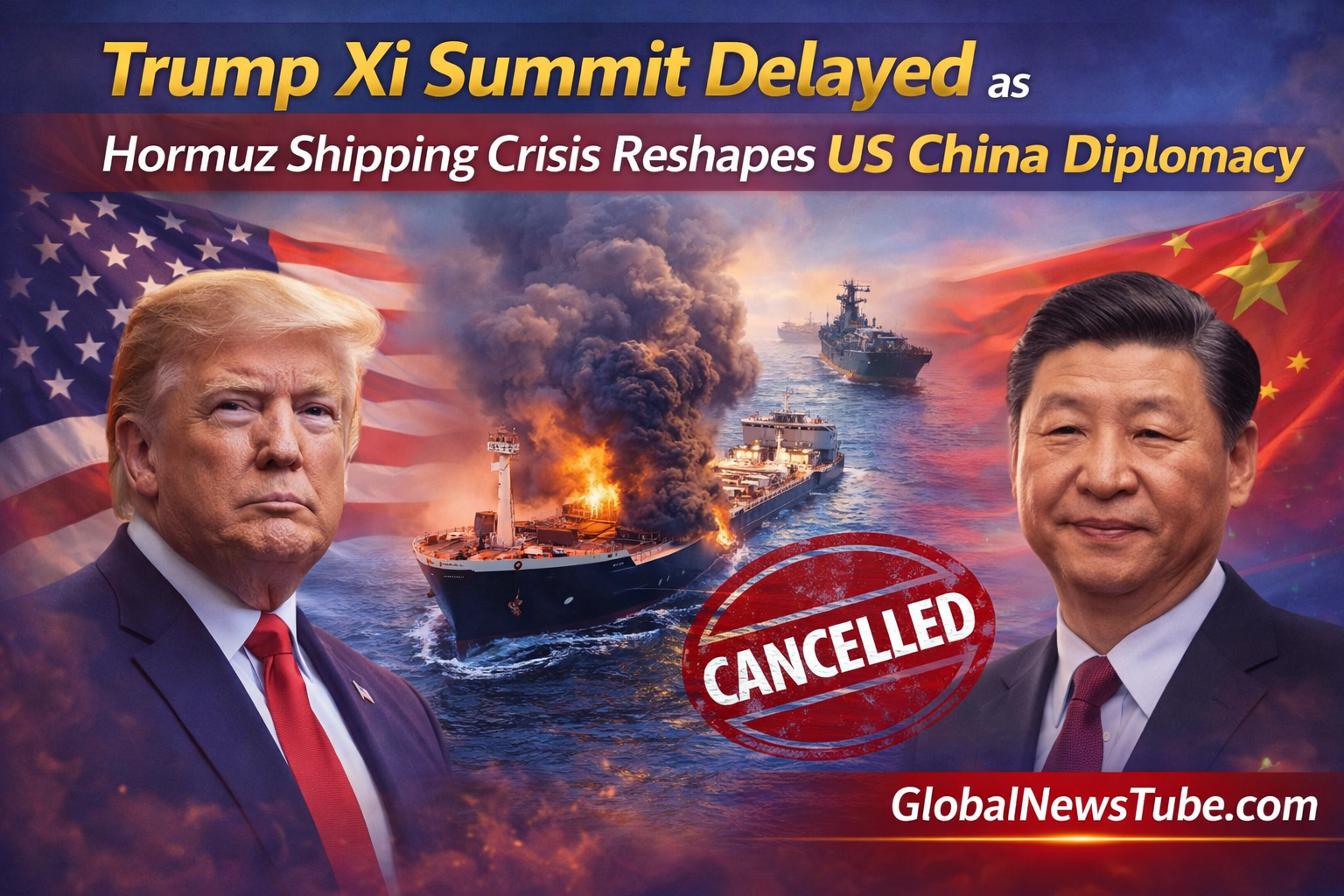
Trump Xi Summit Delayed as Hormuz Shipping Crisis Reshapes US China Diplomacy
The Trump Xi summit delayed story has quickly become one of the most important geopolitical developments of 2026 because it connects war, energy security, and great power diplomacy in one moment. The planned meeting between US President Donald Trump and Chinese President Xi Jinping has been pushed back as the White House focuses on the escalating Iran conflict and the urgent effort to reopen the Strait of Hormuz, one of the world’s most important oil shipping routes.
This delay matters far beyond scheduling. A Trump Xi summit would normally be viewed through the lens of trade, tariffs, and strategic competition. But the current crisis has shifted the conversation toward oil flows, naval security, and the limits of international coordination during wartime. The Strait of Hormuz carries a critical share of global oil transportation, and its disruption has become a direct economic and diplomatic problem for the United States, China, and many energy dependent economies.
Why the Trump Xi Summit Delayed Story Matters
The reason the Trump Xi summit delayed issue is drawing so much attention is that it reveals how quickly a regional war can reshape top level diplomacy. Trump had been preparing for a high stakes meeting with Xi, but the conflict with Iran and the pressure on Gulf shipping pushed the White House into crisis mode. Instead of focusing on economic agreements or symbolic leader to leader optics, Washington is now trying to build support around a vital maritime chokepoint.
That shift is important because it shows how foreign policy priorities can change almost overnight. The summit is no longer just about US China relations in the traditional sense. It is also about whether major powers are willing to cooperate when a global trade artery is under threat.
Strait of Hormuz Shipping Is Now Central
The heart of this story is the Strait of Hormuz shipping crisis. The strait is one of the world’s most important energy chokepoints, and disruptions there can send shockwaves through oil markets, shipping insurance, and industrial supply chains. Trump has publicly called for more countries to contribute support, arguing that the burden of keeping the route open should not fall on the United States alone.
For China, this creates a difficult diplomatic test. Beijing has major energy interests tied to Gulf stability, yet it has appeared cautious about direct military involvement and has placed more emphasis on de escalation and diplomacy. That response reflects China broader approach it wants stable trade flows and access to energy, but it is careful about becoming entangled in a US led security operation.
Iran War Has Changed the Diplomatic Agenda
The Iran war oil shipping crisis has changed the entire context of US diplomacy. What might have been a carefully staged summit with Xi is now being shaped by emergency calculations about shipping lanes, energy prices, and wartime alliances. The White House is no longer dealing only with the military campaign itself. It is also dealing with the economic consequences of conflict, especially the effect on global energy flows and the political cost of any prolonged disruption.
This helps explain why the summit delay has broader symbolic importance. It suggests that the United States is being forced to reorder its diplomatic priorities under pressure. The administration still wants cooperation from China, but the terms of that cooperation have shifted. Instead of trade stability or summit pageantry, the new focus is on whether Beijing can be persuaded to play a constructive role in a crisis affecting the global economy.
What This Means for US China Relations
The Trump China summit 2026 delay may also expose the limits of cooperation between Washington and Beijing. On paper, both countries have strong reasons to care about Hormuz. The United States wants to protect international shipping and show leadership. China wants reliable access to oil and stable trade conditions. Yet shared interests do not automatically lead to shared action.
This is one of the key lessons from the current moment. Even when both powers are affected by the same disruption, they may respond very differently. Washington is leaning toward military coordination and coalition building. Beijing appears more comfortable with diplomatic messaging and a lower profile stance. That gap makes the delayed summit more meaningful because it reflects a broader mismatch in how the two powers manage global crises.
At the same time, the delay may not be entirely negative from a diplomatic standpoint. A rushed summit during a major war might have produced little substance. A postponement could give both sides more time to define their goals and reduce the risk of an unproductive meeting.
Oil Shipping and the Global Economy
One reason the Trump Xi summit delayed story has global relevance is that it is directly tied to oil and shipping. Hormuz is not a symbolic issue. It is a functional artery for the world economy. Disruptions there affect freight movement, tanker risk, energy prices, and business confidence across multiple regions.
That economic dimension makes the delayed summit even more significant. US China relations are already central to global trade, and now they are intersecting with one of the world most sensitive energy routes. If the crisis persists, it could deepen inflation pressure, raise shipping costs, and increase uncertainty for countries that depend heavily on imported oil.
What Could Happen Next
The next phase of the Trump Xi summit delayed story will depend on two things whether Hormuz becomes safer for commercial shipping, and whether Washington and Beijing can find a useful diplomatic formula despite their differences. If the shipping crisis eases, summit planning may resume with a stronger focus on trade and bilateral competition. But if the crisis worsens, the summit could be pushed further back or reshaped entirely around strategic coordination.
There is also a larger political question. Trump push for allied support in Hormuz appears designed not only to solve a shipping problem but also to test which partners will step forward. That means the crisis may influence not just US China relations, but also Washington’s expectations of NATO allies and major Asian economies.
Conclusion
The Trump Xi summit delayed by the Iran war and Hormuz shipping crisis is more than a diplomatic scheduling change. It is a sign that war in the Gulf is now affecting the highest levels of international politics, from oil markets to great power relations. The delay shows how quickly global priorities can shift when a key shipping route comes under pressure and major powers are asked to respond.
For now, the real issue is not just when Trump and Xi will meet. It is what kind of world they will be meeting in one defined by disrupted shipping, rising energy risk, and increasing pressure on the major powers to decide whether competition or coordination comes first.