


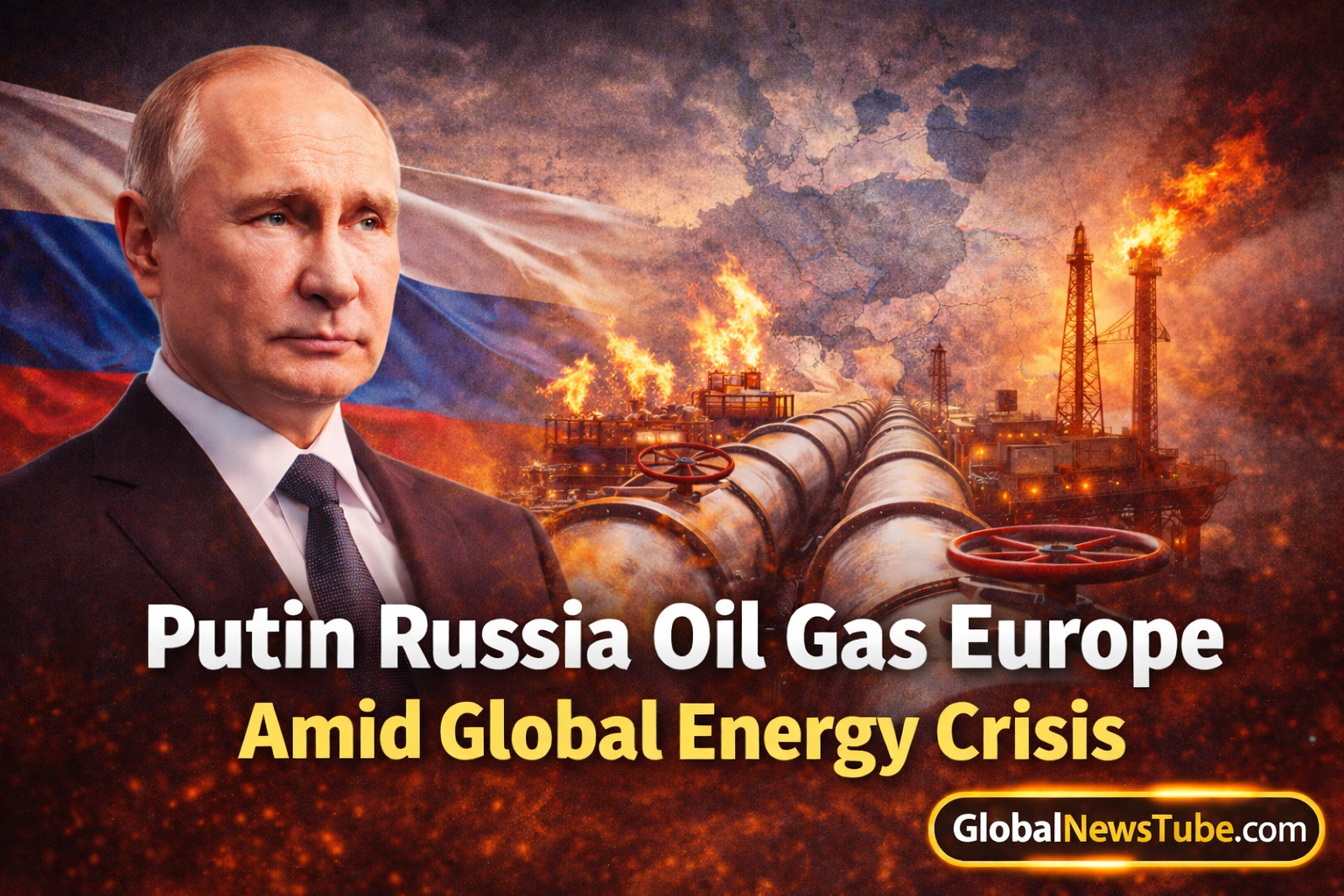
Putin Russia Oil Gas Europe Amid Global Energy Crisis
The Putin Russia oil gas Europe issue has become a central topic in global politics as the world faces a growing energy crisis. Russian President Vladimir Putin recently stated that Russia could supply oil and natural gas to Europe despite the ongoing geopolitical tensions and global disruptions in energy markets.
The statement comes at a time when conflicts and rising oil prices are creating pressure on global energy supplies. European countries, which have been reducing dependence on Russian energy since the Ukraine war, now face new challenges due to rising demand and unstable supply routes.
As energy prices surge and markets become volatile, Russia is positioning itself as a potential supplier that could help stabilize Europe’s energy needs.
Background of the Putin Russia Oil Gas Europe Crisis
Europe’s Energy Dependence
For decades, Europe relied heavily on Russian oil and natural gas imports to power its industries and households. Russian energy exports formed a major part of Europe’s energy mix before geopolitical tensions disrupted these supply relationships.
Following the Ukraine war, the European Union introduced policies aimed at reducing dependence on Russian fossil fuels and diversifying energy sources. These measures included investing in renewable energy, increasing imports from alternative suppliers, and building new energy infrastructure.
Despite these efforts, Europe still faces challenges in fully replacing Russian energy supplies, particularly during periods of global energy shortages.
Impact of Global Energy Disruptions
Conflicts and tensions in energy producing regions have further disrupted global energy markets. Oil prices have surged as concerns grow about supply disruptions through major shipping routes.
Analysts warn that continued instability in key regions could trigger a major energy shock and increase global inflation.
These developments have placed additional pressure on European countries already struggling with high energy costs.
Putin Russia Oil Gas Europe Strategy
Russia Offers Energy Supplies
During recent statements President Vladimir Putin indicated that Russia could supply oil and gas to European markets if demand increases during the global energy crisis.
Russia remains one of the world’s largest producers of oil and natural gas making it a major player in global energy markets. The countrys vast reserves and pipeline infrastructure allow it to deliver energy supplies to multiple regions.
Putin also suggested that Russia could redirect energy exports to alternative markets if Europe continues reducing its purchases.
Energy Markets and Political Pressure
The Putin Russia oil gas Europe debate highlights the strong connection between energy markets and geopolitical power. Russia energy exports have long been an important factor in international relations.
Analysts note that controlling large energy supplies gives countries significant influence during economic or political conflicts.
Because Europe still requires substantial energy imports Russias role in the global energy system remains significant despite political tensions.
Economic Impact of the Putin Russia Oil Gas Europe Debate
Rising Energy Prices
The global energy crisis has led to dramatic increases in oil and gas prices. Higher energy costs affect transportation, manufacturing, and household expenses across many countries.
In Europe rising fuel prices have increased the cost of electricity, heating, and industrial production.
Businesses and governments are searching for ways to stabilize energy markets and prevent further economic disruptions.
Inflation and Economic Pressure
The Putin Russia oil gas Europe crisis has also contributed to global inflation. Energy prices influence the cost of goods and services worldwide, meaning higher fuel costs can quickly affect the broader economy.
Economists warn that prolonged energy shortages could slow economic growth and increase financial pressure on households and businesses.
For European governments, balancing energy security with political commitments to reduce dependence on Russian fuel remains a major challenge.
Global Reactions to Putins Energy Offer
European Union Response
European leaders have remained cautious about relying on Russian energy supplies again. The EUs energy strategy focuses on expanding renewable energy and building partnerships with alternative energy suppliers.
However, some countries continue to import limited amounts of Russian gas due to the lack of immediate alternatives.
The debate over Russian energy supplies highlights the complexity of balancing economic needs with political and security concerns.
International Energy Market Impact
Energy markets around the world are closely watching the Putin Russia oil gas Europe developments. Investors, governments, and energy companies are monitoring how geopolitical tensions could affect supply chains.
A prolonged energy crisis could reshape global energy trade and accelerate the transition toward renewable energy.
Future of Energy Relations Between Russia and Europe
Changing Energy Strategies
Europes long-term energy strategy aims to reduce dependence on fossil fuels and increase renewable energy production. This transition could reshape the continents energy relationships with traditional suppliers like Russia.
At the same time Russia is expanding its energy exports to other international markets.
Possibility of Future Cooperation
Despite political tensions energy cooperation between Russia and Europe may continue in some form due to economic realities. Energy infrastructure, pipelines, and existing trade networks still connect the two regions.
Whether these relationships strengthen or weaken will depend on future geopolitical developments and energy market conditions.
Conclusion
The Putin Russia oil gas Europe issue reflects the complex relationship between energy markets and global politics. As the world faces a growing energy crisis, Russias potential role in supplying oil and gas to Europe remains a controversial topic.
While Europe continues efforts to diversify its energy sources, rising demand and global instability may force governments to reconsider energy strategies.
The future of global energy security will depend on how countries balance political tensions, economic needs, and the transition toward sustainable energy systems.