


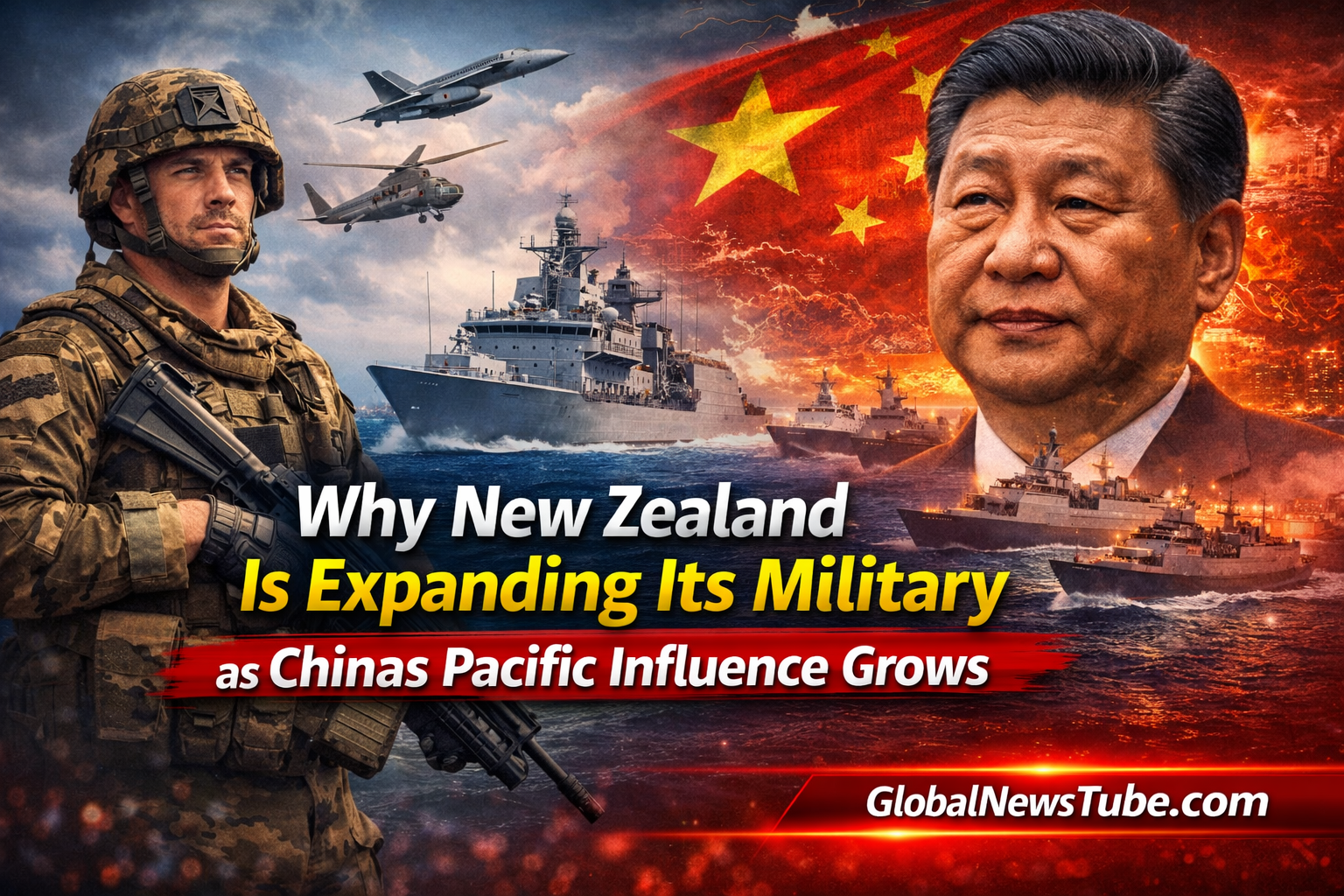
A Major Shift in New Zealand Security Posture
For decades New Zealand was viewed as one of the more restrained military actors in the Indo Pacific. Its defense policy leaned heavily on peacekeeping, humanitarian relief, maritime patrol, and alliance coordination rather than large scale military expansion. That approach is now changing. As strategic competition intensifies across the Pacific, New Zealand is moving to rebuild its armed forces, modernize equipment, and raise defense spending in response to a more unstable regional environment shaped in large part by Chinas growing reach.
Balancing Trade With Security Concerns
The shift is significant because New Zealand has long balanced security ties with Western partners against an economically important relationship with China. China remains one of New Zealands most important trading partners, and Wellington continues to describe the bilateral relationship as complex and consequential. At the same time, New Zealand officials have become more vocal about strategic pressure in the Pacific, foreign interference concerns, and the need for a stronger defense posture.
The Role of the 2025 Defence Capability Plan
A major turning point came with the release of New Zealand 2025 Defence Capability Plan, which lays out a long term program to rebuild the New Zealand Defence Force for a more volatile world. The plan commits the government to major new investment and says defense spending is expected to rise to more than 2% of GDP within the next eight years. Official statements describe the goal as creating a more modern, integrated, and combat capable force.
Rising Defense Spending and Military Upgrades
That policy direction aligns with reporting that New Zealand plans to invest roughly $7 billion in military upgrades over the coming years, including new helicopters, drones, missiles, and infrastructure improvements. The broader aim is not simply to buy equipment, but to reverse years of underinvestment, improve readiness, and increase the countrys ability to operate with allies such as Australia and the United States.
Why China Is Central to the Debate
The China factor is central to this policy rethink. Beijing has steadily expanded its diplomatic, economic, and strategic footprint across the Pacific Islands, raising concerns in Wellington, Canberra, and Washington. Analysts and officials point to a pattern of Chinese engagement that includes security agreements, infrastructure involvement, political influence efforts, and more visible military activity in the wider region. These concerns sharpened after China deepened ties with Pacific states and after Chinese naval activity became more noticeable in waters relevant to Australia and New Zealand.
Growing Tensions in the Pacific Region
New Zealand concerns are not purely theoretical. Reporting over the past year highlighted Chinese naval movements in the wider Tasman and South Pacific environment, developments that reinforced fears that strategic competition is no longer confined to the South China Sea or Taiwan Strait. New Zealand has also watched uneasily as China built influence with Pacific partners, including moves involving the Cook Islands that triggered funding and transparency disputes with Wellington.
What New Zealand Military China Really Means
As a result, the phrase New Zealand military China now captures a much bigger story than a simple bilateral disagreement. It reflects a structural shift in how New Zealand sees its place in regional security. Rather than assuming distance and diplomacy will shield it from major power rivalry, Wellington appears to be concluding that geography no longer provides the same buffer it once did. In the Indo Pacific, maritime routes, intelligence cooperation, undersea infrastructure, Pacific partnerships, and alliance interoperability are all becoming more important.
A Stronger Military Without Abandoning Independence
This does not mean New Zealand is abandoning its independent foreign policy tradition. The country still emphasizes diplomacy, regional stability, and Pacific relationships. But it is also becoming clearer that policymakers believe diplomacy works best when backed by credible capability. The defense buildup is therefore best understood as a hedge New Zealand is preparing for a world in which strategic competition may intensify further, and where smaller states need more resilient military and logistical capacity to protect national interests.
Regional Impact on Allies and Pacific Nations
The implications go beyond New Zealand. For the United States and Australia, a more capable New Zealand military helps distribute the burden of monitoring the South Pacific and securing maritime approaches. For Pacific Island nations, it signals that regional competition is likely to deepen, even as local governments continue to prioritize development, sovereignty, and climate resilience. For China, it is another sign that even countries traditionally seen as pragmatic and moderate are reassessing security risks in light of Beijing expanding presence.
Challenges to Building Long Term Capability
There are still constraints. New Zealand faces budget pressures, force recruitment challenges, and the practical difficulty of turning defense plans into sustained capability. Expanding personnel, replacing aging systems, and upgrading infrastructure all take time. Public support may also depend on whether voters believe the threat environment genuinely justifies the cost. Still, the policy trajectory is now unmistakable New Zealand is moving toward a stronger military footing, and China rise in the Pacific is a major reason why.
Final Thoughts
In that sense, New Zealand’s military rethink is part of a wider Indo Pacific pattern. Countries that once preferred a lower profile defense posture are investing more in deterrence, readiness, and alliance coordination. For New Zealand, this is not just about weapons or budgets. It is about adapting to a new era in which Pacific security has become more contested, China’s influence is harder to ignore, and national resilience increasingly depends on military credibility as well as diplomacy.