


Why Iran War Live Updates Are Dominating Global Attention
Iran war live updates have become one of the most searched topics because the conflict is no longer confined to military targets inside Iran or Israel. It is now affecting aviation, oil shipping, regional infrastructure, and global market confidence. The March 16 developments show a crisis that is widening geographically and economically, with the Gulf increasingly drawn into the fallout. A drone strike near Dubai International Airport disrupted flights, while the Strait of Hormuz remained under severe pressure and oil prices stayed elevated above the key $100 level.
This matters because the conflict has moved from a military confrontation into a broader regional shock. When airports, fuel sites, and shipping routes are affected, the story stops being only about missile exchanges and starts becoming a global economic and travel issue. That is why Iran war live updates are attracting attention far beyond the Middle East. Readers are following the story not only for battlefield developments, but also for what it means for flights, energy prices, inflation, and regional stability.
Dubai Flights Drone Strike Brings the War Into Civilian Infrastructure
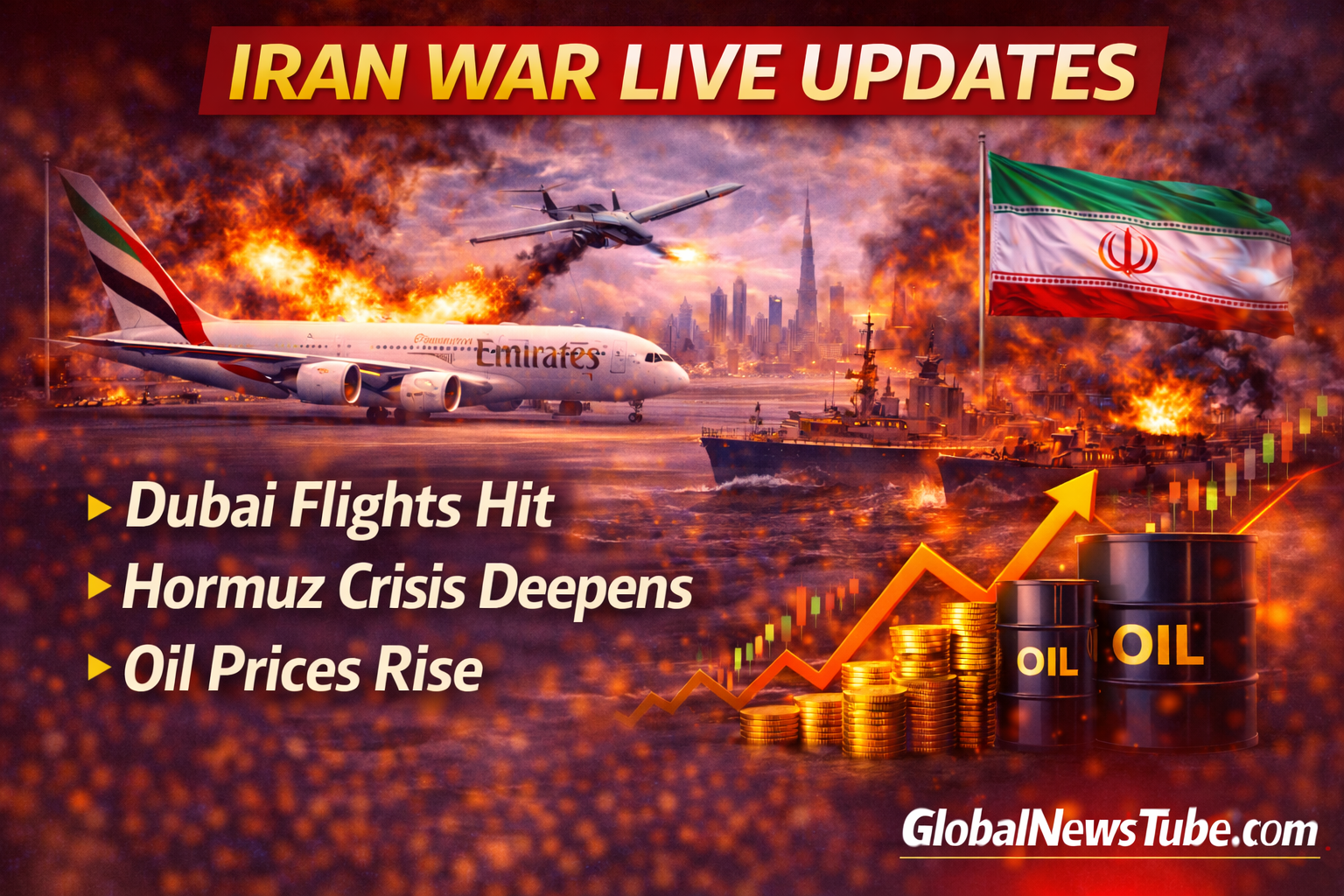
One of the most dramatic developments in the latest Iran war live updates was the disruption at Dubai International Airport. A drone strike caused a large fire near the airport, temporarily suspended operations, and forced airlines to reroute or delay flights. Limited operations later resumed, but the incident showed how vulnerable civilian transport hubs have become as the conflict expands. Dubai is one of the busiest international airports in the world, so even a temporary shutdown can affect thousands of travelers and ripple across global aviation networks.
The Dubai flights drone strike matters because it changes how people experience the crisis. Many wars remain distant for audiences abroad, but a hit on a major global airport makes the impact immediate and visible. Travelers worry about safety, airlines face sudden operational pressure, and governments are forced to reassess the risks to civilian infrastructure.
Strait of Hormuz Crisis Is Driving Global Alarm
The Strait of Hormuz crisis remains central to the entire story because it connects military escalation to global energy markets. Iran has kept pressure on the strait, one of the world’s most important oil chokepoints, and that has helped keep oil prices elevated. Roughly one fifth of the world’s oil trade normally passes through Hormuz, so even partial disruption creates serious concern for governments, traders, and consumers. Major outlets reported that Brent crude stayed above $100 as the market priced in continuing supply stress.
This is why the conflict has become more than a war headline. The Strait of Hormuz crisis affects shipping, insurance costs, fuel prices, and inflation expectations. If tankers cannot move safely, exporters cannot load normally and traders begin assuming that supply pressure could last for weeks. That is what turns Iran war live updates into a global business and economic story. The market is reacting not only to physical disruption, but also to uncertainty about how long the crisis will continue.
Iran Gulf Attacks Are Expanding the Scope of the Conflict
Iran Gulf attacks have made the regional picture far more dangerous. The latest reporting shows that the conflict is not limited to strikes between Iran and Israel. It now includes attacks and threats affecting Gulf states, commercial routes, and major civilian sites. Dubai airport was hit, Abu Dhabi has faced pressure, and Gulf governments are increasingly worried that the war is moving into spaces that were once seen as relatively protected.
That shift matters politically and strategically. By targeting or threatening Gulf infrastructure, Iran raises the cost of the conflict for states closely tied to global finance, trade, and energy logistics. This can be seen as both retaliation and signaling. The message is that the war can spread beyond its original battlefield and affect the broader regional system. For readers following Iran war live updates, this wider pattern is essential. It explains why airports, oil facilities, and shipping lanes are all part of the same story.
Trump Iran Crisis Messaging Adds Another Layer
Trump Iran crisis messaging has added another layer of uncertainty to the situation. President Donald Trump has called on other countries to help reopen or secure the Strait of Hormuz, saying he has been in contact with several governments about the issue. At the same time, reports indicate that some allies have been reluctant to make firm military commitments. That hesitation matters because markets often look for signs of coordinated international action during a crisis. When that response appears uncertain, investors assume disruption could last longer.
Politically, this also puts pressure on Washington. Rising oil prices and regional instability quickly become domestic issues when they affect fuel costs and inflation. That is why Trump Iran crisis messaging is not only about foreign policy. It is also about convincing voters and markets that the situation can be controlled. So far, however, the March 16 updates suggest the crisis remains volatile and that reassurance alone has not restored confidence.
Oil Prices Iran War Impact Is Becoming Harder to Ignore
Oil prices Iran war effects are now one of the clearest ways the conflict is being felt around the world. As long as Hormuz remains under pressure and Gulf infrastructure stays vulnerable, traders are likely to keep a risk premium in the market. Higher oil prices affect transport, food distribution, manufacturing, and household budgets. That means even countries far from the Middle East can feel the consequences of the fighting.
This is one reason the latest Iran war live updates matter so much. They are not just military bulletins. They are also indicators of wider economic stress. When oil remains above $100, governments begin considering emergency responses, reserve releases, or diplomatic pressure to calm the region. The war is therefore shaping economic policy as well as security policy.
Conclusion
Iran war live updates now reflect a crisis that is spilling beyond direct combat and into the systems that hold the region together. The March 16 developments showed Dubai flights disrupted by a drone strike, the Strait of Hormuz still under pressure, and oil prices remaining high as governments struggled to contain the fallout. These events are connected. They all point to a conflict that is becoming more regional, more economically disruptive, and more dangerous for civilian infrastructure.
The biggest takeaway is simple. Iran war live updates are no longer just about the next strike or statement. They are about whether the Gulf can keep its airports open, its oil moving, and its economy functioning under pressure. Until that answer becomes clearer, this story will remain one of the most important and most searched developments in the world.