


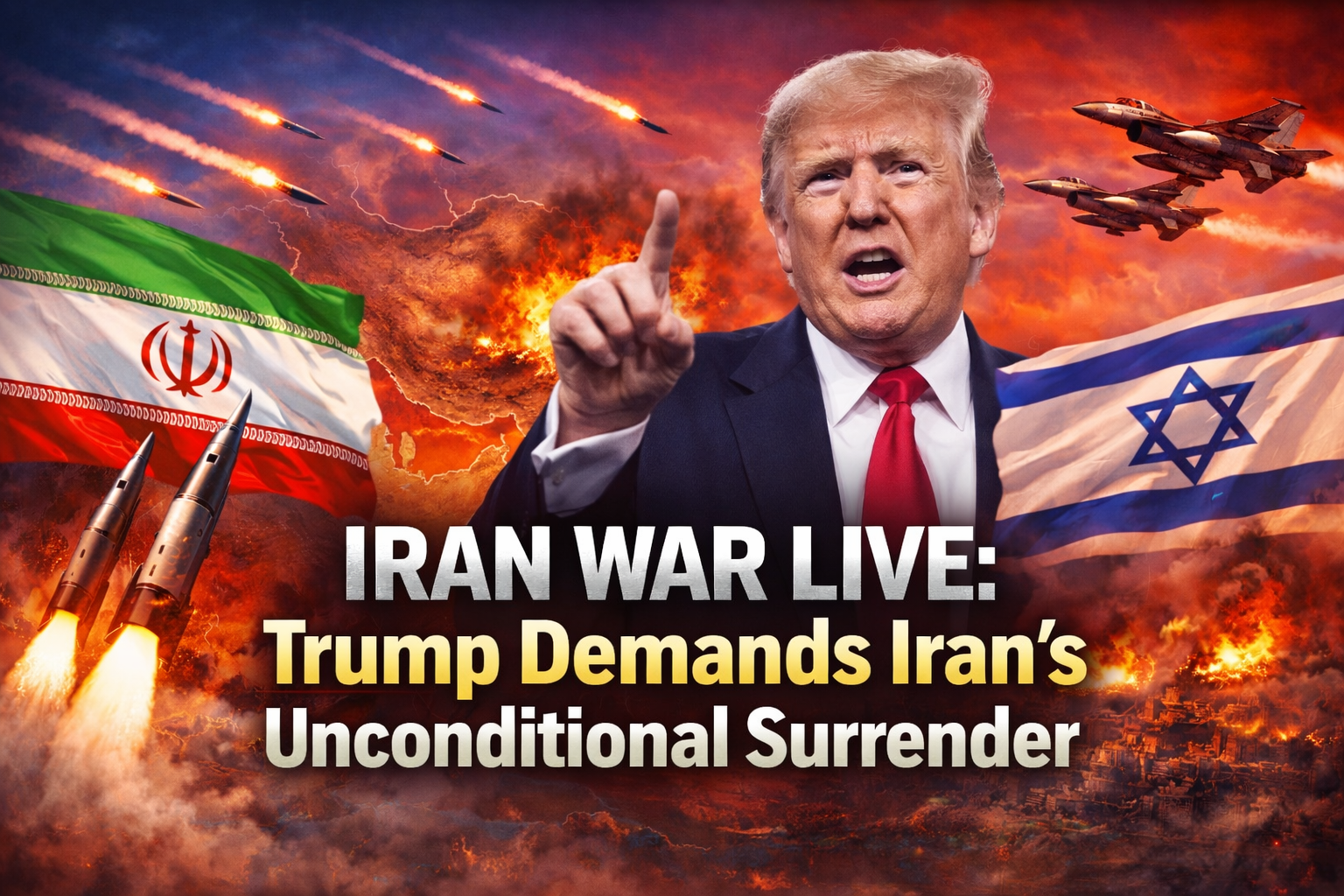
Iran War Live | Trump Demands Iran Unconditional Surrender
The ongoing war between Iran, Israel, and the United States continues to intensify as new military strikes, missile attacks, and diplomatic tensions reshape the Middle East. U.S. President Donald Trump has stated that there will be no negotiations or peace agreement with Iran until the country agrees to “unconditional surrender.” This declaration comes as the conflict enters its second week and continues to spread across the region. Airstrikes have targeted military installations in Iran while Iranian forces respond with missile and drone attacks against Israeli cities and U.S. bases in the Middle East. The conflict, which began with coordinated US Israeli attacks on Iranian military and government infrastructure, has already caused heavy casualties and increased fears of a wider regional war.
Background of the Middle East Conflict
How the Conflict Started
The current war began when the United States and Israel launched joint airstrikes on Iran targeting military bases, government sites, and strategic infrastructure. The operation marked a dramatic escalation in long-standing tensions between Iran and Israel. Following the attacks, Iran responded with missile and drone strikes targeting Israeli territory, U.S. military bases, and allied locations across the Middle East. These retaliatory actions quickly transformed the confrontation into a large-scale regional conflict.
Strategic Objectives of the Attacks
Officials in Washington and Tel Aviv argued that the strikes were aimed at weakening Iran’s military capabilities and preventing the expansion of its nuclear and missile programs. However, critics say the attacks risk destabilizing the region and provoking wider military involvement from other countries.
Trump Demand for Unconditional Surrender
US Position on Negotiations
President Donald Trump has taken a firm stance regarding the conflict, stating that no diplomatic deal with Iran will be accepted unless Tehran agrees to unconditional surrender. Trump also warned that Iran could face severe consequences if it continues military attacks. The statement signals that the U.S. administration is prioritizing military pressure rather than negotiations at this stage of the conflict.
Iranian Response to Trump’s Statement
Iranian officials quickly rejected the demand, calling it unrealistic and insisting that the country will not surrender under foreign pressure. Iran’s leadership emphasized that the country would continue defending its sovereignty and responding to attacks from the United States and Israel.
Military Escalation Across the Middle East
Large-Scale Airstrikes in Iran
Recent reports indicate that Israel has launched large waves of airstrikes against targets in Tehran and other Iranian cities, including military facilities and strategic infrastructure. These operations reportedly involved dozens of fighter jets targeting missile bases, military academies, and command centers linked to Iran’s Revolutionary Guard.
Iranian Missile and Drone Retaliation
Iran has responded with multiple missile launches and drone strikes directed at Israel and neighboring countries hosting U.S. forces. Explosions and air-raid sirens have been reported across several cities in the region as defense systems attempt to intercept incoming attacks. The conflict has also affected Gulf countries, with missiles and drones intercepted near several strategic locations in the region.
Rising Casualties and Humanitarian Concerns
Civilian Impact
The war has caused significant humanitarian consequences. Reports indicate that many civilians have been killed or injured due to missile strikes, air raids, and explosions in densely populated areas. Hospitals and emergency services across several cities are struggling to handle the increasing number of casualties.
Regional Displacement
In addition to casualties, the conflict has forced thousands of people to leave their homes. Many residents in affected areas are seeking shelter as air-raid sirens and missile warnings continue. Humanitarian organizations warn that if the conflict continues, the situation could develop into a major regional crisis.
Global Economic and Security Implications
Oil Supply and Shipping Routes
One of the biggest concerns arising from the conflict is the security of global oil supply routes. Iran has warned that escalating military activity could threaten important maritime trade routes in the Persian Gulf. Any disruption in these areas could significantly impact global energy markets and international trade.
Rising Global Tensions
The conflict has also heightened geopolitical tensions among major world powers. Several countries have urged restraint and called for diplomatic solutions to prevent the war from spreading further. Meanwhile, governments around the world continue to monitor the situation closely due to its potential impact on international security.
Future Outlook of the Conflict
Possibility of Extended War
Analysts warn that the war could continue for weeks or even months if neither side agrees to negotiations. The ongoing exchange of airstrikes and missile attacks indicates that both sides are preparing for a prolonged conflict.
Diplomatic Challenges
Diplomatic efforts to end the conflict remain limited as both Iran and the United States maintain strong positions. While some countries are calling for immediate ceasefire negotiations, the current political climate makes a quick resolution unlikely.
Conclusion
The Iran war continues to escalate as military strikes and political tensions increase across the Middle East. President Trump’s demand for Iran’s unconditional surrender has further complicated diplomatic efforts and increased uncertainty about the future of the conflict. With ongoing airstrikes, missile retaliation, and rising civilian casualties, the war remains one of the most serious geopolitical crises in the world today. Unless diplomatic negotiations begin soon, the conflict could expand further and reshape the political and security landscape of the Middle East.