


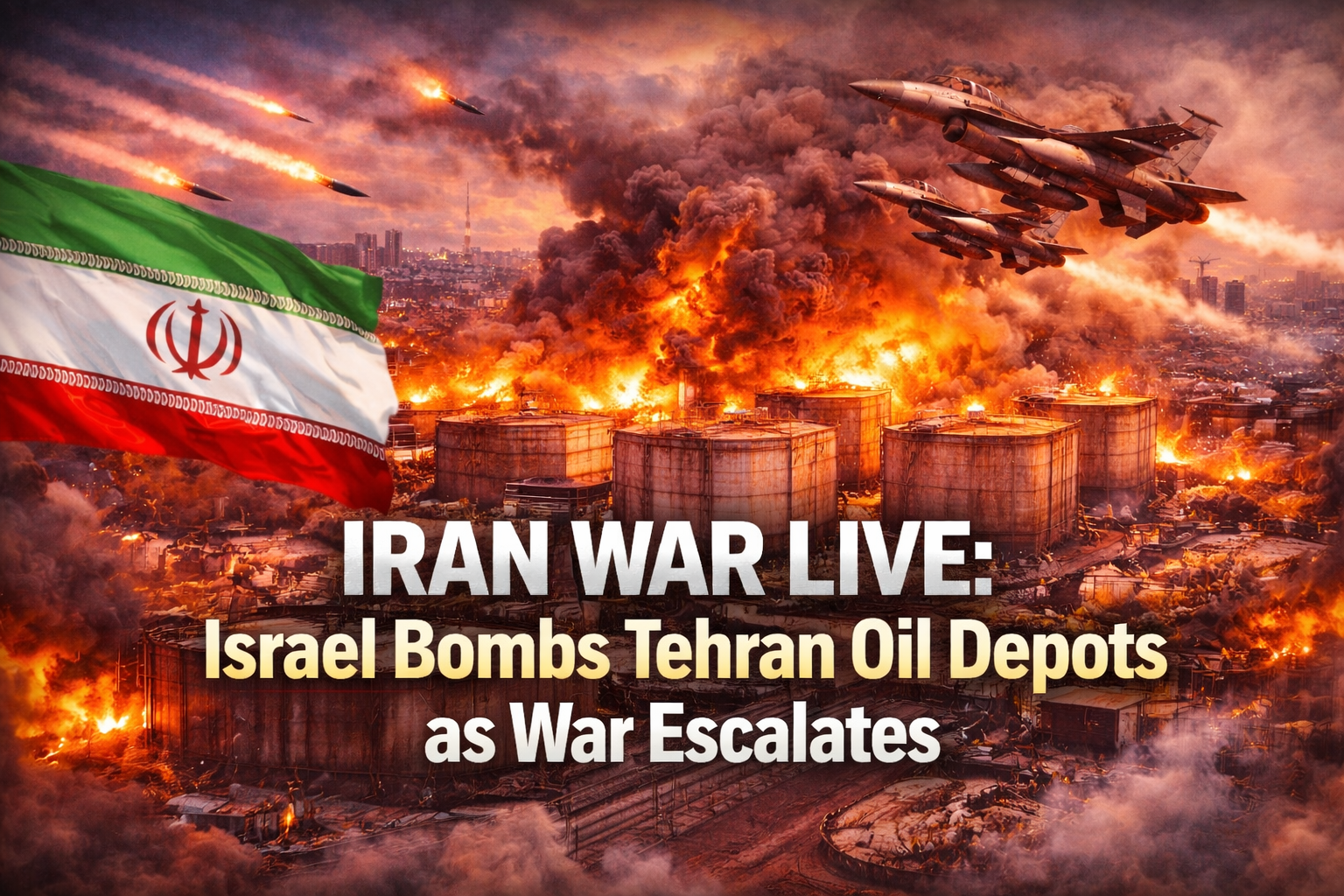
Iran War Live | Israel Bombs Tehran Oil Depots as War Escalates
Iran War Live updates show the Middle East conflict escalating rapidly as Israel launches new strikes on Iran while retaliatory attacks spread across Gulf states. The war, which began after coordinated US Israel strikes on Iranian military infrastructure, has now entered a dangerous phase involving attacks on energy facilities, oil depots, and regional infrastructure.
Recent reports indicate that Israeli aircraft targeted several oil depots in Tehran, causing massive fires and smoke across the capital. At the same time, missile and drone attacks have continued across Gulf countries including Bahrain, Kuwait, and the United Arab Emirates, raising fears that the conflict could expand further across the region.
Background of the Iran War Crisis
Origins of the Conflict
The Iran war crisis began when Israel and the United States launched coordinated airstrikes against Iranian military and nuclear infrastructure. The campaign targeted missile facilities, government installations, and strategic command centers.
The military operation was designed to weaken Iran’s missile program and prevent future nuclear development. However, Iran quickly responded with missile and drone strikes targeting Israel, US military bases, and allied countries in the Middle East.
This escalation transformed the confrontation into a broader regional conflict involving multiple nations and military alliances.
Strategic Military Objectives
According to military analysts, the primary goal of the US Israel operation was to reduce Iran’s military capabilities and disrupt its strategic defense infrastructure. However, the attacks also triggered strong retaliation from Iran and its allies.
Since the start of the conflict, numerous targets across Iran have reportedly been hit by airstrikes, including government facilities and missile bases.
Israel Bombs Tehran Oil Depots
Strikes on Energy Infrastructure
One of the most dramatic developments in the Iran War Live coverage is the Israeli attack on multiple oil depots in Tehran. Iranian officials confirmed that several fuel storage facilities and petroleum transport centers were struck during overnight air raids.
The strikes caused large fires and thick smoke over the Iranian capital, although authorities later said the fires had been brought under control.
Energy infrastructure has increasingly become a key target in the conflict. Analysts believe these strikes are aimed at weakening Iran’s economic capacity and disrupting its fuel distribution systems.
Impact on the Iranian Economy
Attacks on oil depots could significantly impact Iran’s economy because energy production and fuel distribution are critical to the country’s infrastructure.
Damage to these facilities could also affect regional oil markets, especially if the conflict spreads further across the Persian Gulf.
Iran War Live Gulf States Under Attack
Drone and Missile Attacks Across the Gulf
Another major development in the Iran War Live updates is the expansion of attacks beyond Iran and Israel. Gulf countries have reported missile and drone strikes targeting infrastructure and civilian areas.
For example, a drone strike damaged a desalination plant in Bahrain and injured several people, highlighting how the war is affecting neighboring states.
Missile debris has also been reported in Kuwait and other Gulf regions as air defense systems attempt to intercept incoming threats.
Regional Security Concerns
These attacks demonstrate how the war is evolving into a broader regional conflict. Gulf states are increasing security measures and strengthening their defense systems to protect critical infrastructure.
Experts warn that continued attacks on Gulf countries could draw additional nations into the war.
Global Economic Impact of the Iran War
Oil Markets and Energy Security
The Iran War Live conflict has already begun affecting global energy markets. The Middle East is one of the world’s most important oil-producing regions, and any disruption to energy infrastructure can influence global prices.
Recent attacks on oil depots, refineries, and shipping routes have increased fears of supply shortages.
Energy analysts warn that if the conflict continues to escalate, oil prices could rise sharply and disrupt international trade.
Threats to Maritime Trade
Another major concern is the security of shipping routes in the Persian Gulf. The Strait of Hormuz, one of the world’s most important oil transit corridors, remains highly vulnerable during the conflict.
If shipping routes become unsafe, the impact on global trade could be significant.
TAP FOR MORE NEWS HERE
Humanitarian Consequences of the Iran War
Civilian Casualties
The war has caused significant humanitarian damage across the region. Thousands of civilians have been killed or injured since the beginning of the conflict.
Airstrikes, missile attacks, and drone strikes have damaged infrastructure, residential buildings, and public services in multiple countries.
Displacement and Fear
As the Iran War Live crisis continues, thousands of residents across affected areas have been forced to leave their homes. Civilians in major cities such as Tehran and Tel Aviv continue to face constant air-raid warnings.
Conclusion
The Iran War Live conflict continues to escalate as Israel strikes Tehran’s oil depots and attacks spread across Gulf countries. What began as a military campaign against Iran’s missile and nuclear infrastructure has now expanded into a broader regional war.
With energy infrastructure under attack, global oil markets at risk, and missile strikes spreading across neighboring countries, the situation remains highly volatile.
Unless diplomatic negotiations begin soon, the conflict could continue to intensify and reshape the political and security landscape of the Middle East.